by Bill Quigley
The national security state grew exponentially following 9/11, and now includes nearly 4,000 organizations across the country, employing technologies, old and new. Americans have been enlisted to track each other. “The Nationwide Suspicious Activity Reporting Initiative stores the profiles of tens of thousands of Americans and legal residents who are not accused of any crime but who are alleged to have acted suspiciously.”
Thirteen Ways Government Tracks Us
by Bill Quigley
“There are 3,984 federal, state and local organizations working on domestic counterterrorism.”
Privacy is eroding fast as technology offers government increasing ways to track and spy on citizens. The Washington Post reported there are 3,984 federal, state and local organizations working on domestic counterterrorism. Most collect information on people in the US. Here are thirteen examples of how some of the biggest government agencies and programs track people.
One. The National Security Agency (NSA) collects hundreds of millions of emails, texts and phone calls every day and has the ability to collect and sift through billions more. WIRED just reported NSA is building an immense new data center which will intercept, analyze and store even more electronic communications from satellites and cables across the nation and the world. Though NSA is not supposed to focus on US citizens, it does.
Two. The Federal Bureau of Investigation (FBI) National Security Branch Analysis Center (NSAC) has more than 1.5 billion government and private sector records about US citizens collected from commercial databases, government information, and criminal probes.
Three. The American Civil Liberties Union and the New York Times recently reported that cellphones of private individuals in the US are being tracked without warrants by state and local law enforcement all across the country. With more than 300 million cellphones in the US connected to more than 200,000 cell phone towers, cellphone tracking software can pinpoint the location of a phone and document the places the cellphone user visits over the course of a day, week, month or longer.
Four. More than 62 million people in the US have their fingerprints on file with the FBI, state and local governments. This system, called the Integrated Automated Fingerprint Identification System (IAFIS), shares information with 43 states and 5 federal agencies. This system conducts more than 168,000 checks each day.
“Cellphones of private individuals in the US are being tracked without warrants by state and local law enforcement.”
Five. Over 126 million people have their fingerprints, photographs and biographical information accessible on the US Department of Homeland Security Automated Biometric Identification System (IDENT). This system conducts about 250,000 biometric transactions each day. The goal of this system is to provide information for national security, law enforcement, immigration, intelligence and other Homeland Security Functions.
Six. More than 110 million people have their visas and more than 90 million have their photographs entered into the US Department of State Consular Consolidated Database (CCD). This system grows by adding about 35,000 people a day. This system serves as a gateway to the Department of State Facial Recognition system, IDENT and IAFSIS.
Seven. DNA profiles on more than 10 million people are available in the FBI coordinated Combined DNA index System (CODIS) National DNA Index.
Eight. Information on more than 2 million people is kept in the Intelligence Community Security Clearance Repository, commonly known as Scattered Castles. Most of the people in this database are employees of the Department of Defense (DOD) and other intelligence agencies.
Nine. The DOD also has an automated biometric identification system (ABIS) to support military operations overseas. This database incorporates fingerprint, palm print, face and iris matching on 6 million people and is adding 20,000 more people each day.
Ten. Information on over 740,000 people is included in the Terrorist Identities Datamart Environment (TIDE) of the National Counterterrorism Center. TIDE is the US government central repository of information on international terrorist identities. The government says that less than 2 percent of the people on file are US citizens or legal permanent residents. They were just given permission to keep their non-terrorism information on US citizens for a period of five years, up from 180 days.
“Soon, police everywhere will be equipped with handheld devices to collect fingerprint, face, iris and even DNA information on the spot.”
Eleven. Tens of thousands of people are subjects of facial recognition software. The FBI has been working with North Carolina Department of Motor Vehicles and other state and local law enforcement on facial recognition software in a project called “Face Mask.” For example, the FBI has provided thousands of photos and names to the North Carolina DMV which runs those against their photos of North Carolina drivers. The Maricopa Arizona County Sheriff’s Office alone records 9,000 biometric mug shots a month.
Twelve. The FBI operates the Nationwide Suspicious Activity Reporting Initiative (SAR) that collects and analyzes observations or reports of suspicious activities by local law enforcement. With over 160,000 suspicious activity files, SAR stores the profiles of tens of thousands of Americans and legal residents who are not accused of any crime but who are alleged to have acted suspiciously.
Thirteen. The FBI admits it has about 3,000 GPS tracking devices on cars of unsuspecting people in the US right now, even after the US Supreme Court decision authorizing these only after a warrant for probable cause has been issued.
The Future
The technology for tracking and identifying people is exploding as is the government appetite for it.
Soon, police everywhere will be equipped with handheld devices to collect fingerprint, face, iris and even DNA information on the spot and have it instantly sent to national databases for comparison and storage.
Bloomberg News reports the newest surveillance products “can also secretly activate laptop webcams or microphones on mobile devices,” change the contents of written emails mid-transmission, and use voice recognition to scan phone networks.
The advanced technology of the war on terrorism, combined with deferential courts and legislators, have endangered both the right to privacy and the right of people to be free from government snooping and tracking. Only the people can stop this.
Bill Quigley. teaches law at Loyola University New Orleans and works with the Center for Constitutional Rights. A longer version of this article with sources is available. Quigley77@gmail.com.

 The Democratic Party will recalibrate its messaging after its well-funded senate candidate in a Michigan primary lost to Abdul El-Sayed, who by his own admission is a capitalist, not a socialist, and…
 “Conflicts over colonies constitute the major source of war in the modern world.”
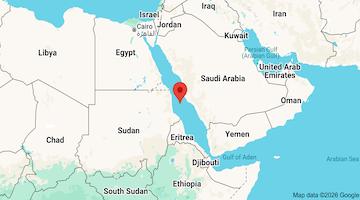 Saudi Arabia has formed a 14-state coalition to stop Ansar Allah, which has threatened to blockade its oil tankers in the Red Sea.
 “...when I talk about our political institutions, there is no reason for any American to continue to be victimized by what we still refer to as the Republican and Democratic parties…We don’t have to…
 In commemoration of the Fidel Castro centenary on August 13, 2026, we present remarks given by Djibo Sobukwe at The Symposium on Fidel Castro and the Cuban Revolution on January 21, 2017,…


