A Black Agenda Radio commentary by executive editor Glen Ford
The electoral scenery must be quite depressing to those who think change must come through the ballot. The system disgorges “a multiracial cast of scoundrels from both major parties coiled up incestuously under the same corporate tent.” However, something different may be afoot in at least three points on the map.
A Tale of Three Cities: Newark, Jackson, Seattle
A Black Agenda Radio commentary by executive editor Glen Ford
The vote is hardly worth casting, these days.”
Electoral politics, the arena that half of Black America was barred from entering until only about 50 years ago, has become a vast wasteland, hopelessly polluted by corporate dollars. Black electoral politics is no exception. It’s been only a little over a decade since corporate America got serious about creating a new class idiot Harold Ford Congressional Black Caucus
That’s why what’s unfolding in Newark, New Jersey, Jackson, Mississippi, and Seattle, Washington, is so rare – and important.
In Seattle, there’s a group of folks who don’t mind working hard and building alliances, all the while telling the world that socialism is the only alternative to barbarism. Kshama Sawant, the newly minted city councilperson, and her Socialist Alternative comrades have forced corporate Democrats to pretend that they really would like to see the city’s minimum wage raised to $15 an hour. Socialist Alternative also demands that the rich pay for an overhaul of public education and transportation – a platform that most people would support, if they thought it had a chance of passing. Kshama Suwant and her comrades believe that people will vote in their own interests if the candidates have proven they are trustworthy.
In Jackson, Mississippi, 66 year-old Mayor Chokwe Lumumba cooperative economy
In Newark, New Jersey, which Cory Booker made into a playground for corporate educational experimentation, city councilman and high school principal Ras Baraka father’s funeral
For Black Agenda Radio, I’m Glen Ford. On the web, go to BlackAgendaReport.com.
BAR executive editor Glen Ford can be contacted at Glen.Ford@BlackAgendaReport.com

 In this week’s segment, we discuss the 80th anniversary of victory in Europe in World War II, and the disinformation that centers on the U.S.'s role and dismisses the pivotal Soviet role in that…
 Roger McKenzie is the international editor of the UK-based Morning Star, the only English-language socialist daily newspaper in the world. He joins us from Oxford to discuss his new book, “The…
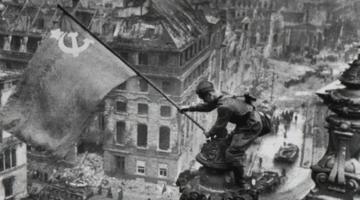 The late Bruce Dixon was a co-founder and managing editor of Black Agenda Report. In 2018, he provided this commentary entitled, "US Fake History of World War II Underlies Permanent Bipartisan…
 Nadiah Alyafai is a member of the US Palestinian Community Network chapter in Chicago and she joins us to discuss why the public must be aware of the Nakba and the continuity of Palestinian…
 Black people who are among the rich and famous garner praise and love, and so do those who are in distress. But concerns for the masses of people and their struggles are often missing.


