
Six million Congolese have died from starvation and war since 1997. The cause has not been, as Western media would have us believe, inscrutable African ethnic conflicts, but the West's hunger for their country's vital mineral resources, which power our aeropsace, automotive and information tech industries.17-23 Six million Congolese have died from starvation and war since 1997. The cause has not been, as Western media would have us believe, inscrutable African ethnic conflicts, but the West's hunger for their country's vital mineral resources, which power our aeropsace, automotive and information tech industries.
October 17-23 is Congo Week
by BAR managing editor Bruce A. Dixon
This October 17 thru the 23rd is the 3rd annual Congo Week.
Congo Week is a project undertaken by thousands of Congolese exiles along with their friends and allies, in cities, towns and university campuses scattered throughout the U.S., Canada, Europe and beyond. Students, labor unions, libraries, churches, local governments and community groups are showing videos and photo exhibits and hosting speakers to help break the walls of silence and disinformation around the Congo.
Six million Congolese have lost their lives since 1997 to fuel the West's hunger for their country's mineral riches. Besides vast amounts of gold, uranium and diamonds, the Congo possesses 90% of the mineral called colombo-tantalum, or coltan. Coltan is vital to the production of capacitors, jet engines, power generation equipment and computers. Every PC, every Mac and iPad, every cell phone, game box, every TIVO, VCR and flat screen TV contain coltan. The global automotive, information technology, aerospace industries, and of course the Pentagon will grind to a halt if their supplies of coltan suffer the least interruption.
The rarely told truth is that driving millions at gunpoint from their farms and villages in eastern Congo, and with them, any government that might protect their rights has created the ideal business climate for Western mining and minerals corporations and their suppliers. Wages, environmental concerns, local taxes and regulations in, and exporting the entire profits out of the zones ravaged and depopulated by invading Rwandan, Burundian, Ugandan armies and their private militia allies, are no problem. It's a piracy and slave labor zone, the ultimate free market.
The fact is that all the armies, official and unofficial are supplied directly and indirectly by the United States, and many are commanded by American-trained officers. The profits and the plunder flow mainly, but not entirely to the West. Plunder and pillage are good for business, and in the Congo, business is good.
Cover stories endlessly recycled in Western media, by the US State Department, and by occasional Hollywood do-gooders, attribute the millions of deaths by starvation and murder, the hundreds of thousands of rapes and maimings to inscrutable African ethnic conflicts no Westerner can possibly understand. In contrast to the mostly fictional genocide in Darfur, the Congolese genocide is very real indeed. It's as though 45,000 people perished ever month for a decade, with barely a whisper, and almost no truth told.
The fact is that the literal blood of literal innocents isn't just on our diamonds. It's in our computers and cell phones, in our cars and aircraft, and in all our military hardware. While the truth may be difficult to accept, it is accessible, and Congo Week aims to make the real voices of the Congo directly available to wider and wider audiences.
Again, the third annual Congo Week is October 17 through the 23rd. If you're interested in hosting speaker or showing a DVD at your home, church, union hall, library, college campus or community center for Congo Week, or finding an event in your city or town to attend, the place to go is www.friendsofthecongo.org, the web site of Friends of the Congo. That's www.friendsofthecongo.org, or you can google Friends of the Congo.
For Black Agenda Radio, I'm Bruce Dixon. Find us on the web at www.blackagendareport.com.
Bruce A. Dixon is managing editor at Black Agenda Report and based in Marietta GA. He can be reached at bruce.dixon(at)blackagendareport.com

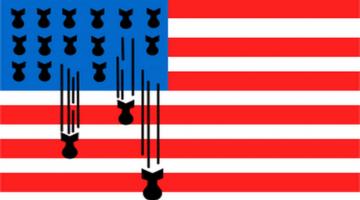 The liberal news media treat U.S. violence and oppression as aberrations from the country's founding ideals rather than expressions of its fundamental character as a settler colony, empire,…
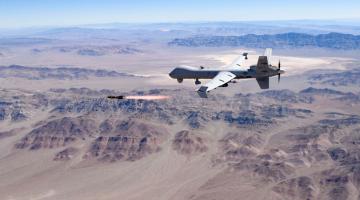 The U.S. relocation of MQ-9 Reaper drones from Africa to Latin America is not a drawdown of imperial aggression but a strategic reallocation, with the drones likely to be used against Cuba, Venezuela…
 Race is a sociopolitical construct, not a biological truth. The real determinants of health are structural factors such as zip code, environmental pollution, and access to resources.
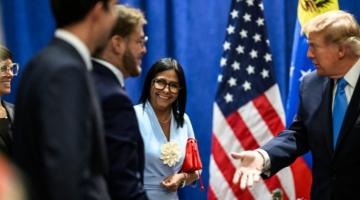 A photograph of Delcy Rodríguez smiling with Donald Trump after the U.S. kidnapped Nicolás Maduro is evidence of subordination to the United States. These images cannot be reconciled with the dignity…
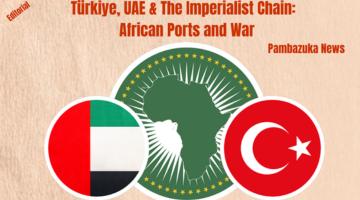 Imperialist competition and wars that facilitate extractivism have long shaped the use of seaports for access to resources, markets, and devalued labor. In the last decade, countries in the chain of…


