A Black Agenda Radio commentary by Glen Ford
It is the season of “occupations” – open-ended protests designed to “liberate” very finite bits of space that represent a larger world that has been alienated from humanity by the greedy grasp of a usurping class.” Three somewhat different occupations hope to “set off a chain of human reaction” that will wrest power from the denizens of Wall Street and their servants in Washington. Meanwhile, Newark, New Jersey, activists are busy occupying their own turf.
Occupations: Wall Street, Washington – and Newark
A Black Agenda Radio commentary by Glen Ford
“The conditions that are inflicted on the people of Newark and every other American inner city have their source in those who rule from Washington in the service of Wall Street – the sites of those other occupations.”
Three “occupations” of significance are underway or about to begin in the United States. These people’s actions share overlapping themes of resistance to the oppression of the many by the few, and attempt to focus the minds of the many on very finite bits of space that represent a larger world that has been alienated from humanity by the greedy grasp of a usurping class. It is hoped that the symbolic liberation of those spaces, through physical occupation by the people, will set off a chain of human reaction culminating in a kind of Big Bang that gives birth to a new social universe.
Big Bangs have happened before; human progress depends on them, which is why people spend their entire lives trying to light the fuse.
The attempt to occupy ground on Manhattan’s Wall Street must occur if the protest is to crystallize into a narrative of struggle. The Wall Street protesters appear to be as they describe themselves, a “leaderless resistance” that is united against the “greed and corruption” of the “one percent” of the population that lords it over the rest of us. The protesters were, at least in the beginning, very young, very white, and transparently upscale in social background – just the kind of cohort in need of introduction to the blunt instruments underpinning the rule of the rich. The NYPD soon obliged them.
“The protesters were, at least in the beginning, very young, very white, and transparently upscale in social background.”
On October 6, a coalition of organizations with many veteran leaders will descend on Freedom Square
In Newark, New Jersey, the People’s Organization for Progress must be, since the conditions that are inflicted on the people of Newark and every other American inner city have their source in those who rule from Washington in the service of Wall Street – the sites of those other occupations.
The activists in Newark are intent on occupying public space in their own city, for more than a year or as long as necessary. That is the most profound kind of occupation: a non-stop mobilization of people embedded in their own communities, yet consciously connected to the larger world. A struggle in which there will be no change of venue, until all the people’s venues are liberated.
For Black Agenda Radio, I’m Glen Ford. On the web, go to BlackAgendaReport.com.
BAR executive editor Glen Ford can be contacted at Glen.Ford@BlackAgendaReport.com .

 In this series, we ask acclaimed authors to answer five questions about their book. This week’s featured author is Louis M.
 Congresswoman Alexandria Ocasio-Cortez and other so-called progressives exemplify the dangers of depending on the Democratic Party to enact any meaningful change.
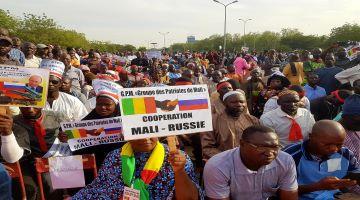 The "scramble for Africa" continues with the U.S., former colonizers such as France, and now Russia, all competing for influence.
 Speech by Salome Ayuak given at the International Month of Action Against AFRICOM launch event.
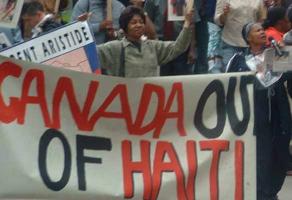 Dismantling the unelected and colonialist CORE Group is the first step to loosening the imperialist stranglehold over Haiti.



