A Black Agenda Radio commentary by Glen Ford
Obama cries crocodile tears about what the Republicans in Congress won’t let him do. But he allowed more than $7 billion in TARP money set aside for worst hit victims of the housing crisis to sit, unspent, in Treasury Department accounts, for two years. “No wonder most people think TARP is only concerned with bailing out the banks. The Obama administration has treated it that way.”
Obama Administration Withholds Home Foreclosure Aid to Hardest Hit
A Black Agenda Radio commentary by Glen Ford
“Treasury Secretary Geithner sat on the homeowners’ relief money for two years, because his boss wanted it that way.”
The Obama administration’s indifference to the plight of foreclosed homeowners, and total subservience to the banks, is once again on public display. According to a report by the Special Inspector General of the TARP program, the administration has spent only a tiny fraction
No wonder most people think TARP – the Troubled Asset Relief Fund – is only concerned with bailing out the banks. The Obama administration has treated it that way, even though Congress intended a portion of that money to help homeowners recover from the damage the banks had done.
From the day he was sworn in – and even before that, on the campaign trail – Obama has behaved as if the welfare of the banks is all that matters. Tim Geithner, the man he appointed to head the Treasury Department, which in turn runs the TARP program, is a former president of the Federal Reserve Bank of New York. A previous Inspector General of TARP reported, back in the summer of 2009, that the bank bailout might cost as much as $24 trillion trillion of that was to come out of TARP and other Treasury Department programs. That’s more than a thousand times more money than the $7.6 billion set aside for the hardest hit homeowners – but Geithner couldn’t even bring himself to spend that paltry sum on TARP’s Hardest Hit Fund, so almost all of the money has been sitting there, doing nothing for anybody, for the last two years.
“Obama has behaved as if the welfare of the banks is all that matters.”
Obama apologists will probably claim the president didn’t know that his Treasury Secretary was withholding billions of dollars in aid to the worst hit victims of the housing crisis – which means, they’ll believe anything.
The reason Geithner didn’t spend the Hardest Hit Fund money is because he, like other bankers, believes that helping homeowners in crisis amounts to tampering with “the market” – a euphemism for Wall Street. Obama thinks that way, too. In early 2008, Obama alone, among the three Democratic presidential candidates in the running, rejected out of hand
The Congressional Black Caucus begged Obama to target foreclosure relief funds to areas that were hurt worst by the meltdown – which overlaps with the geography of Black America
BAR executive editor Glen Ford can be contacted at Glen.Ford@BlackAgendaReport.com .

 The Patriot Front’s bold incursions into U.S. cities are a sign of their burgeoning strength and of the weakness of Black movement politics.
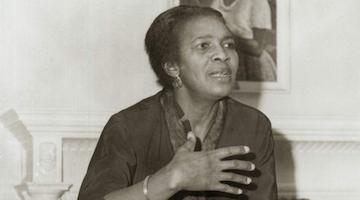 “I was deported from the U.S.A, because as a Negro woman Communist of West Indian descent, I was a thorn in their side…”
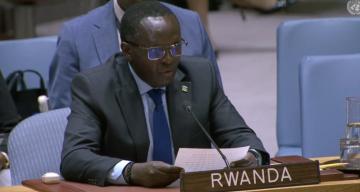 The records of the International Criminal Tribunal on Rwanda should not be surrendered to the Rwandan regime led by President Paul Kagame.
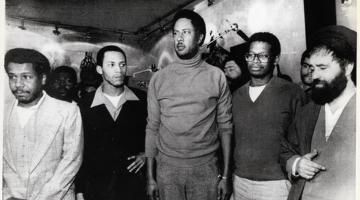 Iran's 1979 revolution was a victory for national sovereignty which also forged solidarity with African people.
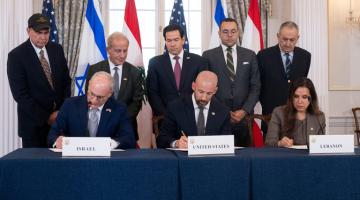 The U.S. and Israel treat negotiations as a weapon to destabilize and disarm the region, but Iran and Hezbollah have shown that real sovereignty requires connecting every front in a unified anti-…


