A Black Agenda Radio commentary by executive editor Glen Ford
The billionaire former owner of BET commissioned a poll on Black political opinion that utterly fails to measure anything meaningful or useful. “What does it tell you about Black America, that Congresswoman Waters has about twice the following of Congressman Clyburn? Does it tell you anything at all?” The NAACP is more popular than the Urban League. Why? The poll didn’t bother to ask.
News Flash: Rich Black Man Pays for Useless Poll, Thinks He’s Done Something Important
A Black Agenda Radio commentary by executive editor Glen Ford
“There are no questions that would illicit answers as to how Blacks think Obama has helped or hurt them.”
Bob Johnson’s poll of Black American political views
We find that 83 percent of Black folks are generally favorable towards the NAACP, 69 percent have good feelings about the National Urban League, and 68 percent are more favorable than not towards the Congressional Black Caucus. Hillary Clinton and President Obama get the highest ratings, because all but one percent of Black folks feel familiar with them, while 4 percent are not too sure what the NAACP is all about, and 16 and 17 percent are unfamiliar with the Black Caucus and the Urban League, respectively.
All five people and organizations are rated highly among Blacks or, presumably, would be if Black folks knew more about them. But, what do these numbers mean? What do African Americans like or dislike about the subjects of the poll? And, where are the numbers on those people and institutions that are generally understood to be unpopular among Blacks, so that we can make a comparison? How can we tell if favorable ratings in the seventies and eighties are good scores, if we don’t know what a bad score is?
“Why were those particular seven persons listed?”
We get an even messier situation on question number eight, which asks “Which of the following [people] speaks for you most often?" For some, unexplained reason, the poll allows respondents to choose from Rev. Al Sharpton, Rev. Jesse Jackson, Congresswoman Maxine Waters, NAACP chief Ben Jealous, Congressman James Clyburn, National Urban League President Marc Morial, and Michael Steel, the Black former chairman of the Republican National Committee. Sharpton won, at 24 percent, and Republican Michael Steel came in last, with 2 percent. Forty percent of those surveyed were not willing to follow any of the above. But, why were those particular seven persons listed? And, what does it tell you about Black America, that Congresswoman Waters has about twice the following of Congressman Clyburn? Does it tell you anything at all?
The results that got the most press attention, of course, revolved around President Obama. Seventy-two percent of Blacks think his election helped African Americans. However, there are no questions that would illicit answers as to how Blacks think Obama has helped or hurt them. The President learns nothing useful, the reader gets no guidance, and it’s a mystery what Bob Johnson gets out of it.
This is a truly incompetent, useless poll. For example, question number fifteen asks if Black unemployment is double that of whites because of: a) failure of the educational system for minorities/African Americans; b) lack of corporate commitment to hiring minorities/African Americans; or c) lack of good government policies. But, what does educational system “failure” mean? That Blacks are educationally unqualified, or that white people assume they are poorly educated, or what? What are “good government policies”? Does it mean a jobs policy? Affirmative action? Public investment? Non-discrimination policies? Who knows?
What have we learned? That a billionaire, Black or white, can spend all the money he wants asking poorly constructed questions for no other purpose than to remind people that he is still rich.
For Black Agenda Radio, I’m Glen Ford. On the web, go to BlackAgendaReport.com.
BAR executive editor Glen Ford can be contacted at Glen.Ford@BlackAgendaReport.com .

 Dr. Gerald Horne joins us from Houston to provide an analysis of US foreign policy in the wake of Donald Trump’s overwhelmming victory and return to the white house.
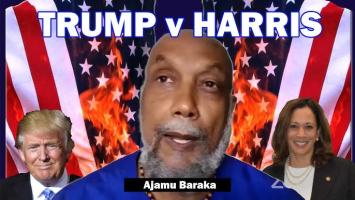 On November 3, 2024, BAR Editor and Columnist, Ajamu Baraka, participated in a panel discussion entitled "Trump vs Harris - US Citizens Denied Choice for Peace, People or Planet." Black Agenda Report…
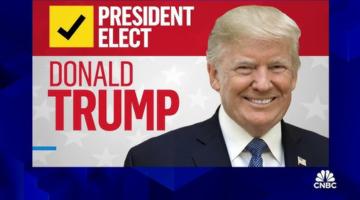 Donald Trump’s victory over Kamala Harris must be a wake up call to Black people. The Democratic Party is a dead end and a movement killer. Our survival depends on getting that corrupt wing of the…
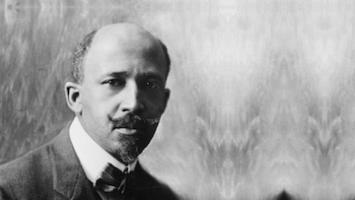 “I believe that democracy has so far disappeared in the United States that no "two evils" exist. There is but one evil party with two names, and it will be elected despite all I can do or say.”
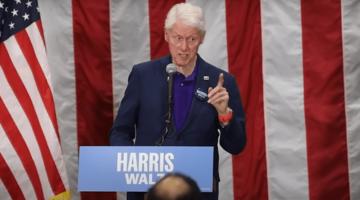 Bill Clinton couldn’t be cozier, or more richly rewarded, in what he calls “the dictator’s club.”


