by Kwasi Anokye
How does a fractured movement fight for release of activists facing false charges, while simultaneously defending the rights of other imprisoned freedom fighters to resist oppression by any means necessary? “Standard leftist language would have us defend our freedom fighters merely as unjustly treated individuals, not as righteous insurgents.” But what about our inherent right to self-determination?
Mutulu’s Call: Securing the Release of Our Captured Fighters
by Kwasi Anokye
“We give the ‘Free Mumia!’ campaign meaning when we fully demand the urgent, unconditional release of Russell Maroon Shoats, Sekou Odinga and all their colleagues.”
Almost three years have slipped by since Dr. Mutulu Shakur proposed another strategy to help secure the release of captured black insurgents “who put their lives on the line” for us. His proposal is a rallying point for the campaign to free POWs. But first we must link our defense of falsely-charged insurgents such as Mumia Abu-Jamal to the release of the whole. Falsely-charged POW Mumia is in prison because he effectively speaks the difficult language of full political protection for black insurgency, period – a language we must learn to speak. If supporters are listening to Mumia, Dr. Shakur's proposal deserves urgent study, elaboration and coordinated action.
Some are yet to take it seriously as it suggests a Truth and Reconciliation Commission-type exercise, citing the South African example. The slow response is understandable. The disappointing after-taste of the SATRC lingers. And the connotation of “reconciliation” in the face of continuing antiblack terror is unsettling. There are also doubts that the US, given its track record, will obey international precepts (e.g. UN Resolution 3103) that justify insurgencies against racist regimes. But expecting easy compliance or imitating the SATRC was not Mutulu's point. He mentions other TRCs and expects us to craft a suitable exercise for the US setting. A major obstacle, however, is our reliance on the political language of the “free.”
To meaningfully act on Mutulu's call we must speak the language of the unfree-trying-to-break free. The perpetual looming threat of arbitrary killings is certainly not what authorizes the political language of the oppressed-free. Blacks often speak it with unparalleled wit and elegant passion, but the language in turn contains our discourse within the parameters of fighting injustice, racism and other symptomatics. The language is oppositional, yet is premised on the free's good old days, which for blacks, were eras of lynching, whips and chains. And slavery days' free(d)men were not free. We subvert our struggle if we seek to revive a majoritarian democracy where arbitrary antiblack murder, lynching and black over-incarceration are aberrations but not scandalous, and antiblack terror triggers little political consequence. Mutulu's proposed project will highlight black insurgency's importance in ensuring some consequences – consequences that have no place in the political language of the free. Yes, mass appeal may be critical. But the necessary intervention must unfold in spite of the free's “delicate ears,” (to borrow from David Walker).
“We subvert our struggle if we seek to revive a majoritarian democracy where arbitrary antiblack murder, lynching and black over-incarceration are aberrations but not scandalous.”
No doubt, the campaign to free POWs has raised awareness about COINTELPRO and state repression. But our elders who put their lives on the line for us remain in prison because the counterintelligence program was designed to keep the “free” safe. Standard leftist language would have us defend our freedom fighters merely as unjustly treated individuals, not as righteous insurgents. A reliance on such language hampers a robust defense of captured black insurgents. We are expected to answer the questions: Did the insurgents act in self-defense? Do they believe in violence? Questions that miss the point. Why would Kojo Bomani Sababu, after 30-plus years in prison, respond “of course, anytime,” to the question, “Would you do this all over again?” Our duty is to provide all-out media/political protection for elders such as Sababu.
The POWs will continue fighting their individual cases in the courts. But as Mutulu reminds us, legal US avenues of redress have been practically exhausted. Perennial parole denials will tempt concerned supporters to delegitimize insurgency. Still, contradicting Sababu's answer isolates the insurgent. It devalues and divides the liberation movement. And fracturing the movement is COINTELPRO's goal. Meanwhile all the disparate elements of the movement will always be in place. Implementing Mutulu's proposal will help connect the dots. We give the “Free Mumia!” campaign meaning when we fully demand the urgent, unconditional release of Russell Maroon Shoats, Sekou Odinga and all their colleagues.
Again, Mumia was targeted because of his acute focus on full political protection for all black insurgents. Mumia still speaks and writes in defense of whole movement as he did before and while on death row. Are we listening to him? Dr. Mutulu Shakur has outlined an approach to securing well-deserved “relief” for the POWs after decades in prolonged detention. Let's sign the appended petition and organize around this one.
Kwasi Anokye lives and works in Rochester N.Y. He can be contacted at k7ank@yahoo.com.

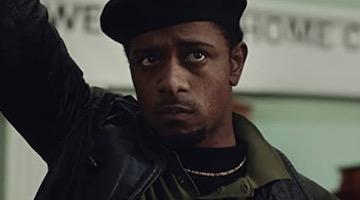 Let’s not allow our revolutionary wish-list to keep us from appreciating the ways this film intervenes—with force and clarity—in our present American political discourse.
 Once we are able to secure Community Control over Police and ensure that entire communities are empowered to exercise such control, we will be free to re-imagine and re-envision the very nature of
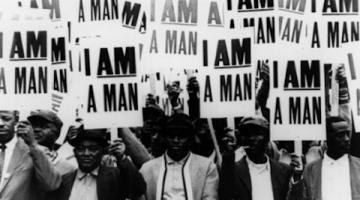 The author, a former corporate journalist like Hedges, reminds him that white workers betrayed Black workers and class solldarity, not the other way around.
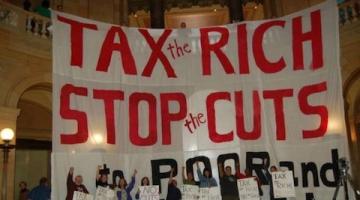 Together, we can demand that one of the wealthiest nations on earth upholds its responsibility to provide the basic necessities for its people.
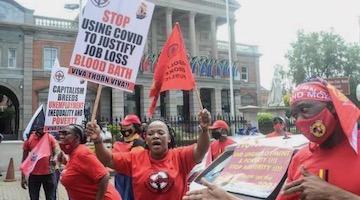 Millions of workers took part in the general strike on February 24, according to the South African Federation of Trade Unions which called for the labor action.


