A Black Agenda Radio commentary by BAR executive editor Glen Ford
Europeans are pouring into northwest Africa in such volume, the huge U.S. airlift capacity may soon be necessary to keep the “Crusaders” supplied. African militaries are being assembled to do the white man’s bidding. The U.S. hopes to establish a Somalia-like operation on the near side of Africa – with Americans in overall charge.
Meeting and Greeting the Crusaders in Africa
A Black Agenda Radio commentary by BAR executive editor Glen Ford
“African officials were handing out orders and directives to other Africans, as if they were actually in charge of something.”
These days the so-called scramble for Africa runs through Mali, and in two directions. As the British, the Italians, the Germans, the Spanish, the Dutch, the Belgians and the Danish follow the French
If the Mali operation takes much longer – which it certainly will – the United States will assume much of the airlift duties, since no other nation in the world has the capacity to resupply a long war on the African continent. Cracking northern Africa wide open is a job for a superpower – which is fine with the Americans. Don Yamamoto, the deputy assistant secretary of state for African affairs, was hanging around the African Union meeting in Ethiopia, where African officials were handing out orders and directives to other Africans, as if they were actually in charge of something. Yamamoto predicted
Oh yes, said deputy secretary Yamamoto. He claims, “A lot of the rebel groups that are now fighting in the region were under Gaddafi’s troops.” Ah, so that’s how the U.S. will tell the story.
“The U.S. has much bigger plans for Africa.”
It’s true that many Tuareg nationalists seeking independence for their homeland in northern Mali worked with Gaddafi’s security forces, and emerged from Libya heavily armed. But, no sooner had the secular Tuareg rebellion begun than it was overwhelmed by Muslim fundamentalists – jihadists who were Gaddafi’s sworn enemies. The jihadists, many of them foreigners, could be run out of the cities of Mali and militarily contained with little effort. But, the Tuaregs live there, and always have. It is, therefore, necessary for the United States to claim that the entire Tuareg people – several million of them – are infested with jihadism, and that this will require a long-term Euro-American presence in Mali and the region.
The French are leading the charge into the desert in Mali, but the U.S. has much bigger plans for Africa. Deputy secretary Yamamoto told reporters that the U.S. would like to see the Mali operation evolve into an African-led affair, like the African Union mission in Somalia. However, although 17,000 Africans do the fighting in Somali, the operation is actually run by the U.S. military and the CIA, and paid for largely by the Americans.
AFRICOM is now assisting six of Mali’s regional neighbors – Niger, Chad, Nigeria, Senegal, Burkina Faso and Togo – with their transport and equipment needs for the fighting ahead. Those countries militaries will always want American guns and financing – which means AFRICOM will never leave. At least, that’s the plan.
For Black Agenda Radio, I’m Glen Ford. On the web, go to BlackAgendaReport.com.
BAR executive editor Glen Ford can be contacted at Glen.Ford@BlackAgendaReport.com .

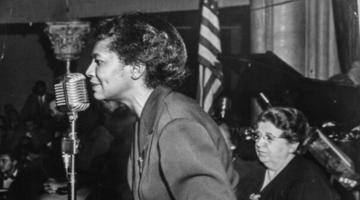 Many in the U.S. "Left" are actually liberal elements that pull socialism toward the Democratic Party. Black organizers must build independent power.
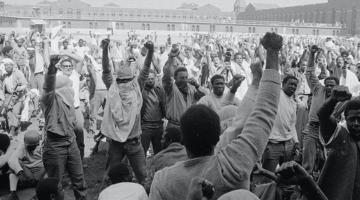 The Attica rebellion was not only about prison "reform." The prison is the most intense expression of a system of imperialist domination that operates at every scale.
 "In the same boat?" is the latest from BAR's Poet-in-Residence.
 An Open Letter from the American "Left" allegedly on behalf of unnamed persons said to be Iranian political prisoners has provided cover for U.S. imperial aggression against Iran by refusing to…
 Empire taught us what to believe about the Global South. It also taught us how to move through it, and being colonized here does not exempt us from carrying those beliefs with us.


