The Beginning of Apartheid's End – March 23 is the Anniversary of the Battle of Cuito Cuanavale
A Black Agenda Radio commentary by BAR Managing Editor Bruce A. Dixon
(originally published in Black Agenda Report on March 23, 2011)
Ceremonies in several African countries and the Caribbean this week marked the March 23 anniversary of the historic 1988 battle of Cuito Cuanavale in Angola. In this military engagement, which Nelson Mandela called “a decisive turning point in the struggle against apartheid”, the Angolan army and Namibian liberation movement, along with tens of thousands Cuban troops and aircraft inflicted a decisive defeat upon the land and air forces of white-ruled South Africa, ultimately forcing South Africa's rulers to the negotiating table.
Back in 1974, the Portuguese army ended its bloody wars of colonial subjugation in Angola and elsewhere by overthrowing its own government and withdrawing from Africa. Almost immediately after Angolan independence, America's puppet dictator of the Congo, Mobutu sent forces into Angola from the north, while white ruled South Africa, also with Washington's blessing, invaded Angola from the south.
White South Africa's armed forces were presumed to be the most powerful on the continent, capable of driving from Cape Town to Cairo with little opposition. The Angolans, even with limited aid from the Soviet Union, were thought to be doomed. The long night of apartheid seemed likely to be prolonged in southern Africa. Though most regimes on the continent opposed racist South Africa rhetorically and diplomatically, not one sent a single man with a stick to oppose the South African invasion. Only Cuba, of all Africa and the African diaspora possessed the resources of moral courage and determination to aid the armed resistance to apartheid.
Responding to the request of the new Angolan government, and to the call of their own African ancestors thousands of Cuban military personnel re-crossed the Atlantic and with tanks, aircraft and other weapons arrived to confront the racist South African army. Though the Cubans and their Angolan allies drove the white South African army and its black puppets from the vicinity of Angola's capital, the South Africans remained able to bomb and raid Southern Angola, sometimes with fairly large forces.
By 1988 South Africa had acquired nuclear weapons and its apartheid army had re-invaded Angola with the usual American approval, threatening to take the crucial air base and river junction of Cuito Cuanavale. Cuba organized a massive air and sea lift, and with the help of Barbados and Guyana, which risked US disapproval by refueling Africa-bound planes carrying arms, equipment and military personnel assembled a formidable force. Cuban pilots knocked South African aircraft from the skies. Cuba concentrated 40,000 troops in an operation which stopped and rolled back the South African advance clear to the Namibian border.
The battle of Cuito Cuanavale forced the apartheid South Africa's white rulers to abandon their dreams of military domination of the region. South Africa was compelled to begin negotiations on the independence of black Namibia, which it had occupied since 1915, and to agree to the release of Nelson Mandela and eventual majority rule in South Africa itself. The new South African state became the first in history to unilaterally renounce and destroy its own nuclear arsenal. “The history of Africa,” asserted Fidel Castro, ”will be written as before and after Cuito Cuanavale.”
Nelson Mandela agrees. “The defeat of the racist army at Cuito Cuanavale has made it possible” he says “for me to be here today! Cuito Cuanavale is a milestone in the history of the struggle for Southern African liberation.”
It was the victory at Cuito Cuanavale which marked the beginning of apartheid's end. It's a victory that should be more widely known, and celebrated here.
Bruce Dixon is based in the Atlanta area and can be contacted at bruce.dixon(at)blackagendareport.com

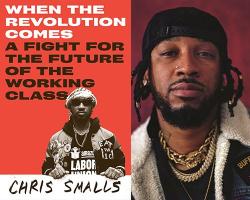 Chris Smalls discusses his memoir, "When the Revolution Comes: A Fight for the Future of the Working Class," published by Penguin Random House. He is the first and only union leader to successfully…
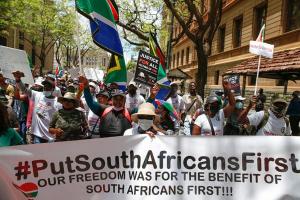 Our guest is Nairobi based political writer and strategist Clinton Nzala. He joins us to provide an update and an analysis of the South African anti-migrant March and March movement, which is…
 The Hague Group’s goal is to “. . . take coordinated legal and diplomatic measures against Israel’s violations of international law.” But international law was never a reality.
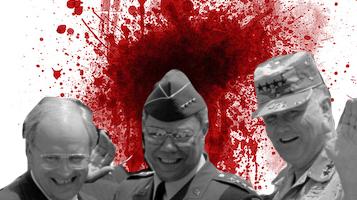 “I believe that the Movement of Nonaligned Countries…can buttress the united will of the Arab nation and help it to prevail against intervention and aggression.”
 There is no evidence that Eritrea has surrendered its Red Sea Coast in exchange for relief from US sanctions.


