Kip's Folly: A Black Commander for U.S. Forces in Africa
by Mark P. Fancher
"We can safely bet that the Pentagon will label African freedom fighters as terrorists and order good ole Kip to ‘suppress the restless natives.'"
 Army General William E. "Kip" Ward stands tall as imperialism's shining black prince. He has been anointed to head Africom, a rapidly unfolding plan to establish an expanded western military presence in Africa for the purpose of securing domination of the continent's oil and other natural resources. (Okay, okay - so they claim Africom is designed to quell internal strife and fight terrorism. But none of us believe that.)
Although Africom has triggered a wave of grumbling across the breadth of the African continent and into many corners of the African Diaspora, it's a pretty good bet that from the oil company executive suites, to the oval office, to the Pentagon, and on down to the fellas who hang out in the officer's club at the local Army base, General Ward is the man of the hour. Even his nickname has been made to order. Can't you hear the comments? "That Kip is a credit to his country, the armed forces and his race." "Why can't they all be more like Kip?"
With degrees from Morgan State University and Pennsylvania State University followed by 36 years of military service in Korea, Egypt, Somalia, Bosnia, Israel, Germany, Alaska and Hawaii, how can you beat this guy? He certainly must have been the kind of person retired generals had in mind when, during the last big affirmative action case to come before the Supreme Court the generals said:''... the military cannot achieve an officer corps that is both highly qualified and racially diverse'' without race-conscious remedies. And if the military can't do that, whose black faces can be used to give credibility to U.S. military operations in Africa?
"The General and so many Africans born in America drift into roles that require them to work against the interests of their people."
It is certainly possible that General Ward is a dedicated career military man who, with great sincerity, welcomes the opportunity to cap his long career with service to the continent of his ancestral origins. If so, that is precisely the problem. He and so many Africans born in America who have distinguished themselves professionally within corporate and government structures either naively miss, or deliberately ignore, their drift into roles that require them to work against the interests of their people.
In the case of Africom, this project is not divorced from a long history of efforts by Africa's people to wrest control of unquantifiable natural wealth, first from western governments that colonized the continent and more recently from multi-national corporations that exploit Africa with the assistance of black neo-colonial heads of African states. It has been necessary for many of these people's struggles to be carried out with arms in places like Angola, Guinea Bissau, Congo, Mozambique and Zimbabwe. Given the determination of exploiters to maintain their iron grip on valuable natural resources, even while Africa's people suffer and starve, it is certainly likely that armed struggle by genuine revolutionaries will occur again in other parts of the continent. When that happens, we can safely bet that the Pentagon will label the African freedom fighters as terrorists and order good ole Kip to "suppress the restless natives."
General Ward is not alone in his willingness to play the role of imperialist lackey. Barack Obama enthusiastically embraces the Africom concept. He uttered the following nonsense: "There will be situations that require the United States to work with its partners in Africa to fight terrorism with lethal force. Having a unified command operating in Africa will facilitate this action." If Ward and Obama were to rationalize their compromises with the tired excuse that Africom can't be stopped and "at least it will be under the control of a brother," we would be compelled to respond that our people's history shows that it doesn't have to be that way.
"Barack Obama enthusiastically embraces the Africom concept."
At the dawn of the 20th Century, when Buffalo Soldiers were directed by racist white commanders to suppress a rebellion by brown-skinned Filipinos, conscience prevented a number of these Africans from following those orders. During the Vietnam War, some of the brothers in the U.S. military did the same thing. In fact, Muhammad Ali, while at the peak of his career, was moved by conscience to bravely refuse to fight in Vietnam. He lost almost everything as a consequence. We must remember the 43 brothers stationed at Fort Hood, Texas who were prosecuted for refusing to attack anti-war protesters at the 1968 Democratic National Convention.
This tradition of refusing to participate in unconscionable U.S. military missions is alive even today. Consider that until the year 2000, U.S.-born Africans accounted for nearly 25 percent of Army personnel. By 2004, less than 16 percent of Army recruits were Africans. That percentage continues to decline. An Army study concluded that the attitudes of black youth were significantly shaped by their community, and the widespread opposition to the Iraq War in that community led to a rejection of military service. According to a Gallup Poll, 78 percent of whites supported the Iraq war, and 72 percent of blacks opposed it in 2003.
"General Ward stands poised to preside over an operation that possibly poses the most lethal threat to Africa and African people in the modern era."
Is it fair to demand that Ward commit career suicide by opposing Africom, or at least refusing to lead it? The short answer is yes. Since our arrival on U.S. shores, Africans have never had the convenient option of declining heroism. Unlike the majority demographic in this country whose individual decisions often have implications only for the individuals who make them, whenever we Africans take the easy road paved by an oppressive system, large numbers of our people are injured or killed as a consequence. Contemplate for only a moment the incredible number of lives of oppressed people and people of color that have been ruined or lost because of the opportunistic, self-centered careers of Clarence Thomas, Condoleezza Rice, and other lesser-known individuals of that ilk. General Ward stands poised to preside over an operation that possibly poses the most lethal threat to Africa and African people in the modern era. If on the question of whether to go forward as Africom's commander, Ward is to be guided by morality and his people's history, he has but one clear choice.
Mark P. Fancher is a human rights lawyer, essayist and activist. He can be contacted at mfancher@comcast.net.

 Sexual issues were loudly debated among anti-colonial activists in the Dutch Caribbean colonies of Curaçao and Aruba, said Chelsea Shields, a history professor at the City Universi
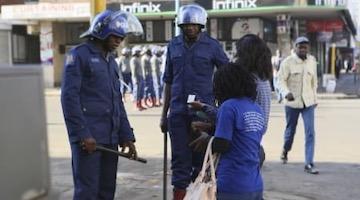 Black women “posed a problem” for the Black government that replaced white rule in Zimbabwe, because their bodies were thought to “disturb urban space,” said Rudo Mudiwa, a PhD in
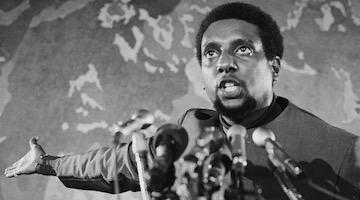 In the political hotbed that was Dar es Salaam, Tanzania, in 1967, US Black Power advocate Stokely Carmichael, who had not yet changed his name to Kwame Ture, made both friends and enemies among th
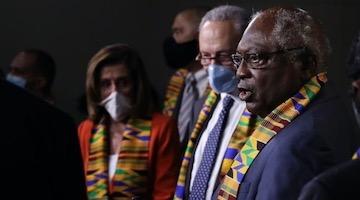 The Black misleaders have been busy selling out Black people for half a century, but are still only barely tolerated by the rich man’s Democratic Party and its racist figurehead, Joe Biden.
 The civil rights groups’ rather basic requests for voting rights protections and the need for federal intervention to address police brutality were minimized and dismissed by the president-ele



