by BAR columnist Jared A Ball, Ph.D. The world created by half a millennium of European conquest requires that Blacks be portrayed as non-human – which is why “we must begin to destroy the world.” That world works 24-7 to destroy Black people through the pervasive commercial imagery of “anti-Blackness.” These relentless assaults are more about enforcing the racial order, than monetary profit.
Hip-Hop and the “Anti-Blackness Antagonism” by BAR columnist Jared A Ball, Ph.D. “Only two corporations own minimally 80%, and usually upwards of 95%, of all the songs making the top 20 spins list on radio.”
In our recent discussion Red, White & Black: Cinema and the Structure of U.S. Antagonism
Wilderson’s examples include popular films such as Monster’s Ball and Antwone Fisher . But hip-hop and R&B lovers need not wait for the more intermittent film industry to see Wilderson’s points in action. Each week, and with a volume and popularity unmatched even by film, popular rap music becomes a bludgeon in the hands of this philosophy of “Anti-Blackness.” And were we to do Wilderson’s point justice more of us would highlight with more regularity the fact that the portrayal of Blackness in popular culture is not about making money, it is not simply a business decision and it is certainly not because it is what we want.
“Popular rap music becomes a bludgeon in the hands of this philosophy of ‘Anti-Blackness.’”
Any given week Through ownership and selective promotion via payment to radio stations these companies assure that their songs, and only their songs, are played as many as 20-40,000 times per song, per month. This means a UMG or Sony Music song is playing on commercial radio every minute of every hour of every single solitary day. This means no time for news and certainly no time for other songs. Look up the lyrics of any of these songs and the function they play is clear. This week’s most played song is by Sony artist Usher with lyrics that are only about a woman droppin it and poppin it on a dance floor. It was played 6859 times last week alone. And, again, this is not about money.
Reviewing the annual reports of these companies shows that in 2009 while Universal Music Group my be the largest music company in the world it accounted for only 14% of its parent company’s total revenues. The second largest, Sony Music, only accounted for 6% of the overall sales for Sony Corporation. And by the way, the third largest music company, Warner Music Group, is run by three private equity groups who, combined, manage funds of well over $110 billion. They don’t need popular culture for money. They need it to protect their sense of self and the just nature of their exploitation.
This is why we don’t see different kinds of films being promoted and why rap albums that have a different content are never on the radio. Mos Def has been in films that have grossed hundreds of millions of dollars around the world. But he is never on the radio. Common also has a budding movie career and has been an “Artist of the Year” award recipient but he too is rarely on the radio. It has nothing to do with quality of the art or what an audience is clamoring for. Audiences want what is promoted. Dead Prez
For Black Agenda Radio, I’m Jared Ball www.BlackAgendaReport.com
Jared Ball can be reached at: jared.ball@morgan.edu

 This book analyzes Early Modern English Drama as a form of cultural production in which the paradigm of Early Modern England was shifting to account for encounters with black Africans.
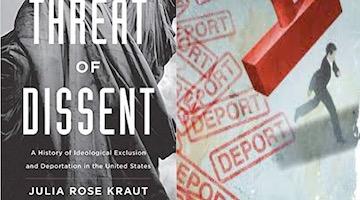 Ideological exclusion and deportation from the United States, and how they has been consistently used as tools of political repression.
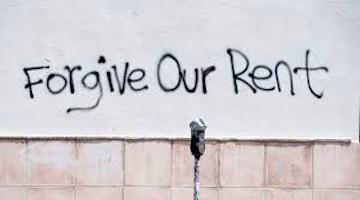 Over 40% of Black and Latinx households pay more than 30% of their income on rent, compared with 25% of white households.
 Black Agenda Radio for Week of July 19, 2021 Class Struggle Shapes Haiti Political Conflict
 In the wake of the jailing of former president Jacob Zuma on corruption charges, two South African provinces were swept by riots that current President Cyril Ramaphosa called an attempted “insurrec


