by BAR editor and senior columnist Margaret Kimberley
Want to hear a real life story of Black love in the time of slavery? Read a book. The fictional Django has nothing on the flesh and blood brother Madison Washington, whose love for his wife, his people, and freedom could fill a TV miniseries or several spaghetti westerns.
Freedom Rider: A Real Life Django
by BAR editor and senior columnist Margaret Kimberley
“Audiences cheering the exploits of the Django fictional character do so in part because they mistakenly believe that this work of fiction has no historical basis in it at all.”
Americans suffer because of a longstanding, deliberate and conscious effort to either obfuscate or to tell outright lies about their nation’s history. Millions of people will say that their country is the greatest in the world not merely because of patriotism, but because the true stories of our history have been disappeared by design. Perhaps the historical topic which is the least known in any substantive way, but which still impacts our lives in 2013, is slavery. Slavery determined how the Constitution is written, why our capital is located where it is, why wars were fought, and as a television show is titled, how the states got their shapes.
It is little wonder that a new film, Django Unchained, has generated so much controversy. The combination of a very painful subject and the lack of information which has been disseminated about it have made a movie a hot topic of conversation. Sadly that discussion has not been very useful.
The Django character is fictional, but history tells us about men who did in fact risk freedom to free their families still in bondage. One man, Madison Washington, failed in his goal to reach his still enslaved wife but succeeded in freeing himself and 130 other men, women and children in 1841.
Among the little known facts which have been lost as a result of the lies of omission and commission is that many thousands of enslaved people were transported within the United States via slave ship. Some were “sold down the (Mississippi) river,” others were transported on ships which plied the eastern and gulf coasts, taking their human cargo to slave markets in New Orleans and Galveston and Mobile and Savannah and Charleston and other cities.
“History tells us about men who did in fact risk freedom to free their families still in bondage.”
Madison Washington successfully fled from Virginia to Canada in 1839 or 1840 and remained there for approximately one year. While he succeeded in safely freeing himself, he longed to be reunited with his wife. Against the advice of abolitionists who assisted him, he returned to Virginia but was captured and re-enslaved. Along with 130 other men, women and children, he was on board the Creole and bound for the New Orleans slave market.
On November 7, 1841 Madison led an insurrection aboard the Creole and with help from his comrades sailed to Nassau in the Bahamas. The Bahamas were under British rule and as such had abolished slavery. The American government demanded that the Creole be returned and that the enslaved persons on board be returned to bondage. The American consul even attempted to retake the vessel, but failed to do so as a result of vigilance among the Bahamians. The British remained steadfast in upholding their laws, and while Washington failed to rescue his wife he succeeded in securing his freedom and that of 130 other people.
Madison Washington was not alone in using the ocean to free himself. Robert Smalls was hired out by his slaveholder as a dockworker and eventually learned to pilot a boat. On the evening of May 12, 1862 Smalls and a group of other enslaved men stole the CSS Planter from the Charleston, South Carolina harbor when the crew went ashore. They had plotted their escape for months and were able to stop and free their families before bringing the ship to the safety of the Union fleet. Smalls went on to serve in the Union war effort and after the war was elected to serve as a senator representing the state that was first to rebel against the Union.
“In general, slavery is swept under the rug, and the descendants of those held in bondage are left with little information or, worse yet, shame about their ancestors.”
Audiences cheering the exploits of the Django fictional character do so in part because they mistakenly believe that this work of fiction has no historical basis in it at all. Do they know that in reality hundreds of black men and women fought for their freedom? There were slave revolts and attempted revolts carried out by Nat Turner and Gabriel in Virginia and Charles Deslonde in Louisiana. Henry “Box” Brown mailed himself from Virginia to New York and made himself a freeman. Harriet Tubman was not content to free herself, but risked capture on numerous occasions to bring hundreds of others to freedom. She was en route to join John Brown at Harpers Ferry and assist in his plan for armed insurrection at the time that his actions were thwarted. Some failed while others succeeded, but there were never ending efforts to escape and resist what was one of America’s greatest evils.
During black history month the exploits of Harriet Tubman and other well known persons are remembered and celebrated, but in general, slavery is swept under the rug, and the descendants of those held in bondage are left with little information or, worse yet, shame about their ancestors. They don’t know that Wall Street functioned as a slave market, that all of the monuments in the nation’s capital, from the White House to the Washington Monument, were built by slave labor. The Second Amendment was a tool to insure that every white person could help enforce slavery, and the nation’s capital moved further and further south, from New York to Philadelphia to a city created on a swamp, to insure that slave holding power had physical control of the government.
That is the story which modern Americans ought to know. Controversies about movies make for good copy, but the ignorance about how slavery shaped this country’s history and the lengths that men and women endured to end it are sadly still hidden.
Margaret Kimberley's Freedom Rider column appears weekly in BAR, and is widely reprinted elsewhere. She maintains a frequently updated blog as well as at http://freedomrider.blogspot.com. Ms. Kimberley lives in New York City, and can be reached via e-Mail at Margaret.Kimberley(at)BlackAgendaReport.com.

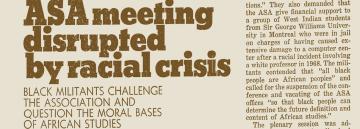 Black challenges to white control of African Studies at the 1969 African Studies Association meeting in Montreal exposed the deeply entrenched racism within, and the imperialist leanings of, th
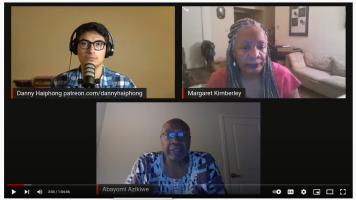 Abayomi Azikiwe of Pan-African News Wire joined Danny Haiphong and Margaret Kimberley to discuss AFRICOM and U.S./NATO imperialist actions on the African continent.
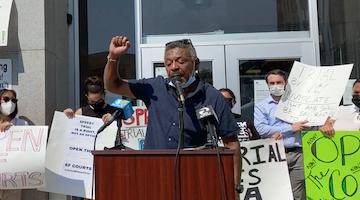 San Francisco Public Defender Manohar Raju spoke to Ann Garrison about why his office is suing San Francisco Superior Court for denying hundreds of Black and Brown people the speedy trial right
 In this series, we ask acclaimed authors to answer five questions about their book.
 Anti-China propaganda is intended to indoctrinate Americans with fear and hatred and gain support for war against that country and against socialism itself.


