by BAR editor and senior columnist Margaret Kimberley
Japan’s nuclear industry, which was never favored by majorities of the Japanese people, has been cracked, drowned and discredited by the earthquake and tsunami. Many U.S. reactors share the same design flaws and inherent dangers, yet “the United States government still has no real means of responding to disaster.” President Obama is America’s biggest booster of nuclear power – as well as the oxymoron, “clean coal.”
Freedom Rider: Japan’s Katrina
by BAR editor and senior columnist Margaret Kimberley
“The Obama administration is still pursuing increased nuclear energy capability and dismissing concerns about safety.”
There is an expression which was especially apt this past week. “Nature bats last.“ Natural disasters are a reminder of human impotence when volcanoes erupt, hurricanes make landfall, and the earth’s plates move and create earthquakes. We cannot control nature, but we can and should recognize how human actions can make these crises far worse than they would be otherwise. The construction of supposedly safe nuclear reactors in Japan is just the latest example of suffering caused by greed and political expediency.
The business of building new nuclear power facilities was all but dead in the United States until Barack Obama resurrected it in 2010. At the time he announced $8 billion in loan guarantees no new nuclear plants had been built in the United States in many years. They lacked public support ever since the Three Mile Island accident of 1979 and they were far too costly to build. In addition, the problem of storing nuclear waste was never resolved and presents serious health and safety problems that last quite literally for thousands of years. Of course nothing changes the game like money, and the Obama announcement brought this dying industry back to life.
If anything good emerges from the disaster in Japan it should be the final destruction of nuclear power. The earthquake-damaged Fukushima Dai-ichi plant exploded after technicians were unable to stabilize and cool its core. Six additional reactors at two different plants were in danger of reaching similar conditions and are said to be in various states of “partial meltdown.” It is astonishing that a country known for centuries of deadly seismic activity has invested so heavily in nuclear energy. Japanese government officials continued to promote nuclear power and minimize its risks even when it was clear that their nation was always in very grave danger.
“It is astonishing that a country known for centuries of deadly seismic activity has invested so heavily in nuclear energy.”
The United States is equally guilty of taking unnecessary chances with nuclear power. Despite the daily reports of a worsening situation, the Obama administration is still pursuing increased nuclear energy capability and dismissing concerns about safety.
If Japan, a nation more advanced in its concern for its citizens, is facing a nuclear catastrophe, the nation unable to protect one of its major cities from hurricane Katrina surely has no business following in its footsteps.
The salient points about the government response to hurricane Katrina were lost in a corporate media muddle focused on sensational images of tragedy. The United States government still has no real means of responding to disaster. The Federal Emergency Management Administration is no more reliable now than it was in the bad old days of Bush. When we see images of Japan, we ought to put ourselves in those pictures.
When Haiti was devastated by an earthquake its poverty and lack of development were assumed to be the reasons for great suffering. Yet even in industrial Japan, thousands of people are now without food, water or electricity. Nature doesn’t just bat last, but it trumps the best of intentions and capabilities.
“California, the American state most subject to earthquakes, has nuclear reactors that are even less secure and more vulnerable to damage than those in Japan.”
America will be in a worse state than Japan should such a disaster strike here. California, the American state most subject to earthquakes, has nuclear reactors that are even less secure and more vulnerable to damage than those in Japan.
The vague assurances coming from the Japanese and American government officials should be rejected out of hand. Already 17 American service members assisting in the rescue efforts have been exposed to what we are told are “low” levels of radiation. Words like “low” and “partial” cannot be accepted at face value. An assumption that dangers are understated is the best response to these reports.
Those environmentalists who were willing to go along with Obama administration plans for nuclear power have now been discredited. An unwillingness to take on the president and his party has once again been proven to be of dubious value. There will always be unexpected events in the natural world, and we can always expect that governments will do as little for the people of the world as they possibly can. Let the nuclear industry die off, and we will have one less reason to live in fear.
Margaret Kimberley's Freedom Rider column appears weekly in BAR, and is widely reprinted elsewhere. She maintains a frequently updated blog as well as at http://freedomrider.blogspot.com. Ms. Kimberley lives in New York City, and can be reached via e-Mail at Margaret.Kimberley(at)BlackAgandaReport.com.

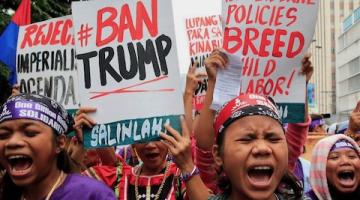 The struggle against systemic racism and the police state in the US is integral and linked to the struggle against US wars of aggression overseas.
 Community control of police and prison abolition have been completely removed from the conversations dictated by a mainstream and complacent narrative.
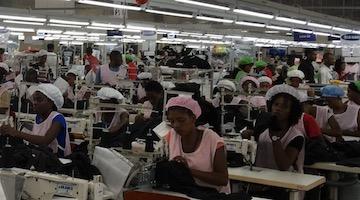 Global Displacements is an examination of the impact of the global organization of capitalist accumulation and exploitation on the life and labor of Haitian and Dominica
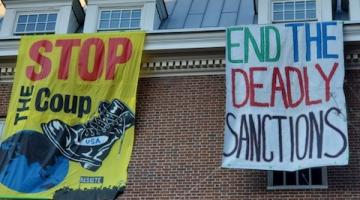 It was agreed that dropping the federal charges and seeking no jail time in return for pleading to a very low-level DC Code charge was an important victory.
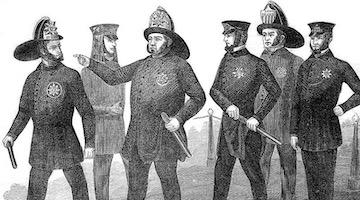 What has recently been condemned as corrupt and brutal policing is actually consistent with historical tradition of localized repression.



