A Black Agenda Radio commentary by Glen Ford
U.S. imperialism faces a “sea change” in the Arab World, but they have few tools to resist the revolt other the corrupt class of local accomplices who are the objects of the people’s rage and disgust. “It is a sure sign that the U.S. is panicking when President Obama flails about, pretending do be on the side of Egypt's popular rebellion while desperately maneuvering to keep men loyal to Washington in control.”
A Free Egypt Means Freedom From America
A Black Agenda Radio commentary by Glen Ford
“The realization grows that, if Egypt is to be free, it must throw out of power those who have profited by selling the nation to the Americans.”
The popular rebellion in Egypt has already taken years off the life of U.S. imperial power. Even if the rebellion somehow fizzled overnight – which cannot and will not happen – It has already engaged and enraged millions across the Arab world. A sea change is taking place in the region, the likes of which has not been experienced in at least two generations, and maybe not since the so-called “Arab awakening” following World War One. The Americans are in panic because, even with a military machine that is more expensive than the armed forces of the rest of the world combined, the United States does not possess the tools to control a whole people that are bent on achieving self-determination. And when it comes to the Arab world, we are talking about peoples with ties that bind across national borders, from the Atlantic to the Indian Ocean.
With the exception of the 2003 Iraq invasion, the United States has dominated the region mainly by co-opting or outright creating corrupt ruling classes in the various Arab countries. While the process may begin with cultivation of a strongman or a king, the subordination of a whole country to Washington’s will – especially a huge one like Egypt – requires that American corporations and global institutions of capital gain a stranglehold on the local political economy. A whole class of businessmen is created who are allied with foreign, corporate powers, not their own countrymen. Their job is to make their countries safe for foreign capital and willing tools of American foreign policy – and, in the case of Egypt and Jordan, even partners with Israel.
“The United States does not possess the tools to control a whole people that are bent on achieving self-determination.”
In order to fulfill their deal with U.S. imperialism, the local rulers have no choice but to wage constant war against their own people. These corrupt politicians and businessmen’s arrangement with Washington requires that they crush the national aspirations of their fellow citizens. There is no escaping the logic of the police state unless the country is freed from the grip of imperialism, which is a form of foreign rule.
That’s why it is a sure sign that the U.S. is panicking when President Obama flails about, pretending do be on the side of Egypt's popular rebellion while desperately maneuvering to keep men loyal to Washington in control. Men like the former chief of intelligence, Omar Suleiman, Hosni Mubarak's handpicked vice-president who was also America's go-to guy for extraordinary rendition in the so-called War on Terror. But the Egyptian people know him better as the man who has waged a war of terror on them. And there are plenty of Egyptian Suleimans in Washington's service – in government, in the military, and in business. Actually, they're all in the business of profiting from imperialism.
That's why the protesters in Tahrir Square keep expanding the list of men that are unacceptable to Egypt's future. It started off with one person: Mubarak. Now, as the revolution progresses, the list of its enemies becomes larger, as the people realize that a whole class of traitors to the nation must be disempowered. The realization grows that, if Egypt is to be free, it must throw out of power those who have profited by selling the nation to the Americans. And the rest of the Arab world learns the same lesson. And with all its military might, Washington has no idea what to do if it loses its Arab accomplices with U.S. imperialism. For Black Agenda Radio, I'm Glen Ford. On the web, go to www.BlackAgendaReport.com.
BAR executive editor Glen Ford can be contacted at Glen.Ford@BlackAgendaReport.com.

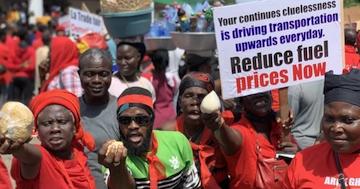 The 2001 Dakar Manifesto had a simple but unassailable claim: the total and unconditional cancellation of the odious African debt.
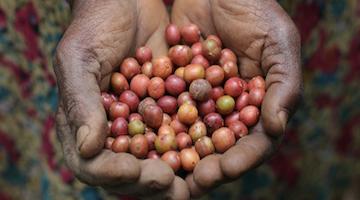 Food production in Africa is complicated by climate change and the use of fertilizers which increase food production but which also create green house gases and create other environmental harm.
 …
… Onyesonwu Chatoyer of the All-African People's Revolutionary Party and BAR Book Forum Editor Roberto Sirvent discuss how "We Can Save Ourselves."
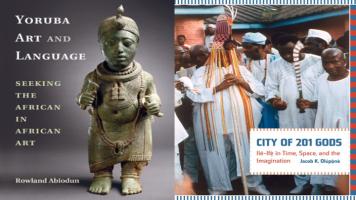 This week’s featured scholar is Ayodeji Ogunnaike. Ogunnaike is an assistant professor at Bowdoin College where he teaches interdisciplinary courses on Africa and the African Diaspora highlighting…


