A Black Agenda Radio commentary by Glen Ford
The United States and France, once thought of as imperial competitors, act as military tag team partners in Africa. France puffed up like a hyper-aggressive peacock in the assault on Libya, and now strikes unilaterally against Islamists in Mali. But the junior imperialist’s brashness comes with the confidence that the superpower has its back.
France and the U.S. Play Tag-Team in Africa
A Black Agenda Radio commentary by Glen Ford
“Only the United States has the logistical capacity to maintain a long war over great distances in Africa.”
The French military has taken the lead in attacking Islamists in the former French African colony of Mali. If recent history is any guide, the United States will be not far behind. Remember that France was, initially, the most aggressive in calling for a NATO war against Libya, in 2011. But the fact is, only the United States has the logistical capacity to maintain a long war over great distances in Africa. Without U.S. refueling tanker aircraft and the awesome infrastructure of U.S. Navy carrier groups, NATO’s eight-month assault on Libya would have been impossible.
In the same way, France would never have committed to putting at least 2,500 ground troops into Mali without assurances that the American superpower has its back. Without U.S. airlift capacity and other logistical support, neither France nor the West African nations of the region can hope for a swift victory over the rebellious Tuaregs of northern Mali.
The war in Mali is a direct result of the Euro-American aggression against Libya. The Tuareg people live in deep poverty. Many found employment in Muammar Gaddafi’s Libya, as did immigrant workers from elsewhere in Africa. Some worked with Libyan security services. When Libya’s government was brought down by the U.S. and its allies, the Tuaregs gathered up as many weapons as they could in the chaos and headed south for home.
Many other Tuaregs never left, and were employed by the Malian Army and its sugar daddy, the United States. The year after 9/11, the U.S. military established its Pan Sahel Initiative, enlisting the militaries of Mali, Niger, Chad and Mauritania into America’s so-called War on Terror on the African front. By 2005, the U.S. had added Algeria, Morocco, Senegal, Nigeria and Tunisia to what was now called the Trans-Saharan Counterterrorism Initiative. This was the beginning of AFRICOM, the U.S. Africa Military Command, which assumed control in 2008.
“The war in Mali is a direct result of the Euro-American aggression against Libya.”
In Mali, the Americans relied heavily on Tuareg soldiers to fight their war against Islamists and independence fighterss in the northern part of the country. But when their Tuareg brothers returned from Libya, three of the four Malian military commanders in the north defected to the rebels , which then led to the virtual collapse of the Malian Army.
Now the French, as the former colonial master, have sent their warplanes to strike at the Tuareg fighters and are preparing to send in 2,500 French soldiers. A regional African force was not scheduled to come to the aid of the Malian army until September, but with the rebel advance and the French response, that timetable will be speeded up. The Americans will be arriving soon, with their massive airlift capacity. And soon the U.S. will have serious boots on the ground in Africa, when a 3,500-member combat brigade from Fort Riley, Kansas, arrives to hold exercises with military units from 35 African countries, later this year. It seems more likely that the brigade will find itself in an actual war in the Sahel.
Back in October of 2011, we wrote that NATO’s “attack on Libya threatens to set the whole northern tier of Africa ablaze,” providing “a pretext for further U.S. and French operations.” In the east, the Horn of Africa is already in flames, and central Africa has become a cemetery for millions. Now it is the Sahel’s turn to burn.
For Black Agenda Radio, I’m Glen Ford. On the web, go to BlackAgendaReport.com.

 In this series, we ask acclaimed authors to answer five questions about their book. This week’s featured author is Habiba Ibrahim. Ibrahim is Associate Professor of English at the University of…
 April Goggans is an organizer with Black Lives Matter in Washington DC. After years of FOIA requests she has been granted a hearing to determine if the Metropolitan Police Department are required to…
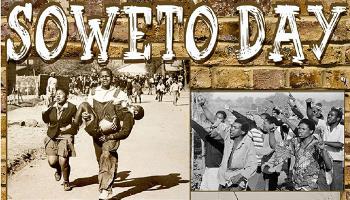 Worldwide outrage over the killing of Soweto youth protesting on June 16, 1976 was a turning point in South African history. But the end of apartheid was not the end of racist oppression or corporate…
 The U.S. excluded Cuba, Nicaragua and Venezuela from the recent Summit of the Americas held in Los Angeles. While there was widespread condemnation against the U.S., only six heads of state had the…
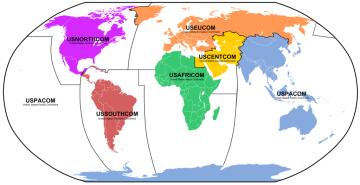 The latest Black Alliance for Peace AFRICOM Watch Bulletin provides analysis of the U.S. Southern Command and includes an interview with Ahjamu Uni, organizer with the All African People's…


