A Black Agenda Radio commentary by executive editor Glen Ford
It’s taken 12 years, but victims of South African apartheid finally convinced a U.S. federal judge to hear their case against IBM and Ford Motor. The plaintiffs say the two multinationals sold the white regime the products it needed to torture and oppress the Black majority – and that the companies intended their vehicles and computers be used for that purpose.
Ford and IBM May Have to Answer for Their Role in Apartheid
A Black Agenda Radio commentary by executive editor Glen Ford
“The judge rejected Ford and IBM’s contention that multinational corporations are legally shielded from these kinds of lawsuits.”
The United States court system, whose value to anyone but the rich is rapidly disappearing, may yet play a role in the unfinished business of South African liberation. A federal district judge in Manhattan ruled that a group of South Africans can proceed with a suit against Ford Motor Company and IBM
That’s a very high burden of proof. However, it’s a better shot than the U.S. Supreme Court gave to a group of Nigerian refugees who tried to sue Shell Oil for helping the Nigerian military to systematically torture and kill environmentalists in the 1990s. The High Court’s interpretation of the relevant U.S. law was that the crimes committed in Nigeria didn’t have a close enough connection
This week, federal judge Shira Scheindlin – the same judge who issued the sweeping ruling against New York City’s stop-and-frisk policies, last year – gave the South African plaintiffs permission to make their case. She also rejected Ford and IBM’s contention that multinational corporations are legally shielded from these kinds of lawsuits. Judge Scheindlin found no basis in law to argue that international laws against such things as genocide, slavery, war crimes and piracy “apply only to natural persons and not to corporations.”
“The South African government failed to prosecute perpetrators from the old regime and paid out only paltry reparations to the victims.”
The South African plaintiffs are part of the Khulumani Group who wrote
Thanks to the Khulumani Group’s lawsuit in Manhattan, two U.S.-based multinational corporations may finally have to explain why they gave aid and comfort to South African apartheid.
For Black Agenda Radio, I’m Glen Ford. On the web, go to BlackAgendaReport.com.
BAR executive editor Glen Ford can be contacted at Glen.Ford@BlackAgendaReport.com .

 Priest App
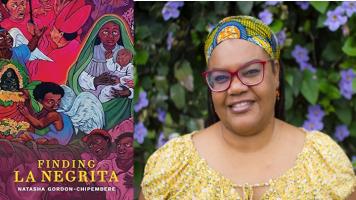 This week’s featured author is Natasha Gordon-Chipembere. Gordon-Chipembere holds a PhD in English from the University of South Africa. She was born in New York to a Costa Rican mom and a Panamanian…
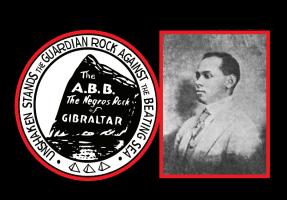 The author makes the case that liberalism is a dead end and that socialism is the only tool for Black liberation.
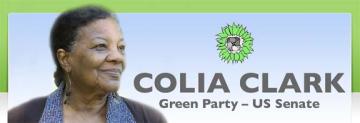 Colia Clark was a veteran of the Black Liberation Movement who worked with Medgar Evers, who was also affiliated with the NAACP and who served as Executive Secretary of the Student Non-Violent…
 Imperialist wars and capitalist predation have accelerated the pace of migration from North African nations. The climate crisis worsens structural inequality between the global south…


