by BAR managing editor Bruce A. Dixon
One of the most accurate predictors of which prisoners will be re-incarcerated is the number and depth of their connections maintained with family on the outside. Jailers on the federal state and local level have long cut deals with phone companies to make huge profits on calls between prisoners and their families. Thanks to years of patient grassroots activism, that might be about to end.
FCC Opens Rulemaking Process To Lower Price of Prison Phone Calls
by BAR managing editor Bruce A. Dixon
Some years ago, one of my own children was in prison on the other side of the continent. She used to call home 15 minutes each Sunday night. That brief weekly phone call cost our family almost $100 each month. We were not alone.
The families of millions of federal, state and local prisoners have been viciously squeezed by the legal collusion of long distance phone companies with jailers from the Federal Bureau of Prisons down to state departments of corrections and local sheriffs. Federal regs require phone companies to deliver cheap local phone service, with a locality usually defined as the telephone exchange, the first three digits after the area code. Rates for calls outside an exchange however, were classified as “long distance,” and not subject to rate controls.
Phone companies made deals with jailers for exclusive access to their prisons and jails in return for lucrative one time kickbacks or a percentage of the gross, along with the occasional campaign or charitable contribution. For the jailers and phone companies it was a classic win-win situation in which everybody at the table got over, except of course prisoners and their families. Researchers attempting to gather information on the actual rates across the country have often been met with non-cooperation on the part of state and local officials reluctant to divulge their manifestly corrupt deals which have constructed this onerous toll booth blocking communication between prisoners and their families.
Ten years ago a grandmother filed a petition with the FCC noting that a five minute call with her grandson cost $18. In the decade since agitation and organizing across the country has finally moved the Federal Communication to take the first tentative step to remedy the problem. On December 28, 2012, the FCC finally issued a "Notice of Proposed Rulemaking , ” the beginning of the period in which it assembles information and takes public comment prior to the issuance of new rules.
At some point in the next few months a period of open public comment will ensue, in which members of the general public can weigh in online, by mail or in person on the issue. The place to go for updated information is www.phonejustice.org , that's www.phonejustice.org .
We need to re-integrate and absorb those currently behind prison walls into our families and communities. The cost of communicating with our relatives behind those walls must come down.
Visit phonejustice.org and sign up for their email list to keep our families connected. For Black Agenda Radio, I'm Bruce Dixon. Find us on the web at www.blackagendareport.com .
Bruce A. Dixon is managing editor at Black Agenda Report. He lives and works near Marietta GA and is a member of the state committee of the Georgia Green Party. He can be reached via this site's contact page, or at bruce.dixon@blackagendareport.com.

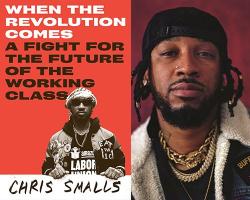 Chris Smalls discusses his memoir, "When the Revolution Comes: A Fight for the Future of the Working Class," published by Penguin Random House. He is the first and only union leader to successfully…
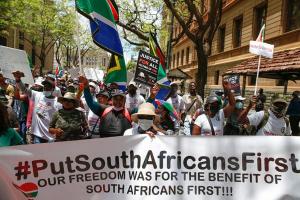 Our guest is Nairobi based political writer and strategist Clinton Nzala. He joins us to provide an update and an analysis of the South African anti-migrant March and March movement, which is…
 The Hague Group’s goal is to “. . . take coordinated legal and diplomatic measures against Israel’s violations of international law.” But international law was never a reality.
 “I believe that the Movement of Nonaligned Countries…can buttress the united will of the Arab nation and help it to prevail against intervention and aggression.”
 There is no evidence that Eritrea has surrendered its Red Sea Coast in exchange for relief from US sanctions.


