by BAR editor and columnist Jared A. Ball
Just because millions of people can interact at the speed of light, does not mean they are going anywhere. Indeed, by providing the illusion of common action, social media tend to suppress the kind of methodical organizing necessary to sustain a real “movement.” And, who owns the new media, anyway? The super-rich. Social media are “perfect for illusion-development and propaganda dissemination but horrible for the oppressed engaged in political struggle.”
The Evangelists of Social Media
by BAR editor and columnist Jared A. Ball
“All this persistent chatter about new media technology improving the world – and improving even radical political organization – is little more than a de facto public relations campaign.”
The “evangelists of social media,” according to Malcolm Gladwell, want us to believe that the revolution we all want has simply been awaiting Twitter or Facebook accounts. And having now achieved them by the hundreds of thousands these evangelists would have us believe that success – political, economic or social – is inevitable. But all this persistent chatter about new media technology improving the world – and improving even radical political organization – is little more than a de facto public relations campaign. Somehow that which happens to increase the ability of the “superclass” to enrich itself and promote its interests can also, coincidentally, make possible the revolution that will overthrow them. Its pure propaganda, the effect of which is to help reduce our capacity to develop radical political movements.
There would seem, also coincidentally, more than a passing connection between the deplorable state of radical politics in this country and this rising mythology of “social media” leading us to a new organizational promised land. More than a few speakers and participants at the recent One Nation rally congratulated Facebook and Twitter users for helping to mobilize more people faster than at any other time in history. This is actually a popular theme among activists at most of their gatherings these days. But worse still was that these voices included NAACP President and Chief Executive Officer Benjamin Jealous. The statement was made as if this storied organization, whatever we may think of it, had never before been able to organize its members. As if the problem the NAACP has faced all these years was an inability to move so many so quickly. This praises speed at the expense of careful education and reasoning. Or was the NAACP’s involvement merely a hired response to an even more compromised labor movement?
“The internet gives us weakly-tied lose bonds of “networks” which create mobs of uninformed, untrained, ill-prepared sheep.”
Remember, Rosa Parks did not sit down that day as some random act of a tired worker. She did so because she had been trained to do so since she joined the NAACP in 1932. We discredit our struggle by dismissing acts of courage as simple accidents as opposed to the results of careful planning and strategy. The original March on Washington had at least as many participants as this One Nation silliness. The Million Man March, also in the pre-internet era, had 10 times more. Shoot, African people in this country have been fighting so long to develop powerful and threatening alternative methods of communication that as far back as 1775 John Adams, fearing the impending rebellions that came with reasoned, planned and strategic communication noted that “The Negroes have a wonderful art of communicating intelligence among themselves.”
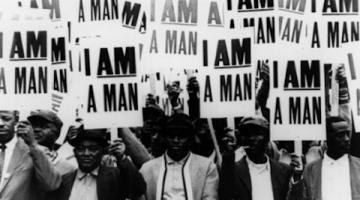
The speed of the internet is more than mitigated by the absence of thoughtfulness, intimate strategy and reasoned planning that most often accompanies it. If anything, we should consider this the intent of military technology imposed on us with the sleekest of public relations techniques. While it may at times make our lives easier it can also quickly give us any number of branded phenomena from tennis shoes to presidents, from movies to social movements. This in part is Gladwell’s point. The lunch counter takeovers that launched the modern civil rights movement occurred at the tail end of planning, strategy, training and all with a “military precision” from what he calls the “strong-tie” intimacy of ordered, hierarchical organization. On the other hand, the internet gives us weakly-tied lose bonds of “networks” which create mobs of uninformed, untrained, ill-prepared sheep perfect for illusion-development and propaganda dissemination but horrible for the oppressed engaged in political struggle.
Our use of the internet should be only to promote support for locally-based community media, from community, low-power and mixtape radio ventures to intimate in-person grassroots political organization. Gladwell was indeed correct, “the revolution won’t be tweeted” and neither will it be cheap, easy or come at the speed of a clicking mouse.
For Black Agenda Radio I’m Jared Ball. Online visit www.BlackAgendaReport.com.
Jared Ball can be reached at freemixradio@gmail.com.

 This book focuses on whether discrimination and violence against Muslim women are sanctioned by the Qur’an, as critics of Islam allege.
 Let’s not allow our revolutionary wish-list to keep us from appreciating the ways this film intervenes—with force and clarity—in our present American political discourse.
 Once we are able to secure Community Control over Police and ensure that entire communities are empowered to exercise such control, we will be free to re-imagine and re-envision the very nature of
 The author, a former corporate journalist like Hedges, reminds him that white workers betrayed Black workers and class solldarity, not the other way around.
 Together, we can demand that one of the wealthiest nations on earth upholds its responsibility to provide the basic necessities for its people.


