A Black Agenda Radio Commentar y by BAR managing editor Bruce A. Dixon
For the black political class, the question “is it racist?” has become a substitute for inquiry into causes and cures, not least because so many of them are complicit in austerity and privatization schemes themselves. Circling the racial wagons is something we've done many times before, and poverty, the prison state and privatization are still all around us. Isn't it time to ask some new questions.
Emergency Managers? School Closings? Are They Racist? Does It Really Matter?
A Black Agenda Radio Commentary by BAR managing editor Bruce A. Dixon
In early 2009, during the first few weeks of the Obama administration, I was one of the folks planning a public discussion on health care in Atlanta. Most of those I worked with wanted the discussion to focus on single payer, Medicare-For-All. But for an uncomfortable week or two one of the organizers stalled the plans by insisting that instead of educating our audience and the public on how a single payer health care system was the only way to control costs, create new jobs and provide quality health care, that we ought to be concentrating instead on exposing race-based disparities in health care availability and outcomes.
In other words, let's not examine a proposed solution to the problem. Let's instead circle the wagons, highlight the racial disparities, and have a conversation on just how racist the whole thing is, as though rediscovering the existence of racism (surprise! Surprise!) in yet another realm of American life is a worthy end in and of itself.
This was no academic question. These were the very weeks during which newly elected President Obama, a one-time proponent of single payer who had promised that every reasonable solution to the the nation's health care crisis would be considered, a time during which the White House did everything it could to keep any mention of single payer health care off the table. As a candidate for Senate from Illinois, Obama had declared himself for single payer health care . But soon afterward Senator Obama had embraced what Massachusetts residents called Romneycare , after their then-governor Mitt Romney, who simply required every Massachusetts resident to purchase a private health insurance policy, made some policies available through a state “exchange”, and levied a tax on anyone without private health insurance. Nowadays “Romneycare” is called “Obamacare.” Go figger.
The emphasis on highlighting disparities as an end, rather than examining and comparing solutions proved useful to the White House, which defended Obamacare on the grounds that it would extend private insurance and Medicaid to some large number of new persons and thereby allegedly reduce the disparities. The coming of austerity and the fine print of course may keep it from doing even that, but the point here is that our black political class has adopted a methodology under which the hunt for and discovery of racism in every act of public policy and some other places too has become an industry, separate and absolutely divorced from any attempts to examine, let alone change the public policy.
So we hear the mayor of Chicago, in keeping with Obama's Race To The Top policies of educational privatization, wants to close 50-some Chicago public schools, mostly in black and brown neighborhoods. Is it racist? Sure. What does that tell us? Half the black people in Michigan have had local government taken from them to divert their taxes straight to banksters and privatize their public assets. Is that racist too? OK, what then?
The “what then” answer provided by our black political class is well ---- nothing. Register to vote, maybe, elect more folks, patronize black businesses or something. It's politically bankrupt. The never-ending, and always fruitful search for racism, and racial disparities has become an industry in and of itself, because it's all our black political class can offer, without questioning capitalism itself. And that is something they can't bring themselves to do.
For Black Agenda Radio I'm Bruce Dixon. Find us on the web at www.blackagendareport.com.
Bruce A. Dixon is managing editor at Black Agenda Report, and a member of the state committee of the Georgia Green Party. He lives and works in Marietta GA and can be reached via this site's contact page, or at bruce.dixon(at)blackagendareport.com.

 Every U.S. action intended to increase its power actually results in it being diminished. Multipolarity is here to stay.
 Scouting day dreaming, dreaming, anticipating a Hollywood Bowl where some master painter splashed stars all over night’s navy blue canvas…
 This week’s featured scholar is Adam Bledsoe. Bledsoe is Assistant Professor of Geography at the University of Minnesota. His article “Neither Ground on Which to Stand, nor Self to Defend: The…
 "Abolition" is the word of the moment. But what does it mean? How should it be taught? Robert Sirvent and Sarah Abdelaziz discuss.
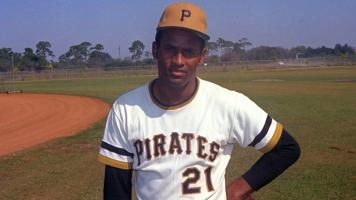 Roberto Clemente was one of the all-time great baseball players and one of the best in a long line of Afro-Latinos. He also acted in solidarity with people around the world, which ironically led to…


