by BAR managing editor Bruce A. Dixon
Some so-called civil rights leaders talk up economic boycotts over Trayvon Martin, the same way some of them did over Troy Davis a few months ago, and the state of Ariizona before that. But what if economic boycotts really don't work for stuff like that? What are these so-called leaders really doing, and why?
Economic Boycotts Over Trayvon Martin Are Cynical Misdirections of a Potential Movement
by BAR managing editor Bruce A. Dixon
The calls made most notably by Rev. Al Sharpton for economic boycotts of Sanford Florida for Trayvon Martin and in the case of brutally beaten Georgia prison inmate Terrance Dean, for boycotts of certain Georgia products are at best deeply wrongheaded, and more likely cynical and deliberate misdirections of popular outrage.
Think about it. Economic boycotts are the tools of choice when you do not have direct access to the powerful people making the decisions. When you call for an economic boycott of Arizona or Florida or Georgia, what you're trying to do is cause economic distress to some wealthy interests, in the hope that they will importune unidentified fellow members of the ruling elite to make some of the changes you need.
Economic boycotts were used in the early and mid-twentieth century by Chinese and Indians fighting for control of their own countries against colonial powers. In the late twentieth century, global economic boycotts mounted in the US and elsewhere were potent political weapons against the South African apartheid regime, and are indispensable tools in the fight against Israel's version of apartheid and its brutal 60 year occupation.
But the decision makers and levers of power over brutal police departments, arbitrary prosecutors and the runaway prison state are not somewhere across the ocean. They the governor's office in every state, the sheriff and prosecutors in every county. They are the Congress, the White House, and the legislators in every state. They are the mayors in every city and town who hire and fire the police chiefs that carry out the policies of aggressive hyper-policing in black and brown communities across the land. Just about every extended family contains prisoners or former prisoners, and almost as many have cops, sheriffs and prison guards as well.
When so-called civil rights leaders tell us we need an economic boycott to reach out and touch these people and their offices, they are misleading and lying to us.
Why do they do this. Some of them are business school graduates who actually believe what they learned in school --- that the market is some kind of divine power that watches over everything. It's not. Some propose boycotts because they just don't know what else to do, and are too busy safeguarding their places as intermediaries representing people who have problems to actually solve those problems. Still others assure us that the vote is power, the vote is the solution, even though Democrats, black ones included, are heavily complicit in the prison state themselves. Their job is to bottle up the widespread outrage around the latest vigilante killing, police atrocity or state-sponsored murder and redirect it into safe channels that threaten nobody and change nothing.
These are leaders who don't want to march on or occupy state houses, city halls and the White House with clear demands to end the drug war, to provide jobs and justice and commence a dialog on how begin rolling back the prison state. Real movements start with real demands, and a refusal to go home until they are heard. We invite you to sign the Trayvon Martin petition at ushrnetwork.org --- that's ushrnetwork.org, and to boycott the next fool who tells you to boycott somebody else for Trayvon Martin.
For Black Agenda Radio, I'm Bruce Dixon. Find us on the web atwww.blackagendareport.com .
Bruce A. Dixon is managing editor at Black Agenda Report, and a member of the state committee of the Georgia Green Party. Contact him at bruce.dixon(at)blackagendareport.com.

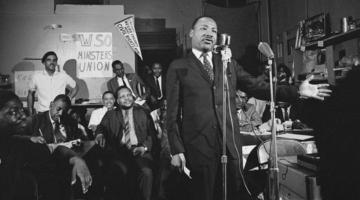 The annual ritual of sanitizing Martin Luther King Jr. serves to obscure his radical anti-war politics, which are urgently needed to challenge U.S. imperialism.
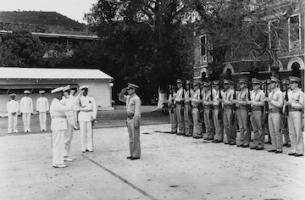 “[T]he United States on March 31, 1917,...acquired the three Danish West Indian isles…subsequently rechristened “the Virgin Islands of the United States.”
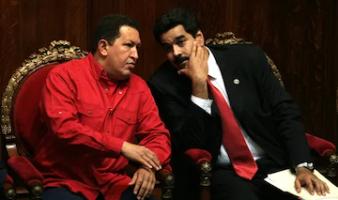 Attorney Dan Kovalik is an attorney representing Colombian President Gustavo Petro. He is also author of The Plot to Overthrow Venezuela: How the US Is Orchestrating a Coup for Oil. Skyhorse…
 "Spinning Half-truth straw into big lie gold…" is the latest from BAR's Poet-in-Residence.
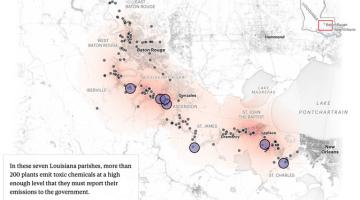 True environmental liberation demands south-to-south solidarity against racial capitalism, linking the struggles of oppressed communities from Palestine to Louisiana under a shared framework of…


