by BAR columnist Jemima Pierre
The indefatigable Dominic-Haitian activist Sonia Pierre died recently, at age 48, outlived by the deep racism that poisons her homeland’s society. “Anti-Haitianism is deeply embedded in Dominican society and has spawned continued mob attacks and lynchings, as well as other sanctioned acts of violence against Haitians or Black Dominicans assumed to be Haitian.” Dominican national identity is entwined with anti-Blackness and anti-Haitianess – which are the same thing. “To be Dominican, then, was to be Hispanic and Catholic, and anything but Black.”
The Dominican Republic Hates Black People
by BAR columnist Jemima Pierre
“In the Dominican Republic the cause is the consequence: you are Black because you are Haitian; you are Haitian because you are Black.”
On December 2, 2011, the Supreme Court of the Dominican Republic upheld a racist law denying citizenship to the children of Haitian immigrants born in the country. Two days later, Sonia Pierre, the indefatigable activist for the human rights of those Dominicans of Haitian descent denied citizenship under the law, died suddenly at the age of 48. The Dominican anti-Haitianism that Sonia Pierre fought her entire life has outlived her, and it will continue inflicting damage on a long-hated segment of the Dominican population: its Black citizens.
Born in the “batey” (the impoverished rural settlements for the mostly Haitian sugar cane cutters for the Dominican sugar industry) to Haitian parents, Ms. Pierre experienced the humiliation that accompanied the social, economic, and legal barriers of Haitian immigrants and Dominicans of Haitian descent in the Dominican Republic. She began her fight early—she was arrested at the age of 13 for leading a strike of sugar cane workers—and has since been the most outspoken critic of the unrelenting xenophobia, racism, and sexism faced by Dominico-Haitians. She has worked incessantly to guarantee citizenship rights for children born on Dominican soil, regardless of parentage, and her work, recognized around the world, was often derided in her own country.
“A deep-seated racism in Dominican society which affects dark-skinned people in general and Haitians and Dominico-Haitians in particular.”
To borrow the phrasing of Frantz Fanon, in the Dominican Republic the cause is the consequence: you are Black because you are Haitian; you are Haitian because you are Black. This reasoning, circular though it appears, undergirds the logic of Dominican anti-Black anti-Haitianism. Carmen Mojica describes anti-Haitianism as the “present manifestation of the long-term evolution of racial prejudice, the selective interpretation of historical facts, and the creation of a nationalist Dominican consciousness.” This anti-Haitian and anti-Black racial prejudice emerged at the beginning of the European colonization of what they dubbed “Hispaniola,” the island shared by the Dominican Republic and Haiti. The Spanish inhabitants of the eastern side of the island were adamantly against the Blacks of the western side of the island who had defeated Napoleon’s armies in 1804 to form the first Black Republic—Haiti. When the newly formed Haitian state occupied the entire island to prevent the return of European rule and slavery, Spanish animosity towards Haiti increased. The push back against Haitian control of the island was accompanied by anti-Black propaganda; the Dominican elite—who always aligned themselves with the “whiteness” of Spain—talked of Haitians as heathens, savages, and African voodoo worshipers who were not fit for civilization. Because the Dominican Republic also had large numbers of Blacks and mulattos, they needed to create a sense of Dominican identity that had nothing to do with Blackness. To be Dominican, then, was to be Hispanic and Catholic, and anything but Black. To be Haitian was to be Black. In fact, despite its history of slavery, most Dominicans are loathed to describe themselves as “Black.”
“The Dominican elite sees their Black selves in the faces and bodies of the Haitians, are embarrassed by it, and have been trying for more than two hundred years to kill it.”
This anti-Black, anti-Haitianness was taken to its logical conclusion under the dictatorship of Rafael L. Trujillo. In October 1937, Trujillo ordered the massacre of Haitians living and working in the border areas of the two countries. Over a period of five days, approximately 30,000 Haitians were brutally killed with guns, machetes, and knives by Dominican troops, civilians and local political authorities. Some were killed while trying to escape across the aptly named “Massacre River” into Haiti. The reasons for this massacre vary but Trujillo’s anti-Blackness was key. However, in an absurd twist it was so difficult to distinguish the Haitians from the Dominicans that the soldiers seeking Haitians needed to listen for the Haitian accent in the Spanish word, “perejil” (parsley) to determine the difference between non-Black “native” and Black “foreigner.”
The reality is that anti-Haitianism (antihaitianismo) in the Dominican Republic is Dominican self-loathing anti-Blackness. The Dominican elite sees their Black selves in the faces and bodies of the Haitians, are embarrassed by it, and have been trying for more than two hundred years to kill it. In the process, thousands of Haitians have paid and continue to pay the price.
Currently, there are an estimated 500,000 to one million Haitian immigrants and Dominican children of Haitians parents in the Dominican Republic. As Christian Aid, among others has reported, the “problem” of Haitians in the Dominican Republic stems from “a deep-seated racism in Dominican society which affects dark-skinned people in general and Haitians and Dominico-Haitians in particular.” Sonia Pierre devoted the majority of her life working against this racism and for the human rights of Dominico-Haitians. In 2005, her organization, MUDHA (Movement for Dominico-Haitian Women), presented a case against the Dominican Republic at the Inter-American Court of Human Rights on behalf of two Dominican children with Haitian parents who were denied Dominican birth certificates, despite proof of their births in the country. When human rights court voted against the Dominican Republic, the Dominican media savaged Ms. Pierre, while the country’s supreme court was unrepentant. It changed its classification of long-term Haitian immigrants to that of “transients,” claiming that children born to such group did not merit Dominican citizenship.
“Despite its history of slavery, most Dominicans are loathed to describe themselves as ‘Black.’”
And while the Dominican Republic gained recognition for its efforts to aid Haiti after the January 2010 earthquake, it also used the opportunity to ramp up its anti-Haitianism. Two weeks after the earthquake the Dominican government even amended the country’s constitution to deny citizenship to children born in the Dominican Republic to foreign parents. The amendment was seen as directed specifically against Dominico-Haitians. As a result many Dominicans of Haitian origin were denied the renewal of their identity documents such as passports, cedula (ID card) and birth certificates. Furthermore, the new constitution had the provision to make the law retroactive, revoking the citizenship of thousands of Dominicans of Haitian ancestry, effectively rendering them stateless and without human rights. Even Sonia Pierre, who is well known as Dominican-born, needed special intervention to receive a copy of her birth certificate.
Pierre always said that she was “not against the Dominican Republic” which she considers her country, but against the actions of her government. But she also realized that this anti-Haitianism is deeply embedded in Dominican society and has spawned continued mob attacks and lynchings, as well as other sanctioned acts of violence against Haitians or Black Dominicans assumed to be Haitian. Pierre herself was not immune from these attacks and, as a recent article in Defend Haiti noted, “powerful sectors in the Dominican Republic including members of civil society and the Catholic hierarchy, politicians and relatives of the government of President Leonel Fernandez have called Ms Pierre a “cancer” for the Dominican Republic.” It is, however, anti-Blackness and anti-Haitianism that are the real cancers of that society.
Pierre fought against Dominican racism. She fought as a Black Dominican, and ultimately for the recognition of Black humanity. It is a struggle that we in the African Diaspora must continue. Jemima Pierre can be reached at BAR1803@gmail.com

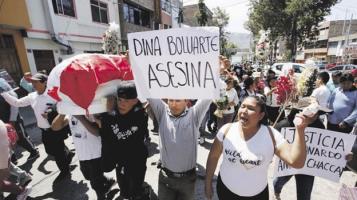 Clau O'Brien Moscoso continues her dispatches from Peru in the wake of a natural disaster and the ongoing coup against President Castillo. A Spanish translation follows.
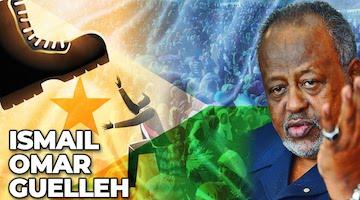 The legacy of colonialism and interference from the U.S. and other states keeps Djibouti's president in office after 25 years. Djibouti needs democracy and sovereignty for its people.
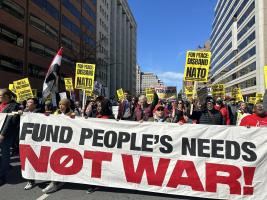 On March 18 thousands of people rallied in Washington DC to mark the 20th anniversary of the invasion of Iraq and to call for an end to the war in Ukraine.
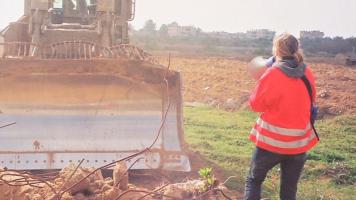 Being a white ally is a very serious matter. They can be "martyred on a shrine of white supremacy in an effort to discourage other whites from following their lead."
 The FBI raid on the Uhuru Movement has resulted in economic sanctions like those imposed on countries that dare to be sovereign despite being under U.S. attack.


