 "When I looked up, I saw Malcolm X standing up and glaring down at one of his assassins. At that point, from the corner of my eye, nearby to my left, I saw a flash from a gun as I watched Malcolm X fall down and back about ten feet."
An earlier edited version of this article appeared in the San Francisco BayView National Black Newspaper.
"It was the saddest day of my life."
In the afternoon, on January 21, 1965, I went to the Audubon Ballroom to hear Malcolm X speak. I also went to sell the newspaper, The Militant, a radical newspaper, which at that time, printed the truth about Malcolm X, his speeches, and publicly defended him.
When I got to the Ballroom, things were radically different -- there were no cops. (Normally Malcolm's meetings in Harlem were crawling with cops.) As I was selling papers, Malcolm X approached the Audubon Ballroom, I offered to sell him the latest issue, but he told me, "not today Roland, I am alone and in a hurry."
A while later, as I entered the meeting room I again did not see any cops. I went in to sit down, where I normally sat along with the rest of the press in the front and the left side of the room. On the way to my seat, Gene Roberts, who later surfaced as a police agent member of the Black Panther Party, told me that I could not sit at my regular place, but on that day I had to sit in the front row on the right side of the hall, facing the stage.
As I sat down, I glanced over, to where I normally sat, and saw a large Black man, with a Navy Blue-gray trench coat. When the meeting started all was quiet, as the crowd listened to Benjamin X introducing Malcolm X.
When Malcolm approached the podium, he gave the normal Muslim greeting for peace, at that point a disturbance occurred in the room. Two men were standing about halfway back in the room and to the right of the Malcolm on stage. One was shouting "Get your hand out of my pocket." Malcolm was trying to calm things down, when the men, one later identified as Talmadge Hayer, started running down the aisle shouting and firing a pistol at Malcolm and ran out the exit doors by the stage, to the right of Malcolm X.
"I saw a flash from a gun as I watched Malcolm X fall down and back about ten feet."
Suddenly I heard gunshots fired from all over the place, and I instinctively hit the floor. When I looked up, I saw Malcolm X standing up and glaring down at one of his assassins. At that point, from the corner of my eye, nearby to my left, I saw a flash from a gun as I watched Malcolm X fall down and back about ten feet. In that instant, when Malcolm died before my eyes, I suddenly realized how big he was and I realized that he was a giant in stature, in the world. This vision of Malcolm X, being assassinated, has haunted me till this day. (The fatal blast, which I later found out to be from a shotgun, came from the area where I had seen the large Black man, with a Navy Blue-gray trench coat!)
When I left the hall, Malcolm's bodyguards told me that they had caught two of the assassins, one who was shot (Talmadge Hayer) and one whom the police took away.
A few weeks later, when I was questioned in the Harlem Police station, I was shown a series of photos of people whom I recognized as members of the Nation of Islam or Malcolm's organization. I also saw a picture of the large Black man, with a Navy Blue-gray trench coat, that I had seen at the Audubon Ballroom. I was thinking of how to respond to the cops and how to say that I did not recognize the photos of Malcolm's friends and supporters and the members of the Nation of Islam.
I then told the cops that I had to go to the rest room. When I got to the men's room door, I saw the same large Black man, coming out of the men's room, that I had seen in the Audubon Ballroom and in the photos that were just shown to me. Then he walked by me, he walked past the desks of the secretary pool, and went to his office inside the police station! At that point I knew that he and the government either killed Malcolm X or were part of the assassination plot. I became very nervous thinking about what I was going to say to the cops when I got back and how I was going to get out of the station alive. I then came up with, "I can not recognize anyone, for all Black people look the same." The cops nodded in agreement and I was then allowed to leave the police station.
"At that point I knew that he and the government either killed Malcolm X or were part of the assassination plot."
Malcolm X was my one of my heroes. He was the most honest mass leader that I have ever known or seen. He was a great orator and his speeches seemed like a conversation between himself and the audience. His speeches were like music to my ear and have inspired me for the rest of my life in the fight for social justice.
He was so human in his orations, I still remember him when made the Harlem 'Hate Gang' Scare speech at The Militant Labor Forum, on May 29, 1964 and other speeches when he chuckled a 'heh heh' when he was about to make a special comment. At that Forum he said: "It's impossible for a chicken to produce a duck egg... The system of this country cannot produce freedom for an Afro-American. It is impossible for this system, this economic system, this political system, this social system, this system period. It is impossible for it , as it now stands, to produce freedom right now for the Black man in this country - it is impossible. And if ever a chicken did produce a duck egg, (heh heh) I'm certain you would say it was certainly a revolutionary chicken. (heh heh)"
Both he and Martin Luther King had come to similar positions about capitalism and the Vietnam War at the time of their death. That is why this government assassinated them. No one has followed in their footsteps. From the point of view of this government, the world leader in political assassinations, the two assassinations worked. For to this day, no mass leader has had the courage to pick up where they left off. They were able to silence the art, science, and truth, of these two great orators. To me, February 21st is "The day the Music Died." It was the saddest day of my life.
Roland Sheppard is a writer and activist and former BA of the Painters Union in San Francisco. Email him at
rolandsheppard@gmail.com
This e-mail address is being protected from spam bots, you need JavaScript enabled to view it
and visit his website, http://web.mac.com/rolandgarret.

 "United Nations Negroz" is the latest poem from our Poet-in-Residence, Raymond Nat Turner.
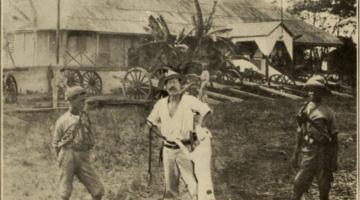 From the moment the first colonizers arrived in the Caribbean, the West has treated the region as a treasure chest for resource extraction and labor exploitation.
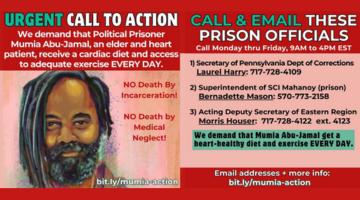 The state uses tactics such as medical neglect, to slowly assassinate political prisoners like Mumia Abu-Jamal.
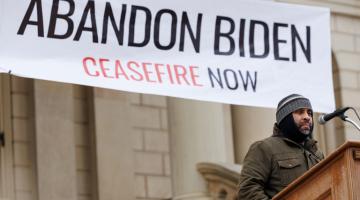 It is prudent for Black people to join in coalition with the Arab and Muslim people collectively refusing to support President Biden and connect the struggle for Palestinian liberation to the…
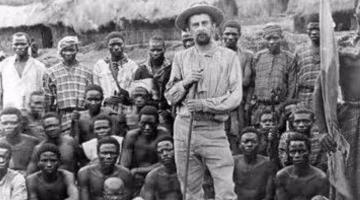 From the decline of the triangular trade to the rapacious extraction of mineral resources and labor exploitation, Africans have organized and revolted against western domination.


