A Black Agenda Radio commentary by Jared A. Ball, Ph.D.
Culture is the expression of collective personhood. The culture of Africa's descendants in the U.S. has been demonized, belittled and viewed as a threat ever since the days when slavemasters banned use of the drum. With the wholesale gentrification of urban America, a new wave of cultural ethnic cleansing is underway, as inner city entertainment venues are being closed, and owners of remaining night spots collude to squeeze original artists with substantial and established audiences out of commercial viability. Like coffee, some are too black, too strong.
Cultural Genocide: The Drums Fall Silent In Chocolate City
by Jared A. Ball, Ph.D.
“Bands are literally told to leave their congas at home in order to re-form themselves as jazz or R&B bands, and the famed “pocket,” go-go’s equivalent to hip-hop’s “break beat” is said to now be off limits...”
“Fuck all the corny laptop DJs that killed the realness.” I found this comment from Washington, DC-based DJ EuRok about DJs adopting new digital music technology as opposed to the traditional vinyl record to be quite relevant far beyond its immediate focus of the closing of DJ Hut, the long-time mainstay of DJ and hip-hop culture in the city. Perhaps it hit harder considering that only a couple of weeks earlier one of DC’s more prominent Go-Go music sound men told me that “go-go as a culture is going to die.” In each case, the impact of gentrification and new technologies were seen by those who would know to be having a nasty impact that goes well beyond the ravages of uprooted community. To the extent that DC represents a national trend and all that is related to issues of gentrifying communities in what has even been likened to an international return to the European model of cities for the wealthy and suburbs for the rest, the nation’s capital also exemplifies the impact on culture of colonial relocation and land-grabbing.
Of course, the cultural expression of Black people has long been a battleground of theft and appropriation. And, as all uninterrupted processes, it continues today. In this case, the long history of “racial cleansing” in the United States has a style and impact that is equally modern in its creeping and slick demeanor. For instance, Washington, D.C. has been targeted as one of Clear Channel’s “Branded Cities” or the plan for complete corporate advertising emersion where “Brandscaping” turns communal spaces into “controlled environment[s]” where “brands [are] to be experienced” and unavoidably interwoven into people’s daily lives. This is the live version of what some lament as the creeping shift of sleeker, more convenient and accessible DJ digital technology which encompasses the closing of record stores which, as all public spheres, mean so much more than a place to purchase albums. It also includes the policy of cleansing the city of its most recognizable cultural expression. Go-Go, with its live musicianship, polyrhythmic, conga-based funk has, according to sound man Greg McNeils, been all-but banned from the city proper. Bands are literally told to leave their congas at home in order to re-form themselves as jazz or R&B bands, and the famed “pocket,” go-go’s equivalent to hip-hop’s “break beat” is said to now be off limits. And similar to EuRok’s dismay at the shift to digital formats McNeils describes a similar trend where street vendors and small store operators are being forced out of business which in turn hurts the underground distribution of go-go mixtapes, or PA taped recordings of live performances, which have been the mass medium network of distribution for those without access to radio.
And he is not alone , cats have been seeing this. Oddisee, of the crew Diamond District, recounts how “mom and pop stores {are} replaced by Couture,” and Head-Roc, the “Mayor of DC Hip-Hop,” who himself has lyrically tackled the issue of gentrification, has recently launched a campaign to expose the vicious network of venue operators who continue to deny local Black artists space to perform and who assure that those who do are held in a state of Electric Purgatory or debt peonage as they must cover their own promotional costs or perceived lack of audience draw.
'“cultural genocide,...includes all policies aimed at destroying the specific characteristics by which a target group is defined, or defines itself, thereby forcing them to become something else....”'
And all of this is also slickly hidden beneath DC’s tightly-controlled media environment which is quite right-wing in general and specifically managed to assure that none of this music is heard on the city’s sanctioned radio. Just this past week, as is the case every week, the dominant “urban” radio stations had all their top ten songs, as measured by times played, or spins, selected by one of three corporations, two of whom, Sony Music’s CEO Howard Stringer and Warner Music’s CEO Edgar Bronfman, share an incestuous board of director interlock.
But the issue really is the impact of this nation’s brand of colonialism and how it manifests the “cultural genocide,” as defined by the United Nations who explain it as “the imposition of [an] alien national pattern…” which “includes all policies aimed at destroying the specific characteristics by which a target group is defined, or defines itself, thereby forcing them to become something else.” This includes assaults on the target population’s “books… language… religious works… destruction or dispersion of objects of… artistic… value” and so on. Shifts in technology which force cultural reformations, that also further limitations of the public sphere, that impose alien cultural forms or, in this case, bastardized corporate versions of the cultural expression, that disappear underground communicative traditions, and again force a removal of the drum all relate to the physical forced removal of colonized populations. And as the nation’s capitol, as goes DC, so goes the Black nation.
For Black Agenda Radio I’m Jared Ball. Online visit www.BlackAgendaReport.com.
Dr. Jared A. Ball is assistant professor of Communication Studies at Baltimore's Morgan State University, host of WPFW's Jazz & Justice, which airs every Monday at 1PM EST, a co-founder of CBC Monitor, and among much else, one of the minds behind VoxUnion.Com.

 In this week’s segment, we discuss U.S. control over Venezuela and its resources, and the Venezuelan people's response to their loss of sovereignty. But we begin with a report on the police killing…
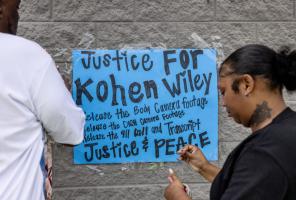 Our guest is attorney Jaribu Hill, executive director of the Mississippi Workers Center for Human Rights. She reports on the police killing of 1-year old Kohen Wiley in Senatobia, Mississippi and on…
 On January 3, 2026, the U.S. conducted a military attack against Venezuela and kidnapped president Nicolas Maduro and his wife, First Combatant Cilia Flores. Since that time interim president Delcy…
 The democrats’ backtracking on what they dismissively refer to as “wokeness” is the newest iteration of their political trickery as once again they give the appearance of supporting what they…
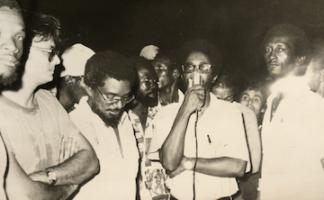 “The Burnham dictatorship crept up upon Guyanese people like a thief in the night.”


