President Bush's minions behaved like vandals in the Civil Rights Division of the Justice Department, trashing the very concept of equal protection under the law. But the white backlash did not begin with Bush. Civil rights has been “in a state of arrested development for over 40 years.”
Civil Rights Division To Clean Up After 8 Years of Bush A Black Agenda Radio commentary by Glen Ford
“Bush packed the Civil Rights Division with right-wing lawyers and administrators determined to erase even the most elementary gains made by minorities.”
The Obama administration has accomplished one solid achievement that may go down in the history books as at least a partial reversal of fortune for racial minorities in the United States. For eight long years, the Bush administration waged vicious political warfare against the very concept of civil rights, as we had come to understand it in America. Equal protection under the law became a dead letter in the U.S. Justice Department, whose Civil Rights Division was transformed into a bulwark of white male supremacy and petty reaction. George Bush’s racist appointees not only refused to enforce the Voting Rights Act and laws against race and sex discrimination in employment, they packed the Civil Rights Division with right-wing lawyers and administrators determined to erase even the most elementary gains made by minorities. Sincere civil rights lawyers were virtually barred from employment, vilified and scorned as “communists” who carried around copies of Chairman Mao’s Little Red Book. George Bush fought to allow the Religious Right to use federal money to discriminate. He cut the number of voting and employment rights lawsuits in half, and transformed the Civil Rights Division into a nexus of civil wrongs.
Eric Holder, President Obama’s choice as the first Black U.S. Attorney General, promised he would put the Justice Department back in the business of civil rights. In September, he announced plans to hire an additional 50 civil rights lawyers. And at congressional hearings last week, Holder’s department agreed to take measures to ensure that civil rights complaints are systematically addressed .
“Equal protection under the law became a dead letter in the U.S. Justice Department.”
All this is very good news, but it needs to be put in historical perspective. The rollback in civil rights did not begin with George Bush. The white backlash against the gains of the Sixties erupted before the ink was dry on civil rights legislation and court rulings. The backlash was in full fury when Ronald Reagan chose to announce his 1980 presidential candidacy in Neshoba County, Mississippi, site of the murder of three civil rights workers, only 16 years before. Republicans, and lots of Democrats, have been trying to make civil rights a dirty word, ever since. They have certainly succeeded in narrowing the scope of what we mean when we say civil rights.
Long before George Bush entered the White House, the non-stop white backlash had prevented full enforcement of Title VI of the Civil Rights Act of 1964, which was designed to prevent the use of federal funds in ways that discriminate. A Justice Department Civil Rights Division that was true to the spirit of Title VI would act against discrimination everywhere it involves federal funding: environmental racism, health care disparities, the entire range of institutionally racist realties that plague Black and brown lives while aided and abetted with tax dollars. Such a civil rights agenda would move most urgently against mass Black incarceration, which literally steals Black lives and liberties by the millions.
Civil rights, as a political issue, has been in a state of arrested development for over 40 years. Its reawakening will require another mass movement, not just a changing of the guard at the U.S. Justice Department.
For Black Agenda Radio, I'm Glen Ford. On the web, go to www.BlackAgendaReport.com .
BAR executive editor Glen Ford can be contacted at Glen.Ford@BlackAgendaReport.com .

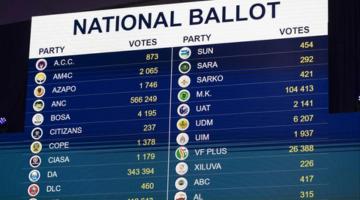 Lefika Chetty joins us to discuss the recent elections in South Africa, and the state of politics in the country.
 We're joined by Dorethea Franklin and Anjana Malhotra to discuss a lawsuit against the City of Buffalo challenging unconstitutional and racially discriminatory traffic enforcement practices by the…
 Donald Trump is often portrayed as the worst president of all time and now his criminal conviction has made him the butt of many jokes. But his legal troubles may not prevent him from winning again.…
 Revisiting a powerful account of the psychology of colonialism and neocolonialism by Haiti’s Jean Price-Mars.
 A Belly of the Beast documentary follows Afro-Cuban journalist Liz Oliva Fernández as she explores the Cuban American community and its relation to the long-running embargo on her country.



