Black Evil Television, Low-Power FM Neighborhood Radio, and the Congressional Black Caucus
by BAR Managing Editor Bruce Dixon
“Whether the music is gangsta rap, Gospel or anything in between, the same handful of national artists sing the same handful of songs from coast to coast.”
Last month viewers of the animated TV series The Boondocks learned that BET really stands for “Black Evil Television”, calculated to stunt the spirits and curtail the intellectual growth of black youth. Satire like the Boondocks depiction of BET only works when it contains big and obvious chunks of the widely known truth. Unfortunately, commercial black radio is not much better.
Spin the dial in any major US market and you'll find one, or four, or a dozen black-oriented stations, some black-owned, but nearly all with the same handful of formats. Whether the music is gangsta rap, Gospel or anything in between, the same handful of national artists sing the same handful of songs from coast to coast. Syndicated black talk radio shows, dishing a standard mixture of celebrity gossip, audience call-ins, shallow self-help and relationship advice with a little current events thrown in occupy the remaining air time.
Although federal laws grant licenses to broadcasters only on the condition that they serve the public interest, local news, local events, and local artists are almost nowhere to be found on the radio. But that could be about to change.
Congress is now considering legislation that will open the door to hundreds of broadcast licenses for low-power FM neighborhood radio stations across the country. With a broadcast radius of only two or three miles, low-power FM neighborhood radio is an ideal vehicle for community and civil rights groups, for unions, for local artists and their promoters, for neighborhood schools and churches to gain access to the airwaves so they can provide audiences with content and services that the owners of big media will not.
“Three out of four black members of the House Commerce Committee where the Low Power FM Neighborhood Radio bill is now are NOT listed as co-sponsors.”
Although the Low Power FM Neighborhood Radio bills enjoy the support of Democrats and Republicans in both houses of Congress, the Congressional Black Caucus definitely bears watching on this issue. In the recent past, giant media and telecom corporations have inundated Black Caucus members with contributions to their campaigns and favorite charities. In 2006 they persuaded 27 out of 40 Black Caucus members to vote in favor of the digital redlining of poor and minority neighborhoods nationwide, and through the National Association of Black State Legislators big media leases African American state reps and senators by the bushel. On media justice issues that affect their communities, Black Democrats vote more often with Republicans than with other Democrats, so this is a time to let them know you are watching.
Three out of four black members of the House Commerce Committee where the Low Power FM Neighborhood Radio bill is now are NOT listed as co-sponsors. They are Bobby Rush of Illinois, Ed Towns of NY and G.K. Butterfield of NC. Email or call the House Commerce Committee at 202-225-2927 (repeat) and suggest that Congressmen Rush, Towns and Butterfield stand up for accountable black radio, for HB 2802, (repeat) the Low Power FM Neighborhood Radio bill. And then ask to be connected to your own member of Congress, to tell him or her the same. We've already got Black Evil Television. It's time we had accountable, local and democratic radio. Low power FM neighborhood radio.
For Black Agenda Radio, I'm Bruce Dixon
Bruce Dixon is based in metro Atlanta, and can be contacted at bruce.dixon(at)blackagendareport.com

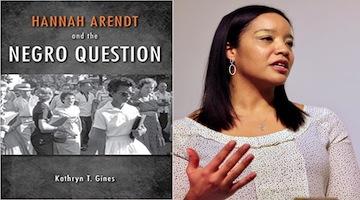 Arendt saw the “Negro question” as a “Negro problem” rather than a white problem.
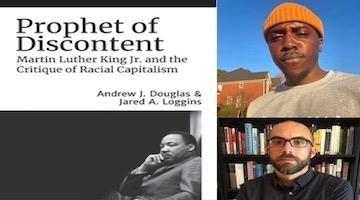 The authors set out to reconstruct King’s critical theory of racial capitalism.
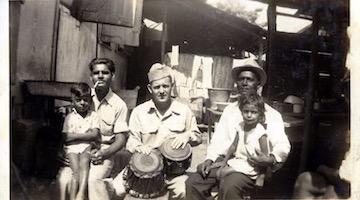 The National Workers Union
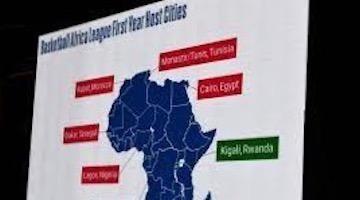 Human rights groups are concerned that using Rwanda as a backdrop would provide a public relations boost for its autocratic leader.
 Detroit police killed hundreds of unnamed Blacks in response to the civil rights movement, revealing why most of today’s proposals to make police more accountable are bound to fail, and how we can


