A Black Agenda Radio commentary by Glen Ford
Britain’s Black rebellion shocked the nation, but has not produced the kind of carnage that routinely accompanies urban unrest in the United States. “Had London’s current disturbances occurred on a similar scale in New York City, with outbreaks across the various boroughs, the police would have unleashed a bloodbath.” Which is not to say that the United Kingdom’s criminal justice system is not as thoroughly racist as its American cousin. It’s just that white Brit society is – relatively speaking – less bloodthirsty.
Black Britain Revolts: What If It Had Been New York?
A Black Agenda Radio commentary by Glen Ford
“When it comes to state violence against people of African descent, Britain isn’t even in the same league with the United States.”
It is impossible to observe the outbreak of Black rebellions on the streets of Great Britain
Just as with virtually every U.S. urban rebellion over the past 75 years, the London police set off the violence when they shot to death a young Black man. African Americans would also immediately recognize the institutionalized racism that pervades the British criminal justice system. Black Brits are six times more like than whites
“African Americans would immediately recognize the institutionalized racism that pervades the British criminal justice system.”
Black Brits and Black Americans are, indeed, in many ways, in much the same boat. But the difference is in the scale of racial repression in the two countries. When it comes to state violence against people of African descent, Britain isn’t even in the same league with the United States. At the time of this writing, besides the initial Black victim, possibly one person had died in days of disturbances in London and other cities. In contrast, the 1992 Los Angeles rebellion
British police struggle to cope with young people linked by instant-message technology who move from neighborhood to neighborhood in “flying squads” of mopeds and bicycles to find the best looting opportunities. But authorities were reluctant to impose curfews, and rejected the use of rubber bullets or water cannon. British Home Secretary Theresa May explained: “The way we police in Britain is not through use of water cannon. The way we police in Britain is through consent of communities.”
You will never hear a cabinet-level officer of the United States government speak of respecting the “consent of communities” while imposing order – certainly not the consent of African American communities. In Philadelphia, at the same time that parts of London were burning, the Black mayor slammed a curfew on the city in reaction to a couple of incidents of “flash mobs” that caused little more than public anxiety, and promised harsh measures if people did not go home and stay home. In the U.S. of A., that means deadly force.
So, yes, the workings of racism in Britain bear many similarities to the United States. But the Brits don't come close to matching the Americans in the sheer scale of racist violence and repression. For Black Agenda Radio, I'm Glen Ford. On the web, go to www.BlackAgendaReport.com
BAR executive editor Glen Ford can be contacted at Glen.Ford@BlackAgendaReport.com.

 Dr. Gerald Horne is an author and historian who currently holds the John J. and Rebecca Moores Chair of History and African American Studies at the University of Houston. Dr. Horne is a prolific…
 Dr. Anthony Monteiro is a Duboisian scholar and founder of the Saturday Free School for Philosophy and Black Liberation. He joins us from Philadelphia to discuss the upcoming inauguration of Donald…
 The moniker “Genocide Joe” is well deserved and one that Joe Biden can never live down, along with any other names that describe the damage he brought to the country and to the world. His legacy is…
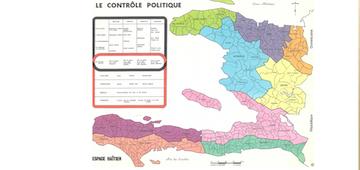 Despite selling out Haiti, former Haitian leftist Gerard Pierre-Charles’s 1983 diagnosis of the imperialist assault on current movements still resonates today.
 Both class and color barriers were broken down during the Michael Manley era, but class barriers re-emerged.


