by Mark P. Fancher
The U.S. military command in Africa, AFRICOM, has trained thousands of officers on the continent, including the young captain that overthrew his own government in Mali, this year. “If AFRICOM’s protégés have taken careful note of how the U.S. military is routinely used to try and take whatever the U.S. wants in Africa, often without regard for law, custom or prudence, it is not hard to imagine how or why Amadou Sanogo might do the same thing in his own country.”
Beware the Rotten Fruit of AFRICOM Training
by Mark P. Fancher
“The U.S. may talk the talk of ‘democracy’ and ‘human rights,’ but in Africa, it has never walked the walk.”
If a tree is judged by its fruit, U.S. Africa Command (AFRICOM) is undeniably diseased from its roots to its branches. One of AFRICOM’s fruits, Amadou Sanogo, who is a captain in Mali’s armed forces, and a former AFRICOM trainee, led the recent military takeover of Mali’s government supposedly because he didn’t believe the country’s leaders were doing enough to suppress an armed secessionist movement in the northern territories. The result was disastrous. The African Union was outraged, and in short order, not only were there crippling economic sanctions against Mali, but also the secessionists took advantage of the confused state of Mali’s government and military and secured control of several towns, including the legendary Timbuktu.
While standing hip deep in a mess of his own making, Sanogo ultimately agreed to step down and allow the re-installation of a civilian government. However, at the time of this writing, he has been a continuing obstacle to efforts by the Economic Community of West African States (ECOWAS) to help Mali navigate through circumstances that threaten to destabilize much of the region.
The Washington Post reported that Sanogo participated in AFRICOM’s “International Military Education and Training” program. According to AFRICOM’s website, the program exposes African soldiers “to U.S. professional military organizations and procedures and the manner in which military organizations function under civilian control.” The program description goes on to say that the participants are introduced “…to elements of U.S. democracy such as the U.S. judicial system, legislative oversight, free speech, equality issues, and U.S. commitment to human rights.” Somehow Sanogo emerged from all of that and resolved to not only strip civilians of their authority but to also take over Mali’s government operations.
“Participants are introduced ‘…to elements of U.S. democracy such as the U.S. judicial system, legislative oversight, free speech, equality issues, and U.S. commitment to human rights.’”
Perhaps none of this should come as a surprise. The U.S. may talk the talk of “democracy” and “human rights,” but in Africa, it has never walked the walk. The U.S. stride has been more of an arrogant imperialist swagger. If AFRICOM’s protégés have taken careful note of how the U.S. military is routinely used to try and take whatever the U.S. wants in Africa, often without regard for law, custom or prudence, it is not hard to imagine how or why Amadou Sanogo might do the same thing in his own country.
If in fact it was exposure to U.S. military culture and training that inspired Sanogo’s folly, then AFRICOM has plenty of other African soldiers traveling down that same track. In recent months U.S. Marines have trained Moroccan soldiers in everything from communications to how to stage “a mechanized, motorized, helo-born, combined arms assault.” In Liberia, the Marines conducted a non-lethal weapons clinic for more than 220 Liberian soldiers. The sessions were part of a U.S. State Department-sponsored mission called “Operation Onward Liberty.”
As a matter of fact, AFRICOM is no longer content to provide just training. James Hart, AFRICOM’s deputy director for programs, said that the U.S. “Africa Partnership Station (APS)” which patrols Africa’s coastal waters, and which has been the site for training Africa’s navies, has the potential to do more. Hart said: “How do we take APS to the next level? By moving away from a training-intensive program and organize APS efforts through emphasizing hands-on training and real-world operations.” Real-world operations? What does that mean against a historical backdrop of forceful U.S. suppression of African forces that threaten the strategic and business interests of western governments and foreign corporations?
AFRICOM training appears to be heavily laced with the ideology of Americanism, which history has demonstrated to be diametrically opposed to the cherished goal of Pan-Africanism. So when it comes to Africa’s true military needs, the continent does not need more loose-cannon, AFRICOM-trained soldiers like Sanogo. It instead needs politically conscious, disciplined civilian militias that can keep these characters and various foreign-sponsored mercenaries under control.
Mark P. Fancher is a lawyer who writes frequently about the U.S. military presence in Africa. He can be contacted at: mfancher@comcast.net.

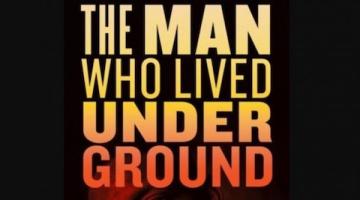 Richard Wright’s 1942 novel was testing the limits of what the white novel-reading public would have found imaginable.
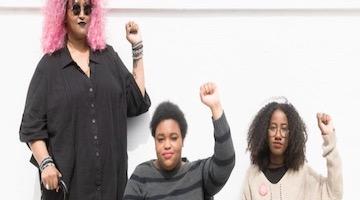 Writers, artists, community organizers and scholars have all contributed their analysis of the resource documents listed, below, and how they might be useful in assessing anti-Black structures arou
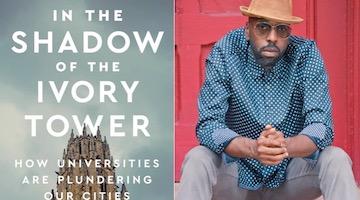 Universities have become today’s companies and our cities their company towns.
 The Age of Revolution (1770–1850), bookended by the American and French Revolutions on the one side and the Revolutions of 1848 on the other, is widely viewed as the progenitor of the modern Euro-A
 The struggle for workers’ rights in this country has been an ongoing battle for hundreds of years.


