Belafonte protects the soul of struggle
by
Amy Goodman
This article originally appeared in the Seattle
Post-Intelligencer.
"Belafonte says the stakes are higher today."
Harry Belafonte just turned 80. The "King of Calypso" was the first
person to have a million-selling album, the first African American to win an
Emmy and is perhaps the most recognizable entertainer in the world. Last
Saturday, I attended his birthday party at a restaurant adjoining the New York
Public Library.

The setting seemed very appropriate, as Belafonte himself is a living library
of not only the civil rights movement, but of liberation struggles around the
world. In 1944, just before shipping out as a U.S. Navy sailor in World War II,
he was banned from the Copacabana nightclub in New York. Ten years later, he headlined
there. He knew Rosa Parks, Paul Robeson and Eleanor Roosevelt. He corresponded
with Nelson Mandela in prison, when the U.S. government considered the South
African leader a terrorist.
Belafonte was a close confidant of the Rev. Martin Luther King Jr. He spoke
daily with King. The FBI was listening. Taylor Branch, the award-winning author
of a trilogy of books on King, was at Harry's party. Belafonte describes how
Branch's final book in the trilogy, "At Canaan's Edge," uncovered extensive
FBI wiretaps of their conversations.
For fighting for the right to vote and to end segregation, Belafonte says:
"We were looked upon as unpatriotic; we were looked upon as people who
were insurgents, that we were doing things to betray our nation and the
tranquility of our citizens. That engaged the FBI. Everything we talked about
was tapped." The FBI even came to his house, when he was away, and frightened
his wife and children.
"The essential difference between then and now is that no
previous regime tried to subvert the Constitution."
He tells me: "The essential difference between then and now is that no
previous regime tried to subvert the Constitution. They may have done illegal
acts. They may have gone outside
the law to do these, but they did them clandestinely. No one stepped to the
table as arrogantly as George W. Bush and his friends have done and said, 'We
legally want to suspend the rights of citizens, the right to surveil, the right
to read your mail, the right to arrest you without charge.' " His criticism
is not limited to Bush (whom he called, while visiting President Hugo Chavez in
Venezuela, "the greatest terrorist in the world").
President Clinton crashed Belafonte's birthday party, which was taking place as
the Democratic presidential contenders battled for the African American vote.
Sens. Hillary Clinton and Barack Obama were in Selma, Ala., for the 42nd
anniversary of the famous voting-rights march from Selma to Montgomery.
In his remarks, Clinton toasted Harry: "I was inspired by your politics
more than you can ever know. Every time I ever saw you after I became
president, I thought that my conscience was being graded, and I was getting less than an A. And every president should feel
that way about somebody as good as you."
I asked Harry how he felt about Clinton showing up: "I'm very flattered,
OK, but I'm mindful of all the things that need to be done." In his
succinct reply, a lifetime of struggle remembered, a keen-edged skepticism.
"He knows what I think. He said I didn't give him an A." I then asked
him about both the Clintons and Obama going to Selma.
"We are hearing platitudes, not platforms.
What do they plan to do for people of color, Mexicans, for people who are imprisoned,
black youth? What are their plans for the Katrinas of America?"
In 1965, Belafonte was on the original Selma march with King. Just before they
reached Montgomery, St. Jude's Catholic Church offered its grounds to the
thousands of marchers.
Belafonte called in artists from around the country. Tony Bennett came, as did
Pete Seeger (both were at Harry's birthday party), Sammy Davis Jr., Mike
Nichols, the conductor Leonard Bernstein, Odetta and Joan Baez. In the rain,
they built their stage in the mud with donated caskets from local mortuaries.
The stakes were incredibly high. People were shot and killed; people were
beaten. Viola Liuzzo, a white Detroit homemaker, was fatally shot by Klansmen
while driving marchers back to Selma. Weeks before, police shot a man named
Jimmie Lee Jackson, who later died. Despite all that, Belafonte says the stakes
are higher today.
Like the two stone lions that guard the New York Public Library, Harry
Belafonte -- fierce, fearless and focused -- protects the soul of struggle.
Even as he enters his ninth decade, this lion does not sleep tonight.
Amy Goodman is the host of "Democracy
Now!," a daily international TV/radio news hour.

 Students in France are engaging in mass protests. Hundreds of them have been arrested and injured by police, and many schools are closed. Annick Metefia joins us from Paris. She is a member of the…
 Ajamu Baraka of the Black Alliance for Peace joins Dimitri Lascaris on BettBeat Media for a conversation about something Western publics have not yet come to terms with — the fact that resistance to…
 Progressive candidates rarely remain so after winning public office. Zohran Mamdani is no exception, but his capitulation to New York zionists angered his supporters, and the people he hoped to…
 “Between October 2 and October 8, 1937, between 15,000 and 40,000 Haitians and Black Dominicans were slaughtered by Dominican troops…”
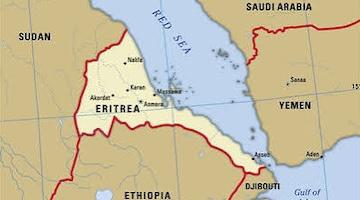 Ethiopia and Eritrea are on the brink of a war that could further destabilize the Red Sea, disrupt oil tanker traffic, and drive gas prices even higher.


