Barack Obama: Progressives Beware!
by Ted Glick
“Such wisdom might help us move beyond ideological bickering and serve as the basis of a renewed effort to tackle the problem of inner-city poverty. We could begin by acknowledging that perhaps the single biggest thing we could do to reduce such poverty is to encourage teenage girls to finish high school and avoid having children out of wedlock. . .” – Barack Obama, The Audacity of Hope, pps. 255-256
Last month, and ever since, following a trip to New Hampshire by Barack Obama, the mass media has been full of stories about what a big hit he was, how not just Democrats but Republicans and independents are excited about this man, this black man, this man of mixed ancestry, this dynamic speaker. What many of them are talking and writing about is his apparent ability to transcend ideological differences, to connect and draw support from liberal and conservative voters across lines of race and culture.
Hearing these reports, I wondered: what’s the real deal about Obama? Does he really stand for anything? Is he more than political smoke and mirrors?
And so I read his best-selling book, The Audacity of Hope.
Beginning the reading, I had some hopes. Last year I read his first book, Dreams From My Father, and came away feeling that, particularly given his personal experiences as a black man growing up in the USA and his community organizing work in Chicago, he might be for real. Perhaps he would be a progressive leader with principles, someone who had a chance of playing the Democratic Party political game without being significantly corrupted, someone like a John Conyers, Jim McDermott, Cynthia McKinney or Dennis Kucinich.
“Obama is much closer to a Bill or Hillary Clinton, about whom he has nothing but positive things to say.”
Based upon some of the positions Obama takes in the book, one might associate him with these progressive Democrats. In the area of energy, for example, Obama calls for “raising fuel efficiency standards,” ending “every single tax break the [oil] industry receives,” and
In the area of electoral reform, he supports “nonpartisan districting, same day registration, weekend elections and public financing of campaigns or free television and radio time.”
And in the area of labor rights, he says that “we should have tougher penalties to prevent employers from firing or discriminating against workers involved in organizing efforts. Employers should have to recognize a union if a majority of employees sign authorization cards choosing the union to represent them.”
However, a close reading of Audacity indicates that Obama is much closer to a Bill or Hillary Clinton, about whom he has nothing but positive things to say in the book, than he is to Conyers or other progressive Dems. This is the case despite his willingness to speak out against the Iraq war in 2002, and despite the strong possibility that, as this is being written, he will run against Hillary for the Democratic Presidential nomination in 2008.
I wonder if Obama would have spoken out against the war four years ago if, instead of being a State Senator, he had been a U.S. Senator, and one with political ambitions.
“Obama writes, ‘We should also acknowledge that conservatives – and Bill Clinton – were right about welfare as it was previously structured.’”
The quotation at the beginning of this column is instructive. He follows this ideologically conservative position with a second one in the next paragraph, saying: “we should also acknowledge that conservatives – and Bill Clinton – were right about welfare as it was previously structured.” He says this even though further along he writes, “welfare reform. . . has swelled the ranks of the working poor, with women churning in and out of the labor market, locked into jobs that don’t pay a living wage, forced every day to scramble for adequate child care, affordable housing, and accessible health case, only to find themselves at the end of each month wondering how they can stretch the last few dollars that they have left to cover the food bill, the gas bill, and the baby’s new coat.”
Then come several pages in which he identifies a number of things that would actually make a difference: more effective policing, community-based health centers, “a radical transformation of the schools,” affordable child care, parental counseling and programs, addressing unemployment.
This inconsistency is found throughout the book. Often it is more than inconsistency, it is Obama taking a number of clearly problematic positions.
One is this summary of U.S. history: “We did not have to go through any of the violent upheavals that Europe was forced to endure as it shed its feudal past. Our passage from an agricultural to an industrial society was eased by the sheer size of the continent, vast tracts of land and abundant resources that allowed new immigrants to continually remake themselves.” (p. 55) The civil war was not a “violent upheaval?” What about the Native peoples who were violently and forcibly displaced from those “vast tracts of land,” the reality of slavery or the taking of half the land of Mexico by military force? Nowhere in the book does Obama correct this inaccurate, essentially racist view of U.S. history.
Throughout “Audacity” Obama makes clear his support for “free trade” and corporate globalization, although he never uses “corporate” as an adjective to describe “globalization” for what it really is. Instead he writes, “like Bob Rubin, I am optimistic about the long-term prospects for the U.S. economy and the ability of U.S. workers to compete in a free trade environment – but only if we distribute the costs and benefits of globalization more fairly across the population.” (p. 176) Yeah, sure.
“Obama makes clear his support for “free trade” and corporate globalization.”
Obama, the sole black U.S. Senator, is not a strong proponent of affirmative action. “An emphasis on universal, as opposed to race-specific, programs isn’t just good policy, it’s also good politics. . . white guilt has largely exhausted itself in America; even the most fair-minded of whites, those who would genuinely like to see racial inequality ended and poverty relieved, tend to push back against suggestions of racial victimization – or race-specific claims based on the history of race discrimination in this country.” (p. 247)
Why does he “oppose,” his word, “universal” to “race-specific” programs? They’re not either-or, they’re both-and.
No wonder the press is writing about Obama as a black man whom white people can love and support. You can almost hear some white journalists, and others, thinking, thank you, Barack, for freeing me from concern about 400 years of slavery, segregation and continuing institutionalized racism and inequality.
Obama’s foreign policy positions are similarly problematic. He calls for “a revised foreign policy framework that matches the boldness and scope of Truman’s post-World War II policies” (p. 303). Truman was the president who presided over a dramatic expansion of U.S. imperial policies economically and militarily and the Cold War, as well as what turned into full-scale McCarthyism domestically. Obama’s perspective is that “given the depletion of our [military] forces after the wars in Iraq and Afghanistan, we will probably need a somewhat higher [Pentagon] budget in the immediate future just to restore readiness and replace equipment.” (p. 307) So much for a reversal of Bush’s dangerous and expensive military build-up that is literally robbing the U.S. American people of badly-needed resources for a wide range of programs.
“The press is writing about Obama as a black man whom white people can love and support.”
Obama’s U.S.-centric view of the world leads to some major blind spots. For example, his take on “the disastrous consequences of the [Vietnam] conflict – for our credibility and prestige abroad, for our armed forces. . . and most of all for those who fought” (p. 287) completely leaves out the “disastrous consequences” for the people of Indochina, the millions who died in Vietnam, Cambodia and Laos as a result of U.S. foreign policy.
Independent-minded progressives need to be clear about Barack Obama: he is not one of us.
Last week I happened to see an article which compared Hillary Clinton’s voting record in the U.S. Senate with Obama’s. I remember the numbers: 82.5 vs. 79.8. The numbers placed them on a most conservative (1) to most liberal (100) scale in relationship to others in the Senate. (Keep in mind that 55 members of the U.S. Senate last year were Republicans, and it’s not exactly a progressive institution.]
I don’t remember whether Clinton or Obama had the higher 82.5 rating, but it really doesn’t matter given the closeness of the two numbers.
As African American author and activist Kevin Gray has written, there should be no doubt about it: Obama is cut from similar cloth as Bill and Hillary. He’s a Democratic Leadership Council man. Progressives beware.
Ted Glick works with the Climate Crisis Coalition and the Independent Progressive Politics Network. His seven years of Future Hope columns are archived at www.ippn.org. He can be reached at indpol@igc.org or P.O. Box 1132, Bloomfield, N.J. 07003.

 Jacqueline Luqman was a panelist on the February 16, 2023 webinar Why and How to End the War in Ukraine, which was sponsored by Chicago Area Peace Action. These were her remarks.
 Ajamu Baraka argued that the Ukrainian crisis was a “manufactured crisis” primarily created by the miscalculations of policy-makers in the U.S. and Western Europe who were blinded by the prospect of…
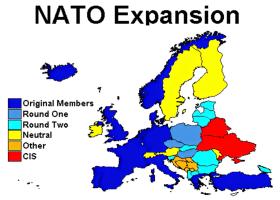 According to Dr. Gerald Horne, greed and shortsightedness convinced the U.S. that it could achieve the strategic objectives of undermining German economic power by controlling the European market,…
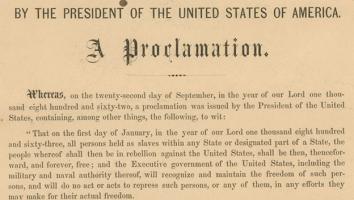 February is the designated month to honor presidents, but Black people should know better than to believe what they are told about any benevolence on the part of George Washington, Abraham…
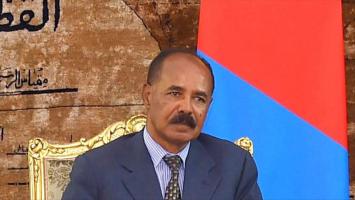 The president of Eritrea gives a wide ranging interview on the U.S. regime change effort against neighboring nation Ethiopia using the TPLF, and long-standing U.S. hostility towards his country.



