Click the flash player to listen to or the mic to download an audio in MP3 format.
Legislation to begin the process of amending the U.S. Constitution, introduced by Black Congresspersons John Conyers and Donna Edwards, “deserves broad support.” There is no greater enemy of mankind than the global corporation, which has now been empowered by the U.S. Supreme Court to further monopolize the American political conversation.
Amend the Constitution – and Whatever Else It Takes to Break Corporate Power
A Black Agenda Radio commentary by Glen Ford
“The Supreme Court empowered corporate speech to drown out all other speech in U.S. society.”
For a long time, the very idea of amending the U.S. Constitution filled many people on the Left with dread – myself included. History has given us good reason to believe that masses of angry American white folk cannot be trusted anywhere near the Constitution. As often as not, those who called for changes in the text or interpretation of the Constitution were seeking to strip Black people of any protections provided by that Founding Document.
For that reason, when Congressman Jesse Jackson, Jr. and his assistant Frank Watson released their 2001 book, A More Perfect Union , with its call for 8 amendments to the Constitution, some of us that supported Jackson's political goals were nonetheless leery of the amendment process, which looked like the kind of national free-for-all, barroom brawl that the racist Right is better at than the Left is. Opening up the Constitutional Pandora's Box, we feared, would more likely result in the abolition of the Bill of Rights than in guarantees of the right to equal and high quality education, affordable housing, full employment or any other newly explicit constitutional rights. It seemed safer to leave the Constitution alone, rather than risk setting a process in motion that the Right might wind up controlling.
But that was before the finance capitalist class swallowed the American state, whole, in 2008 and 2009, expropriating the current and future wealth and full faith and credit of the nation, in order to back up their chips in Wall Street’s casinos. Then, in January of this year, the U.S. Supreme Court ruled that corporations have every right to use their ill-gotten trillions to monopolize the American political conversation. The Supreme Court empowered corporate speech to drown out all other speech in U.S. society.
“There is no short road to freedom from corporate rule.”
If there is to be any future for progressive electoral politics in the United States – indeed, if there is to be any point in conducting legal, above-ground political agitation of any kind, then the looming corporate monopoly on speech must be broken.
Corporate power is the enemy of all humanity. It strangles the productive forces of the world in its tentacles, creating poverty and war as the inevitable consequence of its diabolical existence. Not one of the myriad crises that threaten the planet can possibly be resolved, unless the death grip of international corporate power is removed from around humanity's throat.
In the last decade, corporate power has infested the internal workings of Black politics in the United States, spawning a new class of African American political prostitutes beholden to their paymasters in the boardrooms. The battle for independent Black politics is, of necessity, a fight against corporate power.
The constitutional amendment route to limiting corporate speech is a long and dangerous one, requiring approval by two-thirds of the Congress and three-quarters of the states. But there is no short road to freedom from corporate rule. The constitutional amendment legislation introduced in the House by Representatives John Conyers and Donna Edwards deserves broad support, as one of many strategies in the epic struggle to put people, not corporations, in charge of human affairs. BAR executive editor Glen Ford can be contacted at Glen.Ford@BlackAgendaReport.com .

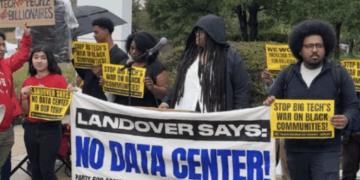 There is near unanimity of opinion against data centers in the U.S. But elitist and compromised environmental groups and the climate industry should not lead this fight.
 "What’s with a Pomade Man’s testosterone obsession?" is the latest from BAR's Poet-in-Residence
 Johanna Fernandez left a powerful and revolutionary legacy through her scholarship and activism.
 Johanna Fernandez touched many lives through her scholarship, activism, and belief that people themselves can change history and be "the ones we've been waiting for."
 "Unlike the Zionist claim that 'Israel has a right to exist,' my assertion is rooted in international law. Of course, given Israel’s propensity for violating such laws, it’s no surprise they’re still…


