A Black Agenda Radio commentary by executive editor Glen Ford
The African Union made a show of rejecting the International Criminal Court’s “race hunting” methods, but the facts of dependence on the imperial powers remain. “Virtually all the armies of Africa, except for Eritrea, Zimbabwe and Sudan, have become integrated into either U.S. or French military structures.”
The African Union: Still Subservient After All These Years
A Black Agenda Radio commentary by executive editor Glen Ford
“The African Union’s little rebellion against the International Criminal Court simply shows that African leaders understand that the Americans have no loyalties.”
Developments at the recent African Union conference highlight the abject subservience to the West of the vast majority of states on the continent – and African leaders’ occasional attempts to contest their subordinate status. On an independent-minded note, the African Union rebuked the International Criminal Court for its fixation on indicting only Africans for crimes against humanity. Ethiopia’s prime minister, who was also chairman of the AU meeting, said the court’s “process has degenerated into some kind of race hunting rather than the objective of taking care of crimes and impunities.” To drive home the point, the AU voted almost unanimously to ask the court to refer its case against Kenyan President Uhuru Kenyatta and his vice president back to Kenyan courts, saying Kenya had the capacity to adjudicate the matter on its own. Only Botswana objected to the proposal.
The ICC is known to eagerly indict just about anyone – any African, that is – who falls out of favor with the United States. The U.S. clearly favored Uhuru Kenyatta’s opponent in the presidential race, Raila Odinga – which may have been one reason that Kenyans voted the other way. Yet, the AU’s slap in the face of the court and, indirectly, its U.S. backers, is much less than it seems. Kenya remains an unwavering puppet of U.S. policy in the Horn of Africa, having joined in the invasion of neighboring Somalia at Washington’s behest. And Ethiopia and Uganda provide the bulk of the troops occupying Somalia under U.S. direction. On paper, the war in Somalia is an African Union and United Nations mission, but the war is run by the CIA and largely financed by the Europeans. The African Union’s little rebellion against the International Criminal Court simply shows that African leaders understand that the Americans have no loyalties and are capable of turning on any one them when it suits their purposes, and having them tossed into prison by the International Criminal Court. The African heads of state were simply looking out for their own heads.
“A continental standing army?”
There was a lot of bluster in Addis Ababa about creating an independent African force to maintain order on the continent. The leaders voted to create an “intervening” military unit to rapidly deal with crises and coup d’etats. That would be followed by creation of a full-fledged African Standby Force – a kind of continental standing army – as early as 2015. AU spokesmen speculated that the force “could be 100 percent” African, in terms of men on the ground. However, it would still need logistical support from the so-called “international community” – a euphemism for the United States and Europe – who are, of course, the sworn enemies of African independence.
The truth is, virtually all the armies of Africa, except for Eritrea, Zimbabwe and Sudan, have become integrated into either U.S. or French military structures, and cannot act independently. African leaders claim they will try to break free by raising taxes on things like airline flights and hotel rooms – but that’s nonsense for home consumption. The African Union’s Peace and Security Commissioner, Ramtane Lamamra, spoke of the “historic nature and scope” of the AU’s tentative moves towards military independence. But they are parakeets in a cage, trying to sound like eagles, fifty years after the formation of the Organization of African Unity.
For Black Agenda Radio, I’m Glen Ford. On the web, go to BlackAgendaReport.com.
BAR executive editor Glen Ford can be contacted at Glen.Ford@BlackAgendaReport.com.

 This week the incoming administration was on your minds.
 The streets permeate dominant understandings of Blackness, and the life-and-death consequences of these perceptions are at the heart of this book.
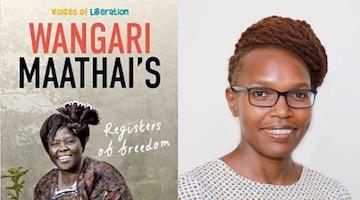 Maathai’s approach to environmental conservation centers poor rural communities, especially women, and their need for fuel, fodder and income
 Afro-pessimism theorizes slavery as a social relation which distinguishes Blackness as a paradigmatic position antithetical to humans.
  The denial of Black humanity is essential to the order of racial capitalism, and dictates that Blacks deserve whatever treatment they get.


