A Black Agenda Radio commentary by executive editor Glen Ford
The African Union made a show of rejecting the International Criminal Court’s “race hunting” methods, but the facts of dependence on the imperial powers remain. “Virtually all the armies of Africa, except for Eritrea, Zimbabwe and Sudan, have become integrated into either U.S. or French military structures.”
The African Union: Still Subservient After All These Years
A Black Agenda Radio commentary by executive editor Glen Ford
“The African Union’s little rebellion against the International Criminal Court simply shows that African leaders understand that the Americans have no loyalties.”
Developments at the recent African Union conference its case
The ICC is known to eagerly indict just about anyone – any African, that is – who falls out of favor with the United States. The U.S. clearly favored
“A continental standing army?”
There was a lot of bluster in Addis Ababa about creating an independent African force to maintain order on the continent. The leaders voted to create an “intervening” military unit to rapidly deal with crises and coup d’etats. That would be followed by creation of a full-fledged African Standby Force – a kind of continental standing army – as early as 2015. AU spokesmen speculated that the force “could be 100 percent” African, in terms of men on the ground. However, it would still need logistical support from the so-called “international community” – a euphemism for the United States and Europe – who are, of course, the sworn enemies of African independence.
The truth is, virtually all the armies of Africa, except for Eritrea, Zimbabwe and Sudan, have become integrated into either U.S. or French
For Black Agenda Radio, I’m Glen Ford. On the web, go to BlackAgendaReport.com.
BAR executive editor Glen Ford can be contacted at Glen.Ford@BlackAgendaReport.com.

 In 1921 thousands of whites attacked the Black population of Tulsa, Oklahoma with machine guns, airplanes, fire and pure hatred, killing at least 300.
 More policing rarely results in justice for anyone, and only puts Black, Indigenous, and other communities of color (BIPOC), including Asian people, at risk for more violence.
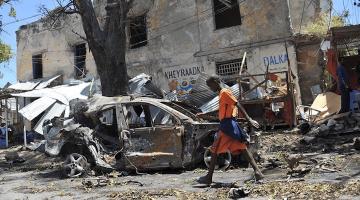 “Bombing Somali civilians is one of AFRICOM’s main projects,” writes Mohamed Haji Ingiriis, a young Somali historian.
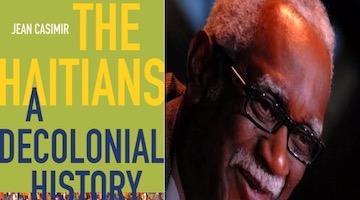 The worldview animating Haitian masses today is leading to a social context ungovernable within the framework of prevailing economic neo-liberalism.
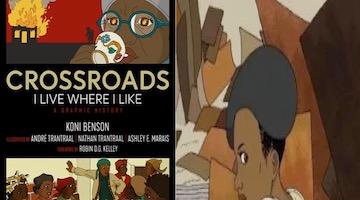 This book challenges the myth that 1994 was the turning point in South Africa -- because the liberation process is unfinished.


