by Mark P. Fancher
African decolonization began with dreams of prosperity through unity, best articulated by Ghana’s President Kwame Nkrumah. But Nkrumah was toppled by forces backed by the U.S., and the vision of a United States of Africa faded. “Nevertheless, the demand for African unity by Africa’s grassroots has been incessant,” fed by yearnings from the grassroots.
The African Liberation Struggle is a Grassroots Thing
by Mark P. Fancher
“It is the nationalization of Africa’s oil and precious minerals that will finally give the continent the independent power that it has craved.”
1On March 6, 1957, Ghana’s long, hard struggle for independence from British colonial rule had ended. Kwame Nkrumah, the country’s first president, stood in triumph above Accra’s Polo Grounds and surveyed a dancing sea of his people - all with tears in their eyes, joy in their hearts and a determination to celebrate as they never had before. At that moment, the jubilation seemed like it would never end, but a mere nine years later Nkrumah’s government was overthrown.
As he sat exiled and alone, Nkrumah wrote: “The word ‘coup’ should not be used to describe what took place in Ghana on 24th February 1966. On that day, Ghana was captured by traitors among the army and police who were inspired and helped by neo-colonialists and certain reactionary elements among our own population. It was an act of aggression, an ‘invasion,’ planned to take place in my absence and to be maintained by force. Seldom in history has a more cowardly and criminally stupid attempt been made to destroy the independence of a nation.”
We now know that the CIA-planned overthrow of Nkrumah was not a unique event. Covert or proxy operations to destroy progressive African leadership have been a standard agenda item for the U.S. military and U.S. intelligence agencies. Documents show that plans to assassinate Patrice Lumumba, Congo’s first prime minister, were hatched in the Oval Office. The U.S. actively supported and collaborated with South Africa’s apartheid regime and counter-revolutionary African forces to attempt the destabilization of Angola’s government. The U.S. has played an integral role in maintaining crippling, deadly economic sanctions against Zimbabwe.
“Covert or proxy operations to destroy progressive African leadership have been a standard agenda item for the U.S. military and U.S. intelligence agencies.”
The U.S. nevertheless denies that it is an empire, and limiting the use of U.S. troops in Africa, which has a notorious history of colonialism, is important to the preservation of the illusion of non-intervention. So even though the White House requested $275 million to fund operations of U.S. Africa Command (AFRICOM), the actual deployment of U.S. combat troops on the African continent has been rare. AFRICOM is designed to avoid a high profile presence of U.S. soldiers in Africa, and to instead have them lurking in the continent’s shadows directing African military forces to carry out missions helpful to U.S. interests. But the meddling hand of U.S. imperialism has left unmistakable fingerprints all over Africa, and Nkrumah was among the first to detect them.
Nkrumah knew that many African countries are too intimidated to even attempt to counter U.S. destabilization operations. To bolster the strength and courage of these countries, and for purposes of self-defense and eventual prosperity, Nkrumah urged that they all close ranks against imperialism and establish what could be the most powerful of the world’s superpowers - “The United States of Africa.” It is an idea that has always resonated with the African masses, but which has been avoided by many leaders of African countries as if it were a highly contagious, deadly disease. For example, in or about 1960, Nigeria’s then-Prime Minister declared: “The recently widely-discussed plan for a United States of Africa will only create new problems. Nigeria still needs many decades to attain the level of other countries. Our most pressing problems are here [in Nigeria], and only here.”
“Nkrumah urged that Africans close ranks against imperialism and establish what could be the most powerful of the world’s superpowers – ‘The United States of Africa.’”
Nevertheless, the demand for African unity by Africa’s grassroots has been incessant, and that may account for the African Union having made unity a prominent feature of its program. But while the idea of unity has been embraced, there has been a reluctance to adopt the other critical element of Nkrumah’s formulation - continent-wide socialism. It is the nationalization of Africa’s oil and precious minerals that will finally give the continent the independent power that it has craved. Yet, few African heads of state have the guts to stand up to foreign countries and corporations that are stealing and exploiting Africa’s valuable resources and to expel them permanently from the continent. These leaders likely fear they will suffer the same fate as Nkrumah, Lumumba, Robert Mugabe, Thomas Sankara and others who have defied imperialist forces. Given the reluctance of African heads of state to move forward with a program of unity and socialism, what is to be done?
After many fruitless debates, Nkrumah came to accept that many leaders of African governments will never establish a continent-wide, socialist state. If it were to happen, agitation would have to come from the bottom-up rather than from the top-down. He identified workers and peasants as critical elements of a revolutionary alliance, but he also included: students who had the drive and wherewithal to spark insurrections; members of the “nationalist bourgeoisie” willing to commit class suicide, and “men and women of African descent living overseas.” He said: “There is room for all these people in our great struggle.”
“In the U.S. we are in a unique position to expose AFRICOM for what it is, and to destroy its credibility.”
So how can those of us who are “men and women of African descent living overseas” contribute to Africa’s struggle? In the U.S. we are in a unique position to expose AFRICOM for what it is, and to destroy its credibility. We are able to lobby for normalization of relations with Zimbabwe. We can organize strategic boycotts of corporations that instigate violence in Congo. In the same way that Cuba sends brigades of health care professionals to Africa to render internationalist service, we too can develop programs for our professionals and tradespeople to spend time in those parts of Africa where they are most needed. However, these and other projects will succeed only if they are carried out by organizations.
So, joining an organization that fights for Africa is the first, most important task for any African who wishes to make a meaningful contribution. A good way to learn about such organizations is to attend African Liberation Day programs that they organize. The
All-African People’s Revolutionary Party and many other organizations sponsor African Liberation Day events on or near May 25
th throughout Africa and in every corner of the African diaspora. Information about these events can be found at
www.africanliberationday.net.
A powerful Africa will by its mere existence create a powerful African diaspora, so we have everything to gain from the completion of Nkrumah’s mission. To that end, we must abandon any cowards and scoundrels who pretend to lead African governments, and who use their positions to steal, betray and subvert the revolutionary march of Africa’s people. It falls to us - African workers, peasants, students and exiled children of the continent to bring about Africa’s redemption.
Mark P. Fancher is a lawyer, writer and activist. He can be contacted at mfancher(at)comcast.net.

 France and Germany pressured African Union leaders for months to join a brief Zoom call with Ukraine’s Volodymyr Zelensky. 51 of 55 African heads of state (93%) boycotted the meeting, showing clear…
 The International Monetary Fund has a long history of insisting on loan conditionalities which are harmful to public services. This practice did not change even during the pandemic, with African…
 Leftist formation wins Colombian presidential election, the effort to end involuntary servitude in U.S. prisons, the impeachment of a Black legislator in Brazil, and the nature of fascism and need…
 Ajamu Baraka is National Organizer of the Black Alliance for Peace. He joins us to discuss the recent election results in Colombia where Gustavo Petro, became the new president, and Francia Marquez,…
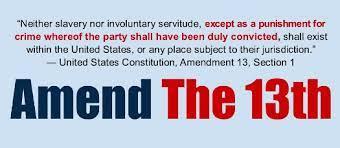 Savannah Eldrige is the founder of Coaliton to Abolish Slavery in Texas, an organization devoted to ending involuntary servitude in that state. She is also the founder of Be Frank 4 Justice which…


