by Mark P. Fancher
The rulers of Michigan believed the quickest path to economic development was to place the state’s Black cities under the control of a single, appointed emergency manager. The policy is domestic colonialism in practice, “an implicit – but distinct – embrace of the idea that people of color are inferior, incompetent” – and disposable.
Colonialism in Michigan’s Little Africa
by Mark P. Fancher
“In some cases, black people are regarded as being so worthless that they must simply be purged.”
Michigan state government’s arrogant, callous indifference to both the plight of the people of Flint and the weight of outraged public opinion is explained quite simply by the fact that some officials regard black Michigan as their own little Africa. With the mentality of colonizers, they created and wielded the mighty weapon of Michigan’s emergency manager law, and they set out to dominate and exploit predominantly black cities with breathtaking indifference to the rights and the welfare of those who live there. Michigan’s emergency manager law gives the governor the power to place all authority of a mayor and city council in the hands of a single unelected individual, supposedly for the purpose of rescuing the municipality from financial distress.
The “rescue” of Flint apparently involved the poisoning of its water supply.
If you ask them, those responsible for the crisis in Flint and other problems resulting from emergency management elsewhere will deny categorically that their actions have anything to do with racial domination. In their minds, it has been about efficient, economical rehabilitation of a state to lay the groundwork for profitable enterprise. But underlying all of that is an implicit – but distinct – embrace of the idea that people of color are inferior, incompetent, disposable and naturally endowed with a superhuman capacity to endure neglect and even imposed misery. In some cases, black people are regarded as being so worthless that they must simply be purged.
Colonial thinking is an ugly thing. Marcus Clarke, a 19th-Century British literary figure, in speaking of the Maori (New Zealand’s indigenous people) said: “…having got the land, established ourselves there and built churches and public houses and so on, we would be fools not to use our best endeavors to keep [it]. To do this in peace, the Maoris must be exterminated…To make treaties and talk bunkum is perfectly useless; they must be stamped out and utterly annihilated…”
In Michigan, it becomes increasingly clear that “having got the land” and established control over black Michigan, some state officials have regarded as only so much “bunkum” the idea of respecting the political will and the lives of those who live in predominantly black cities.
“Michigan colonizers persuaded themselves and others that black people are incapable of governing themselves, even if emergency managers make things worse.”
The lack of respect is clear because when the people became fed up with the emergency manager law, and after they fought hard battles to have a referendum placed on the ballot and then went to the polls in large numbers to have the law repealed, reactionary forces enacted a new, almost identical emergency manager law with an appropriations provision. In Michigan, a law with an appropriations provision is immune to referendum. The will of the people be damned. Michigan colonizers persuaded themselves and others that black people are incapable of governing themselves, even if emergency managers make things worse. And if the children must drink poison water in Flint in order to save a few dollars, they say let them drink it, because black lives really don’t matter.
None of this is surprising to generations of populations of color in underdeveloped countries and the indigenous nations of the Americas. Africa in particular knows this mentality well. As 1884 drew to a close, leaders of various western European countries, weary of squabbling with each other over who had rights to exploit the natural resources of Africa, gathered in Berlin and huddled around a map of what they called “the dark continent.” They carved Africa’s territory into puzzle pieces that they parceled out for colonization. No Africans were either present or consulted during this process, and for almost a century thereafter, Africa was subjected to wholesale theft and exploitation of its natural wealth and the brutalization and subjugation of its people.
Those who habitually insist that race has no significant impact on life in America will continue to deny the racial reality in Flint. Not so for the generations of people of color who have been witness to the destructive consequences of power in the hands of those hell-bent on dominating and exploiting them. For them, it is yet another sad but familiar chapter in a global, colonial, racial experience.
Mark P. Fancher is the staff attorney for the ACLU of Michigan’s Racial Justice Project. He is a member of a legal team challenging the legality of Michigan’s Emergency Manager law in the federal courts. In addition to the ACLU, the plaintiffs are represented by: the Sugar Law Center for Economic and Social Justice, the Center for Constitutional Rights, and the law firms of Constitutional Litigation Associates, Goodman & Hurwitz and the Sanders Law Firm. The author can be contacted at: mfancher@comcast.net.

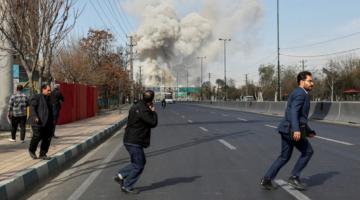 The demand to call out alleged crimes in Iran or Cuba while those countries face annihilation from the U.S. and Israel is a refusal to see those people as human beings worthy of protection.
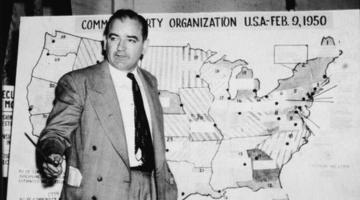 Red Scares are a recurring feature of the U.S. political tradition aimed at criminalizing anticapitalist politics through accusations of foreign infiltration and conspiracy. The NSPM-7 and the report…
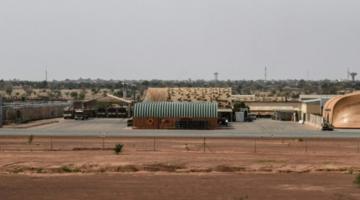 For several years, three landlocked West African states have undergone political transformations designed to turn the page on French neo-colonialism.
 The U.S. is considering drone strikes and sanctions against the Alliance of Sahel States under the guise of counterterrorism, but the real objective is to regain neo-colonial control over African…
 Western pro-Palestinian activism isolates Palestine from its regional allies, depoliticizing its struggle and reinforcing colonial divisions.


