After the ascendancy of Cyril Ramaphosa to the presidency of the African National Congress (ANC) last month, it is vital to understand deep structural barriers that prevent South Africa’s achievement of desperately needed socio-economic justice.
The ideological shifts that took place in the ANC’s economic views from 1990 can only be described as breathtaking: from an explicitly socialist, redistributive approach towards embracing the American ideologies of neoliberal globalism and market fundamentalism.
From 1990 Nelson Mandela and Harry Oppenheimer met regularly for lunch or dinner and the main corporations of the Minerals Energy Complex (MEC) met regularly with a leadership core of the ANC at Little Brenthurst, Oppenheimer’s estate. When other corporate leaders joined the secret negotiations on the future of the economic policy of South Africa, the meetings were shifted to the Development Bank of Southern Africa during the night.
Although I was involved in the ‘talks about talks’ from 1987 until 1989, I did not take part in the 1990-94 negotiation process. I have been told that at the time senior individuals attached to the Sanlam Group of corporations were very much against my involvement because of my preference for social-democratic capitalism.
During these meetings an elite compromise gradually emerged between white politicians and capitalists under the leadership of the MEC, a leadership core of the ANC, and American and British pressure groups.
From February 1990 until early 1992, all the ANC policy documents emphasised the need for ‘growth through redistribution’. But when a reworked economic document of the ANC entitled ‘Ready to Govern’ was published in May 1992, the phrase ‘growth through redistribution’ was conspicuously omitted. Since then the ANC has never again emphasised the need for a comprehensive redistribution policy.
The secret negotiations reached a climax in November 1993. At that stage South Africa was preparing for interim government by the Transitional Executive Council (TEC), which decided that South Africa needed a loan of $850 million from the International Monetary Fund (IMF). The ‘statement on economic policies’ in the IMF deal committed the TEC to neoliberalism and market fundamentalism.
There can be little doubt that the secret negotiations between the MEC and a leadership core of the ANC were mainly responsible for the party’s ideological somersault. It was, however, not the influence of the MEC alone. There was also pressure and persuasion from Western governments, and from the IMF and World Bank, and global corporations. A large group of leading ANC figures received ideological training at American universities and international banks.
In the years after the Soviet Union imploded in 1991, an atmosphere of triumphalism reigned supreme in American political and economic circles: the ‘American economic model’ triumphed and every country in the world could only survive and prosper if it adapted as quickly and completely as possible to anti-statism, deregulation, privatisation, fiscal austerity, market fundamentalism and free trade.
Promises were made to the ANC that as soon as the new government had implemented this model, conditions would be conducive to a large influx of foreign direct investment, higher growth rates, higher employment and a trickle-down effect to alleviate poverty. The role of the American pressure group was, however, not restricted to exaggerated promises, but also included subtle threats that the US had the ability (and the inclination) to disrupt the South African economy if the ANC should be recalcitrant and not prepared to cooperate.
With the adoption of the Growth, Employment and Redistribution programme (GEAR) in 1996, the ANC and the American pressure group succeeded in Americanising the South African economy. In biblical idiom, we have every reason to lament the fact that the ANC was deceived on such a massive scale by false prophets who led South Africa, not to the promised land, but into a desert in which the poorer part of the population was doomed to live permanently in a systemic condition of abject poverty.
On 11 February 1990, the day of Nelson Mandela’s release from prison, he made the following statement: “The white monopoly of political power must be ended, and we need a fundamental restructuring of our political and economic systems to address the inequalities of apartheid and create a genuine democratic South Africa.”
But the new politico-economic system turned out to be highly dysfunctional. a neoliberal politico-economic system was institutionalised to serve the narrow interests of the old white elite and the emerging black elite. The enabling conditions of the new system were moulded in such a way that the imperial aspirations of the American-led neoliberal empire would be satisfied.
The quid pro quo between the corporate sectors and the ANC leadership core was that lucrative opportunities would be created for the emerging ANC elite to join the white capitalist elite to become rich enough to maintain the same consumerist lifestyle as the white elite.
The elite compromise emphatically excluded the possibility of a comprehensive redistribution policy, which was regarded as unaffordable after preference was given to addressing the interests of the old white corporate elite and the emerging black elite, and after the conditionalities prescribed by the American-led neoliberal empire were accepted. The fact that taxation and expenditure were fixed by the elite compromise deprived the ANC government of the ability to implement a comprehensive redistributive policy.
The most harmful consequence has been the de-industrialisation through South Africa’s obligation to implement a free-trade policy. This has had a devastating effect on many industries that operated for decades behind tariff walls. Clothing, textile and footwear were almost destroyed by the import of cheap products. But while the free-trade policy was harmful for manufacturing, it was to the advantage of the MEC. These corporations were later given the additional privilege of shifting their main listings to London and New York, and to become independent transnational corporations.
While the ANC operated on the moral high ground during the anti-apartheid struggle, since 1994 they have slipped into a sleazy underworld where corruption, nepotism and money squandering are the order of the day, so that South Africa could become a neocolonial satellite of the American-led neoliberal empire. Although the ANC has been the government of South Africa since 1994, we could allege that it is still not ‘ready to govern’.
It is very much in doubt whether the South African project is still viable, given this context. Dangerous levels of corruption, state capture, inequality, poverty and inefficiency under Jacob’s Zuma presidency may perhaps be turned around under strong leadership. But structurally, a dangerous triangle has emerged between three groups in South Africa: the old white elite, the new black elite, and the impoverished bottom forty percent. This conflict may yet lead to an implosion of the country. It is therefore vital to revisit the decision made twenty years ago by the neoliberal elites within the ANC government to reject the proposal of a wealth tax for redistributive purposes.
Originally published at here, Pambazuka News, Africa’s Voices for Freedom and Justice at Pambazuka.org.
Sampie Terreblanche, 84, is professor emeritus at Stellenbosch University, and also spent time at Harvard and the University of the Free State. His work as political economist and public commentator over sixty years was marked by sharp and controversial shifts to the left of his Afrikaner nationalist roots. Terreblanche served on several public commissions and as deputy chairman of the SABC. He has authored 13 books and hundreds of papers and public lectures, with a focus since the 1990s on inequality and its underlying wealth problem. Among many awards, he received three honorary doctorates. A celebration of his work will be held at the University of Johannesburg on Monday. Lost in Transformation, his 2012 book about South Africa’s transition to neoliberalism (from KMM Review Publishing), is available online (for $12) and will be on sale at the event.


 "Cuba has remained a shining example of internationalism and holds a special place in the history of people's struggles against imperialism."
 In this week’s segment we will discuss the recent Democratic Party Senate primary in Michigan, in which the establishment and AIPAC backed candidate went down to defeat, part of a new trend of…
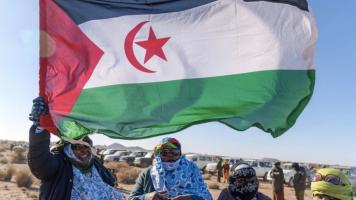 Ambassador Malainin Lakhal is Deputy Representative of the Sahrawi Republic to the African Union. He joins us from Algeria to discuss 50 years of occupation by Morocco, which promotes irregular…
 Abayomi Azikiwe is editor of the Pan-African Newswire and a Detroit resident and activist. Dr. Abdul El-Sayed won the Democratic Party primary for the senate in Michigan, defeating the establishment…
 Ajamu Baraka and Dimitri Lascaris join BettBeat media to interrogate the questions the anti-imperialists keep refusing to ask.


