by Benjamin Woods
The Movement for Black Lives (M4BL) must recognize the dynamic relationship between race and class in Black America – contradictions that “can only be resolved through explicit, conscious class struggle” within the community. What’s needed is a socialist, mass-based Black Workers Party “that replaces the neoliberalism of the Black Bourgeoisie with the hegemony of the Black working class.”
Class Struggle and National Liberation in the Movement for Black Lives
by Benjamin Woods
Dedicated to and Inspired by Kwame Nkrumah & Jalil Muntaqim
“The class struggle in this period will take the form of a fight for community control of institutions and demanding more than the minimum civil rights advanced by the Black Liberal Establishment.”
One year ago the city of Baltimore rose up in righteous rebellion. Although the murder of Freddie Gray and police instigating of Black youth at Mondawmin Mall was the catalyst, generations of structural racism and economic underdevelopment were the root causes of the insurrection. “Bmore” is an excellent illustration of the current contradictions within Black America. On the one hand the city is governed by a Black elite (including a Black mayor, police commissioner, state’s attorney, national guard commander, all the way up to a Black President), but is still unable to end the police killings and economic exclusion of a large section of Black Baltimore.
At the same time, there are numerous examples of how racism impacts Black people of all social classes. For instance, Trayvon Martin was gunned down by a white vigilante with no consequences in a middle-class neighborhood. While this contradiction is often presented as race versus class in Black political circles, the two should instead be seen as having a dynamic relationship. This article seeks to contribute to the developing theory and practice of the Movement for Black Lives (M4BL).
“There is greater inequality within Black America than between White and Black America.”
Black people in the US are a domestic colony. Similar to former colonies on the African continent and the Caribbean, we transitioned from classic colonialism to neocolonialism. Following the passage of the Voting Rights Act of 1965 Black Elected Officials (BEO) grew exponentially, from 350 in 1964 to about 10,500 in 2011. Most of the BEOs are affiliated with the Democratic Party (i.e. the party of financial capital.) Kwame Nkrumah defined neocolonialism as a nation that ostensibly has political independence but, in fact, is economically dependent. Furthermore, due to increased economic opportunities for a small sector of Black folk, studies show there is greater inequality within Black America than between White and Black America.
In short, these contradictions can only be resolved through explicit, conscious class struggle. By class struggle we mean the attempt of a class, or at least a section of it, to make a conscious assertion to win and hold political power. The class struggle in this period will take the form of a fight for community control of institutions and demanding more than the minimum civil rights advanced by the Black Liberal Establishment. The class struggle has five purposes: 1) to erode the legitimacy of the Black Bourgeoisie 2) discrediting integration into the capitalist system 3) removing the means to control the Black colony (i.e. Black bourgeoisie) 4) to win the Black masses to Nationalism and 5) raising political consciousness.
“The US settler state is a prison house of nations.”
While class conflict contributes to the forward motion and development of the Black nation, the primary contradiction in the world is that between oppressed and oppressor nations or the colonizer and the colonized. The US settler state is a prison house of nations. This means that Blacks, Chicano's, Puerto Ricans, and Native Americans are oppressed nations and must be liberated as nations! We reject Stalin’s definition of nation in favor of that provided by Kwame Nkrumah in his book Class Struggle in Africa “It is around the African peoples struggle for liberation and unification that African and Black culture will take shape and substance." In short, in the course of the Black movement we have created organizations and institutions which have in turned shaped the character of our identity, culture, and movement.
Racism has played such a crucial role in the oppression of Black people that even many of our White Left ‘allies’ have accepted it assumptions. For example, in the early 20th century, Hubert Harrison, a leading figure in the American Left, quit the Socialist Party, U.S.A. because in their own words ‘We have nothing special to offer the Negro.’ Later in 1959, Harry Haywood, the chief theoretician of Black Liberation in the Communist Party, USA was expelled for trying make the right of self-determination and white chauvinism (i.e. racism) central issues in the party. So, it isn’t only right-wingers like Donald Trump or Bill O’ Reilly that isolate and attack the Black Nation but the White Left as well.
“The M4BL can integrate class struggle and national liberation into its theory and practice.”
Therefore, we must principally, though not exclusively, organize along national lines for dual power. Dual power means creating popular assemblies that operate democratically-controlled institutions that fulfill the functions of the state. Of course, the state will not allow parallel institutions to exist for too long (see Tulsa, OK in 1921 and BPP survival programs) so at some point, there will be a confrontation. This will bring the oppressed and oppressor nations into direct conflict.
Arguably, the greatest contribution of the M4BL to the larger Black Liberation Movement is its Women and Queer leadership. But at the same time, M4BL is often accused of postmodern identity politics which views the problems of working class Black folks as secondary. In order to overcome these criticisms the M4BL can integrate class struggle and national liberation into its theory and practice. The means to carry out the class struggle and national liberation is a Black Workers Party (BWP). The BWP would be a socialist, mass party that replaces the neoliberalism of the Black Bourgeoisie with the hegemony of the Black working class. In a great tradition of Black freedom fighters, BWP can use Nationalism as a springboard to internationalism. Class Struggle for National Unity. National Unity for Self-Government.
Benjamin Woods is a PhD candidate at Howard University and co-founder of Students Against Mass Incarceration. He is an organizer in Washington D.C. Benjamin can be contacted at benjaminwoods1@yahoo.com, or through his website FreeTheLand.

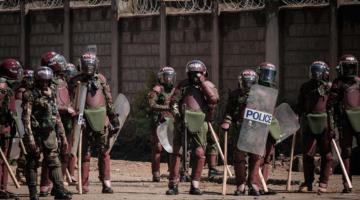 The impending occupation of Haiti is but a repeat of the brutal occupations that began in 1915.
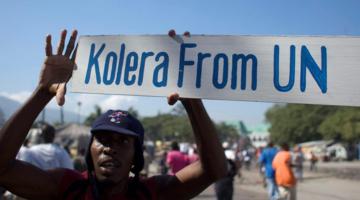 As the United States and its allies push renewed foreign intervention, the uses and abuses of the first Black republic as a testing ground of imperialism offer stark warnings. Haiti still struggles…
 "Dis-honest Broker (for my friend Farid)" is the latest work from BAR's poet-in-residence.
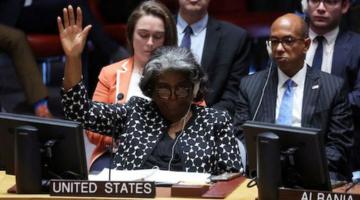 On October 18, US Ambassador to the UN Linda Thomas-Greenfield raised her hand to veto even so much as a “humanitarian pause” to Israel’s war on Gaza.
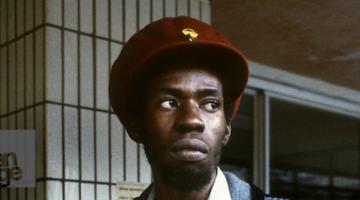 In this eulogy for dub poet Michael “Mikey” Smith, Amiri Baraka asserts the need for Black and Third World mass organization against the ravages of neo-colonialism, imperialism, racism, and…


