by BAR editor and columnist Dr. Marsha Coleman-Adebayo
News media outnumbered protesters after a Baltimore judge acquitted the cop charged with murdering Freddie Gray. The judge, the cop, the mayor, and the prosecutor are Black. “If Black people get positions of power in the system and use those positions to continue operations of the system and the oppression it brings down on Black people then those are people who need to be opposed,” said Carl Dix, of the Stop Mass Incarceration Network.
<1-break-->
Why Didn’t Black People Protest the Acquittal of Accused Freddy Gray Killer? An Interview with Carl Dix
by BAR editor and columnist Dr. Marsha Coleman-Adebayo
“Community members remember what the Baltimore rebellion accomplished but they also remember the heavy price paid for their sacrifice.”
The Carl Dix interview below continues the conversation regarding the recent trial of Baltimore police officer Caesar Goodson who was recently acquitted of 2nd degree murder charges in the “rough riding” death of Freddie Gray. No Baltimore police officers have been found liable for Gray’s death. In fact, the only person who has been found “guilty” of a crime is a teenager whose sole crime was the damage to the window of a police car. The teenager is now serving a six-year sentence for participating in protest against police murder.
In 2011, Carl Dix and Cornel West called for mass, nonviolent protest at New York City police precincts with the highest rates of “stop and frisk,” contributing to mass public opposition to the practice. Along with Dr. West, Carl put out the Call for the October 2014 Month of Resistance to Mass Incarceration, Police Terror, Repression and the Criminalization of a Generation. In August and October 2014 Carl joined mass protests in Ferguson, Missouri, against the police killing of Michael Brown, and was arrested while standing with the “defiant ones” on the first night of the National Guard mobilization. Carl Dix is a founding member, and a representative, of the Revolutionary Communist Party, USA (RCP.)
Marsha Coleman-Adebayo: What is your analysis of the recent verdict in the Freddy Gray case involving Officer Caesar Goodson?
Carl Dix: I considered this decision to be a modern day Dred Scott decision or a modern day lynching. The modern lynching was the murder of Freddy Gray. I consider the Freddy Gray case to be a Dred Scott decision because the judge in this case essentially said that Black people have no rights that police are bound to respect.
Coleman-Adebayo: As the public is aware the judge in this case is a Black man. How do you compare a racist judge presiding over Dred Scott with an African-American judge, the product of the civil rights movement, presiding over the Freddy Gray case?
Dix: In both instances, the Scott and Gray cases, the judges were serving the interest of white supremacy. Three of the police officers, also beneficiaries of the civil rights movement, were involved in the killing of Freddy Gray were African-American. The larger issue involved is that of justice for Freddy Gray, in particular, and justice for African-Americans in general. The point wasn’t to get Black folks in position of power but to destroy the system of white supremacy. The black people involved in the killing of Freddy Gray were actually instruments carrying out the designs of white supremacy against Black people.
Coleman-Adebayo: The question of Black Nationalism is a difficult one for Black folks in America. Most black people want to support Blacks in power, such as the first black president, Barack Obama, or even Clarence Thomas when he was initially nominated to the Supreme Court. How do we tackle the problems of class allegiances and betrayal within the African community when the dominant threat of attack still emanates from white supremacy?
Dix: We have to be clear about the goal. The goal must be to end the savage oppression that this system has imposed on Black people for centuries. If Black people get positions of power in the system and use those positions to continue operations of the system and the oppression it brings down on Black people then those are people who need to be opposed. Because we are not out to get Black faces in high places. We must be clear that our goal is to end the oppression of Black people and not get distracted by the agents who act on behalf of our oppressors. For me, ending deadly white supremacy, oppression and exploitation comes with the abolishing of capitalism and imperialism.
Coleman-Adebayo: Back to the Freddy Gray case, you have made the statement that there were more police and media in front of the courthouse than protesters. Why didn’t black people in Baltimore come out to protest the acquittal of Officer Goodson?
Dix: I think there were several major factors involved. One, people didn’t think there was anything they could do to affect the outcome of the case. We visited the neighborhood where Freddy Gray lived and was arrested. No doubt, there was widespread anger about the way Gray had been abused by the police and the fact that the police, up until this point had been exonerated.
People were glad that activists had come to Baltimore to protest but they didn’t see a reason that they should take such risk considering the number of protestors either convicted or still awaiting trial.
The news media or mass corporate propaganda had played a major role in this decision. For weeks, corporate media had reported that the cop was going to get off. There were stories in the media that the prosecution’s case was falling apart and it seemed hopeless that justice would be served.
“People didn’t see a reason that they should take such risk considering the number of protestors either convicted or still awaiting trial.”
Secondly, the community was aware that the Gray family had accepted a settlement and that the family was not going to join the protest. A number of people expressed the sentiment that the settlement in the Freddy Gray case had compromised the family’s ability to participate in the protest and to speak out against the police. Many people we spoke with in the community questioned their participation and the possibility of police retaliation if the Gray family was not going to speak out or protest.
Coleman-Adebayo: That’s understandable considering that the prosecutor’s office in Baltimore has charged a number of young people with disturbing the peace and destruction of property. These young people may end up going to jail and the killers of Freddy Gray may all be exonerated.
Dix: We’ve already seen this. A young man, a teenager, was charged with breaking a police car window. He was convicted and sentenced to 6 years in prison. He is currently serving out those six years right now. What’s clear to the average person is that the police car window was more important that the murder of 25 year old Freddy Gray. This is how obscene, deprived and racist the system is. It comes down to the community understanding the level of sacrifice required. Community members remember what the Baltimore rebellion accomplished but they also remember the heavy price paid for their sacrifice. It’s not unreasonable for them to question whether it was worth paying that sacrificial price again considering all the variables involved. It’s an astute calculation. No one, however, should doubt their resolve. They understand that their lives and those of their families are on the line.
“What’s clear to the average person is that the police car window was more important that the murder of 25 year old Freddy Gray.”
It is already speculated by the corporate media that the prosecutor may drop the remaining charges against police in this case. But if history provides guidance in this area, we know and the community understands that police murders will not stop, they haven’t stopped for over four hundred years. However, my sense it that it’s advantageous for the community to assess damages and develop an action plan to end the oppression, police murders and suffering in their community.
Coleman-Adebayo: How do black people continue to press forward and fight for justice in the face of such overwhelming odds?
Dix: One, this verdict is an indication that the system is no damn good and needs to be gotten rid of through revolution. Secondly, anyone who hates this injustice, such as the situation in Freddy Gray’s case and others, must stand up and resist. I realize there is sacrifice involved in the struggle but if we don’t resist then the Freddy Gray verdict, the poisoning of Black folks in Flint, the Tuskegee Experiment and other genocidal acts will continue unabated.
Coleman-Adebayo: Thank you.
Dr. Marsha Coleman-Adebayo is the author of the Pulitzer Prize nominated: No FEAR: A Whistleblowers Triumph over Corruption and Retaliation at the EPA. She worked at the EPA for 18 years and blew the whistle on a US multinational corporation that endangered South African vanadium mine workers. Marsha's successful lawsuit led to the introduction and passage of the first civil rights and whistleblower law of the 21st century: the Notification of Federal Employees Anti-discrimination and Retaliation Act of 2002 (No FEAR Act). She is Director of Transparency and Accountability for the Green Shadow Cabinet, serves on the Advisory Board of ExposeFacts.com and coordinates the Hands Up Coalition, DC.

 "STICKUP: MORE for the GREEDY; less for the needy!!" is the latest from BAR's Poet-in-Residence.
 The threats by the Trump administration to detain migrants in Guantanamo Bay will not be the first time the United States has used the facility for migrant detention. Not too long ago,…
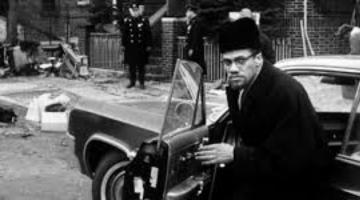 United States intelligence agencies kept close watch over developments in the African American struggle for freedom, justice, equality and self-determination after the conclusion of the Second…
 Western nations are fueling the atrocities Rwanda is inflicting on the Democratic Republic of Congo. Despite the unrelenting aggression, the Congolese people are resisting. International solidarity…
 "When people show you who they are, believe them" remains true when we examine the sorry state of the U.S. political arena. Both major political parties have made clear their priorities - and those…


