by Julian Cola
Brazil, with the largest Black population outside of Africa, attempts to perpetuate the myth that it is a “racial democracy.” If so, it is an incredibly violent one. “Ban Ki-moon, the United Nations Secretary General, stated that 50,000 people are killed in Brazil every year,” many by police, and most Black and brown. Columbia University neuroscientist Dr. Carl Hart traveled to Brazil to speak on the evils of racism – and, instead, became a witness.
Brazil Welcomes Dr. Carl Hart
by Julian Cola
This article previously appeared in TheZambezian.
“Amnesty International released a report stating that mainly young and black residents of favelas (shanty towns), rural workers and indigenous peoples were at particular risk of human rights violations.”
Brazil’s mythological ethos of racial democracy exhausted itself, again, this past August. Dr. Carl Hart, neuroscientist and professor at Columbia University, was invited to São Paulo by the Brazilian Institute for Criminal Sciences in order to lecture about the war on drugs and how it marginalizes and excludes blacks and poor people from society. The media went into a titillating frenzy before he uttered a single word because he had been, supposedly, barred from the Tivoli Moffarej. The five-star hotel’s PR machine quickly rebuked the accusation by releasing inaudible video footage showing Dr. Hart going straight to the toilet upon his arrival and circulating on hotel premises without incident. Their guest later corroborated the story in an online interview, adding that he was approached by conference organizers as soon as he came out of the restroom. They apologized because, as he entered the hotel, a security guard, believing that a dreadlocked black man had ventured far beyond his designated confines, was about to approach him. However, Dr. Hart clarified that his entrance to the hotel was uneventful and all of the energy that was used to express sorrow and regret over an incident that never happened, should instead be used to address serious racial problems that continue to plague Brazilian society.
I can’t imagine another place on the face of this earth that prides itself more on racial diversity than Brazil. Even the United States’ post-racial fairy tale has worn thin as the Black Lives Matter campaign sweeps the country. Now, that’s not to say that Brazil is not diverse. African, Tupí-Guarani, Portuguese and other European contributions to the country’s sociocultural aesthetics are undeniable. However, this argument reeks foul as it’s subsumed under the canopy of racial democracy. Heralded into the public imagination at the turn of the nineteenth century, dominant white society couldn’t have found a better cliché ally that veiled and nullified legitimate claims of institutionalized racism. It was conceptually part and parcel of maintaining Brazil’s hyper-stratified society, tactfully detruding and keeping Afro-Brazilians at the very bottom of the socioeconomic totem pole.
“Black people were 142 percent more likely to be targeted.”
In recent years, the Brazilian government has implemented higher education and television quotas for Afro-Brazilians, slightly increasing their enrollment in public and private universities and presence on TV screens. The Folha de São Paulo, one of Brazil’s most influential and widely read newspapers, responded by producing a video stating why the organization doesn’t support quotas. Earlier this year Amnesty International released a report stating that mainly young and black residents of favelas (shanty towns), rural workers and indigenous peoples were at particular risk of human rights violations. Also this year, Ban Ki-moon, the United Nations Secretary General, stated that 50,000 people are killed in Brazil every year. A joint study released by the UNESCO, the Latin American Social Sciences Institute, and the Brazilian government revealed that, of those deaths, black people were 142 percent more likely to be targeted. A major Brazilian television station reported the findings but excluded the exorbitantly high percentage of black victims. In 2013, Cuban doctors arrived in Brazil as part of a program called Mais Médicos (More Medics). Their mission was to attend to the needs of economically impoverished and secluded communities, areas that had been historically ignored by Brazilian doctors, an overwhelming majority of whom are, inevitably, privileged white men and women. Upon the arrival of Cuban doctors in the state of Ceará, hordes of Brazilian doctors lined the airport terminals and chanted, “slaves” and other epithets at the black medics who had come to help.
“Dr. Hart’s main purpose of traveling to Brazil was overshadowed by the viral trivialization of an event”
So powerful is the idea of racial democracy that it also impacts the viewpoints of some Afro-Brazilians. Once, while in the northeast of Brazil, I spoke with a young black man about the dynamics of society and power. He chided my innuendos linking access to resources to an elite, white monopoly. Fatigued by our cat and mouse debate, I bluntly stated that we cannot ignore the fact that these individuals control the upper echelons of political and economic power in this country. He immediately counter-charged that some black people can be just as racist as white people. Our discussion ended and my dear fellow returned to his impoverished community, home to many black people.
Ironically, Dr. Hart’s main purpose of traveling to Brazil was overshadowed by the viral trivialization of an event that, seemingly (seemingly), never occurred. An outcry of regret and apologies followed but he declined to accept. He had seen and heard enough, refusing to be hoodwinked by the sexy lore of racial democracy. Even his lecture, shortly before it got underway, profiled the confluence between the war on drugs and racism. As everybody gathered in the auditorium, strange sensations must have converged upon him. The audience settled into their seats. The guest speaker opened his discussion by saying (this is my translation from what was reported in several Brazilian media outlets) “Look beside you—do you see how many black people are here? You should be ashamed of yourself.” In an audience of roughly one thousand people, mainly criminal lawyers and judges, Dr. Hart only saw two or three black people.
Julian Cola is a translator living in Brazil who wants to use his linguistic skills to help bridge communications gaps between black people in the western world.

 This week, BAR's poet-in-residence discusses his work, we learn why Bill Clinton, the CIA director and Tony Blair recently visited Guyana. First, the Black vote and election year politics in Michigan.
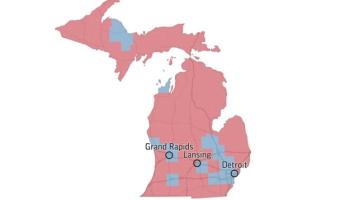 Abayomi Azikiwe, editor of Pan-African News Wire joins to discuss Michigan's Black voters, the Abandon Biden campaign, and the prospects for the swing state in the 2024 presidential election.
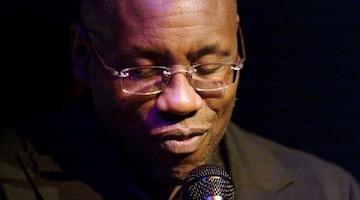 BAR Poet-in-Residence, Raymond Nat Turner, joins us from New York City to talk about his work and an upcoming performance with his group, Upsurge New York City.
 Gerald Perreira of Organization for the Victory of the People in Guyana joins us to discuss the long running territorial dispute with neighboring Venezuela and the increasing activity of U.S. in the…
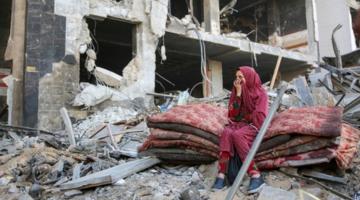 Any sign of even tiny opposition is enough to send Israel into a frenzy of bloodletting. Hospital attacks, murders of aid workers, violations of the sovereignty of embassies, are all par for the…


