by Mark P. Fancher
Just as slave runaways made common cause with Native Americans in resistance to white settlers, U.S. Blacks should reciprocate the solidarity offered by Cuba, Venezuela and Palestinians, as well as providing whatever assistance is possible to progressive and revolutionary forces in Africa. However, “the task of political disengagement” from the rigged U.S. process “demands assurance that the community is not embarking on a journey into the abyss.”
The New Black Maroons to America: “We Quit!”
by Mark P. Fancher
“There were slaves who looked for opportunities to kill the master and determine their own destiny.”
During eight years of a black Presidency, we witnessed a police violence epidemic, the poisoning of the Flint water supply, the criminalization of black school children, and the militarization of Africa. Many who pinned their hopes on the Obama phenomenon must now decide whether the terror of systemic racial oppression and its consistent disregard for African life are best addressed through continuing pursuit of integration into the political structures and institutions of the oppressor; or by instead walking the path to independence, self-sufficiency and self-determination.
The choice is not new, and through the years Africans have had to make decisions. There were enslaved Africans who aspired to nothing greater than servitude in the slave-owner’s home. At the same time there were others who looked for opportunities to kill the master and escape into the wilderness to establish communities of maroons, who made their own way and determined their own destiny.
“Africans in the U.S. are uniquely positioned to champion the struggles of peoples beyond U.S. borders.”
Some who dreamed of a black nation also recognized the potential for alliances with communities resisting a common oppressor. Africans fled slave plantations and strategically joined indigenous communities. Many journeyed into dense tropical regions of Florida where they united with the Seminoles and shared with them rice cultivation techniques and other agricultural practices brought from West Africa. Historian William Loren Katz explained:
“The Seminole Nation offered their new friends some valuable gifts in return. Africans and other ethnic groups enjoyed an independent village status. Their only obligation was to pay a small agricultural tax to be used for the common defense. If Africans needed something besides freedom, it was a strong defense against slave hunters from the north, so their tax was well spent. Georgia slaveholders were soon invading Florida, seeking their runaways, and were soon meeting a united resistance by red and black armed forces.”
After the institution of slavery was destroyed, Africans’ instinct to live as independent, self-determining people persisted. In 1866, John Sanborn, the Commissioner of Indian Affairs commented: “The [formerly enslaved Africans] are the most industrious, economical, and in many respects, the more intelligent portion of the population of the Indian Territory. They all desire to remain in that territory upon lands set apart for their own exclusive use.”
The instinct to separate from oppressive forces was global. By 1955, regions of the world that had been the focus of underdevelopment and exploitation recognized their shared plight, and in much the same way that enslaved Africans made common cause with First Nations peoples, representatives of so-called “Third World” countries convened in Bandung, Indonesia. That meeting set the stage for the Non-Aligned Movement that, in response to the Cold War, established as its mission, to "create an independent path in world politics that would not result in member States becoming pawns in the struggles between the major powers."
“The Non-Aligned Movement established as its mission, to ‘create an independent path in world politics.’”
As we approach a new historical milestone, with most Africans perceiving as bleak prospects for integration into a new Trump-inspired political reality, advocates for self-determination may assume the idea of an alternative, independent political path will find greater resonance in the black community. However, for many, the idea of becoming 21st Century maroons may take a little getting used to.
Throughout the African World, there is a perceived unbreakable connection between black people and the empire. It is a perception inspired by misguided sentiment or ignorance or fear, or some combination of these and other factors. The idea of cutting ties with the imperialist political structure is regarded by some as insane, or at least impractical. Thus, the task of political disengagement demands assurance that the community is not embarking on a journey into the abyss. This challenge might be met by demonstrating that disengagement from global imperialism and exploitative domestic capitalism can be followed in short order by productive engagement and alliance with other enemies of imperialism.
In the same way that enslaved Africans established alliances with indigenous peoples, there are now comparable communities around the world with whom relationships might be established. In recent years, the appetite for such relationships has been demonstrated in various ways. Palestinian activists provided Ferguson protesters with advice about coping with teargas. Venezuela made free and affordable heating oil available to low-income communities in the U.S. Cuba has not only made standing offers to provide cost-free medical education for the youth of underserved communities around the world, but they also stood ready to send a large army of physicians into Katrina-ravaged New Orleans.
“There are progressive to revolutionary forces in various parts of Africa with whom western black communities might make common cause.”
There has likewise been a perception that Africans in the U.S. are uniquely positioned to return the favor of these gestures of solidarity by championing within this country the struggles of peoples beyond U.S. borders. This has certainly been true with respect to the Palestinian cause, efforts to end the economic isolation of Cuba and Zimbabwe, and the ongoing struggle to dislodge U.S. military troops from Africa.
In addition to relationships with progressive countries in the western hemisphere and any movement among the First Nations that might grow out of the Standing Rock experience, there are progressive to revolutionary forces in various parts of Africa with whom western black communities might make common cause. The consolidation of these relationships into a global network that has its own politics, trade arrangements and diplomatic relationships can enhance prospects for the attainment of long-term goals like the establishment of a continent-wide African super state and the eventual triumph of the world’s revolutionary forces over imperial power.
When it comes to politics we don’t have to accept the programs of the Democrats, Republicans or any other players in a rigged political process. Like the maroons we can say no thanks to all of it.
Mark P. Fancher is an attorney who writes periodically for Black Agenda Report. He can be contacted at mfancher@comcast.net

 Ecuador was once a safe country with some of the best economic prospects in the region. Today, Ecuador has a nearly 500% increase in violent crimes and a marginalized population of poor, African, and…
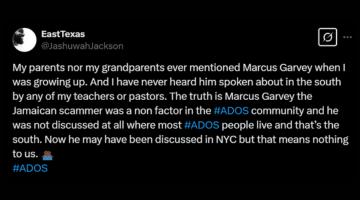 The ADOS and FBA (American Descendants of Slavery and Foundational Black Americans) movements have gained influence by advocating for reparations exclusively for Black Americans descended from U.S.…
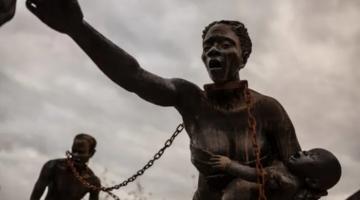 So-called Foundational Black Americans may tell themselves they are noble protectors of ancestral legacy, but they are, in fact, little different from European groups in this country that…
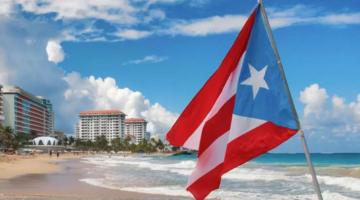 Capitalist developers and political opportunists are feeding off Puerto Rico's land and resources to privatize the island. The people suffer from deteriorating infrastructure and increasing…
 Journalists Hossam Shabat and Mohammed Mansour were killed in targeted Israeli airstrikes, as the death toll among media workers continues to rise.


