“Many of those detained belong to the Afro-Colombian organization Proceso de Comunidades Negras (Black Communities’ Process - PCN) and in their respective communities, are active in defending human rights.”
On April 20, Colombian human rights organizations in the south-west of the country denounced the mass arrests of leaders and human rights defenders in the departments of Nariño, Cauca and Valle del Cauca. The organizations pointed out that people who were detained had attended sessions of the National Liberation Army (ELN) peace talks held in Quito, Ecuador, and they would probably be charged with rebellion and be accused of having links to the guerrilla group.
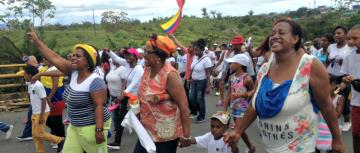
Human rights organizations have not been able to identify all of the 30 people who were detained in the operations due to the irregular circumstances under which the legal proceedings took place. Many of those detained belong to the Afro-Colombian organization Proceso de Comunidades Negras (Black Communities’ Process - PCN) and in their respective communities, are active in defending human rights, the rights of Black communities, and defending peace as they have already been victimized by the armed conflict in their territories.
The natural resource wealth and strategic position of the south-western region of Colombia has made it a focal point of the armed conflict and a territory subject to constant dispute. For the residents and communities of the region, this has meant being subjected to all sorts of human rights violations – forced displacement, massacres and threats -- and in general, living under violent and militarized control of their territories.
“Several of the people detained had served as members of local governments.”
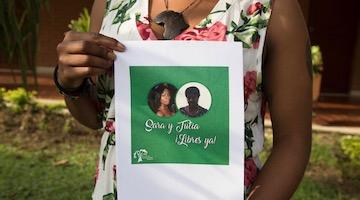
Sara Liliana Quiñonez Valencia and her mother Tulia Marys Valencia, two of the leaders who were detained, are from Tumaco, Nariño, one of the municipalities with the highest murder rates in the world. The PCN explained in a communique that Sara had served as President and Vice President of the Afro-Colombian Community Council of Alto Mira and Frontera, a task which put her and her family’s life at risk. In 2015, the communique said, Sara and her family were forcibly displaced after she received threats to her life, safety and wellbeing due to her work with the Community Council to defend and strengthen the collective rights of her community. She was forcibly displaced again in October 2017 when the leadership of the community council was threatened. They communique also noted that two legal representatives of the Afro-Colombian Community Council of Alto Mira and Frontera, along with other leaders from the community, have been assassinated.
When Sara was arrested, she was living in forced displacement in the city of Cali with her family. She was under the protection of the Inter-American Commission of Human Rights, as well as a scheme from the Colombian National Protection Unit (Unidad Nacional de Protección, UNP). Her mother Tulia is also a well-known local leader, who works with the women’s group and local committees of the Afro-Colombian Community Council of Alto Mira and Frontera.
“Attacks by a FARC dissident group have put the two governments in an uncomfortable position.”
Among those who were arrested are former mayors of the city of Samaniego in Nariño, Harold Montufar Andrade, Pedro Dorado, Ricardo Dorado and Yamile Montenegro. Several of the other people detained had served as members of local governments and were active members of the social organizations in the region.
The social movement Congreso de los Pueblos (The People’s Congress) denounced the detentions of the activists and the context in which the operations occurred -- when both the Ecuadorian and Colombian governments are making frenzied efforts to crack down on the ‘FARC dissident group’ led by Alias ‘Guacho,’ whose attacks and kidnappings in the past two weeks have put the two governments in an uncomfortable position.
The movement stated that “In response to the difficult situation in the border zone caused by the armed wing of the Sinaloa Cartel commanded by Alias ‘Guacho’, the government is continuing with the criminalization of social movements and distracting the attention of society. It is creating new judicial ‘false positives’ in its rush to respond to the recent criticisms from a sector of the right-wing that on purpose uses fear and internal war as a campaign tool.”
The detentions of these activists is yet another instance of the government targeting those who defend human rights, fight for social justice and support the peace process. The detention of FARC political party member Jesús Santrich just two weeks ago, the opening of an investigation in March on the links between the Peasant Senator Alberto Castilla and the insurgent group ELN, and the jailing of dozens of innocent students, human rights defenders, peasants, miners, and social leaders is further evidence of this.
This article previously appeared in The Dawn News


 The United Nations has adopted a resolution calling for the use of map projections that more accurately portray the size and proportions of the world’s continents, particularly correcting the long-…
 In this week’s segment, we discuss organizers in Washington, D.C. who developed a transit solidarity program to oppose transit fare crackdowns that criminalize poverty. But we begin with a discussion…
 Dr. Shireen Al-Adeimi provides historical background and analysis of events in Yemen as Ansar Allah advances against Saudi-backed mercenaries.
 Pan-African Community Action (PACA) released a Transit Solidarity Plan for Washington, DC that challenges DC fare evasion crackdowns by collecting and redistributing fare cards to residents in the…
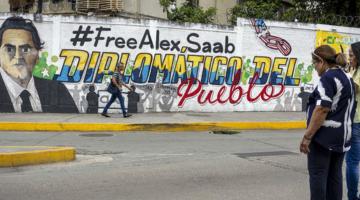 The United States got its hands on Alex Saab a second time in order to use him in its case against Nicolás Maduro. The U.S. succeeded in getting a guilty plea from Saab, but the current Venezuelan…


