A Black Agenda Radio commentary by executive editor Glen Ford Beyoncé has wowed her public again with the YouTube and Superbowl versions of “Formation” – but it’s really all about capital formation. “Beyoncé wants to be perceived as being down with the new movement” – the same motivation that led James Brown to release “Say It Loud, I’m Black and I’m Proud,” in 1968. Neither artist is the least bit radical, but both “know how to ride the waves of popular culture” and to masquerade as change-makers.
Beyoncé , James Brown and Black Movements A Black Agenda Radio commentary by executive editor Glen Ford “ Fans and critics alike have over-interpreted Beyoncé’s latest commercial product.”
Only two days and one Superbowl performance after Beyoncé released her video, “Formation,” the song had registered 7 million views on YouTube. These numbers are not really all that surprising for an artist who is rated the nation’s number one celebrity, with a net worth of $250 million and the highest yearly earnings record . Beyoncé and her multi-millionaire husband Jay-Z are by no stretch of the imagination political radicals. But they do know how to ride the waves of popular culture, putting their own signatures on existing social movements. It’s good business, and they are good at it.
Beyoncé and her platoon of female dancers generated maximum shock-and-awe value with her fifth career Superbowl performance , derived from the “Formation” single . Beyoncé was bedecked with a bandolier for high-powered ammunition, while her dancers were costumed in Black Panther-themed uniforms as they moved in military-like “formations” and formed a giant “X” – presumably signifying Malcolm. In the video, a young boy dances in front of a line of cops, as the camera flashes to graffiti demanding “Stop Shooting Us.” We immediately make the connection to 12 year-old Tamir Rice, murdered by Cleveland cops – except in the video, the police put up their hands in surrender to the dancing child. New Orleans is the motif for Beyoncé’s rhythmic fantasy, which ends with her atop a police car as it sinks beneath the flood waters.
Black Lives Spend Money
Fans and critics alike have over-interpreted Beyoncé’s latest commercial product – as if it provides an insight into her and her husband Jay-Z’s political leanings. A National Pubic Radio article features Black female intellectuals and journalists pontificating on the boldness of Beyoncé’s Blackness and womanhood, and her roots in the down-and-dirty quarters of the South. R. L. Stephens II, writing in the radical publication Orchestrated Pulse , complains that “Formation” fails to inform us about the “political conditions” that Black people face. He points out that Beyoncé is a supporter and Twitter follower of DeRay McKesson, who has turned a social media presence into a ticket into the V.I.P. sections of corporate power and the Democratic Party.
But, of course, DeRay McKesson is only of interest to the Power Structure because he opportunistically attached himself to an emerging social movement, the same Black Lives Matter movement from which Beyoncé and her spouse hope to derive social relevancy – and of course, tens of millions more in sales.
In the video, the Beyoncé character calls herself a “Black Bill Gates in the making” and is money-hungry to the bone. This is not a radical song. What it does, is signify that Beyoncé wants to be perceived as being down with the new movement. It’s much like soul singer James Brown’s musical endorsement of “Black” as the proud name of his people, in his 1968 hit record. Brown was, in fact, a deeply conservative businessman who would endorse – or betray – anyone, to guard his bankroll. Beyoncé and Jay-Z have no political principles except profit-making. But they, like James Brown, recognize the potential of an awakening people, and try to get with the “movement.” In that sense, the “movement” is the rising star – and that is the point of the matter.
For Black Agenda Radio, I’m Glen Ford. On the web, go to BlackAgendaReport.com.

 "As long as the virus continues to circulate anywhere, people will continue to die, trade and travel will continue to be disrupted, and the economic recovery will be further delayed."
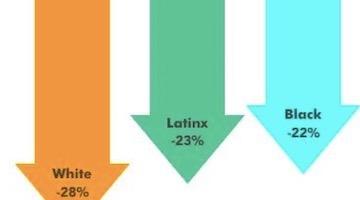 The pandemic forced many police departments, courts and jails to take steps that reformers had been demanding for decades.
 Expect “Lip Service” from Biden on Immigration Reform
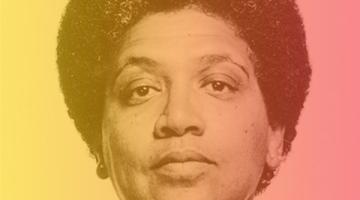 Black poet and feminist Audre Lorde showed her socialist and revolutionary colors in the wake of the US invasion of Grenada, her parent’s birthplace, in 1983, said Jack Turner, pro
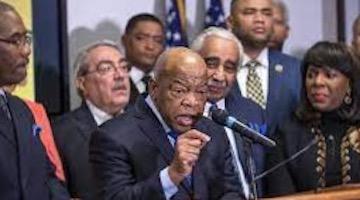 “If we want to have Black liberation, we have to abolish capitalism to do that,” said Kandista Mallett, an activist and columnist for Teen Vogue magazine who authored a recent colu


