In this series, we ask acclaimed authors to answer five questions about their book. This week’s featured author is Nanjala Nyabola. Nyabola is a writer and political analyst based in Nairobi, Kenya. Her work focuses on structural injustice, the intersection between technology and politics, and migration and human mobility. Her book is Strange and Difficult Times: Notes on a Global Pandemic.
Roberto Sirvent: How can your book help BAR readers understand the current political and social climate?
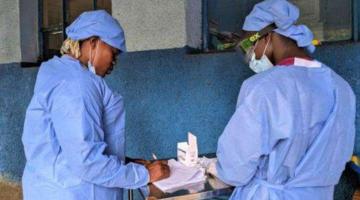
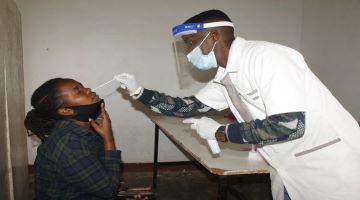
Nanjala Nyabola: The COVID-19 pandemic was one of the most significant transformations in contemporary history, yet it feels like the world is rushing to return to “normal” – whatever that means – without confronting all the things that were broken, all the things that went wrong, all the ways that people were harmed and even all the ways in which “normal” was toxic for so many people. “Strange and Difficult Times: Notes on a Global Pandemic” is written as memory work, to hold space in the archive for all of these stories, particularly from Africa, that are so important to understanding how the world has shifted. It is a catalogue of errors, histories, hopes and dreams of people who are even as we speak being written out of the histories of the pandemic. Pretending like the last three years didn’t happen is a bad politics and bad policy. We are already seeing how countries that were abandoned by the international system are adjusting their relationships to the multilateral system because of the way we were treated during the pandemic. We are experiencing a period of realignment and people really wanting us to rethink what the values of domestic and international politics are. It’s important for people who are thinking about the present and future of global politics to reject this impulse to move on as if nothing has happened or changed.
What do you hope activists and community organizers will take away from reading your book?
I want people to understand that there is so much agency and creativity on the African continent, within our communities and within our societies. We’re not idealistic or completely ignorant of the size and scope of the challenge that the pandemic created in Africa. We are keenly aware of the things our government did wrong and the ways in which our systems failed and continue to fail us. But we are also keenly aware of the things that were done to us: the choices that were taken to let Africa suffer even when it was so easy to work together to prevent it. No one in this world is a bigger critic than I am of African governments when they fail, but this was one of those moments in which the failures on the continent were no more dire than those of other parts of the world. But we were not being held to the same standard as the rest of the world. Somehow the possible mass failure of Africa was not only to be expected but a minor tragedy in the scheme of saving lives in other parts of the world. In this way, I want people to understand that the coming wave of mistrust is not unfounded or irrational. I want people to understand that African people know that we have been wronged by both our governments and the governments of the world, and whatever comes next in this coming age of upheaval and realignment is a product of that disappointment. But I also want people to know that “we did not simply throw our dead in the ground and move on”. We didn’t abandon ourselves, even if the narrative of African helplessness is so embedded in international relations.
We know readers will learn a lot from your book, but what do you hope readers will un-learn? In other words, is there a particular ideology you’re hoping to dismantle?
I want to dismantle neoliberal ideas of public health specifically and governance more broadly, and I want people to unlearn this idea that the issues that have arisen from this pandemic moment are inevitable. We are here because many policymakers and government leaders made choices, and often selfish and inward looking choices that privileged the survival of the few over the survival of the many. I want people to understand that there is nothing inevitable about the neoliberal health system. We have to unlearn that if we hope to make a difference in this space. In this I’m indebted to the work that people like Mariame Kaba have done on prisons and carceral systems because it really brought something important home to me. Anything that can be built can also be un-built – nothing human made about the system in which we live in is inevitable, so it is never a waste of time to try and change people’s minds and perspectives on things, even if the scale of the task seems so large and intimidating.
Which intellectuals and/or intellectual movements most inspire your work?
Black feminism, and African feminism specifically, is the most influential thread of intellectual work for me. It inspires me to think deeply about my work in academia and in practice – what it means to do work that is grounded, rooted in care and love, and that is centered on the experiences of those who have the least power in a system rather than those who have most. I spend a lot of time thinking about the many “leaderless” women’s movements that have shaped the continent, from the Aba women’s riots to the Thuku revolts, to the present day My Dress My Choice and Rhodes Must Fall. It reminds me that you don’t have to model neoliberal, masculinized ideals of power in order to be influential or relevant. You just have to be rooted and stay in constant connection with the people you claim to be working for. I’m also constantly inspired by the work of Edward Said and Alice Walker. They embody the kind of work I aspire to – deeply intellectual but also deeply practical. They don’t just sit in the ivory tower and pontificate but they get involved. And their work spans so many spaces. I love it.
Which two books published in the last five years would you recommend to BAR readers? How do you envision engaging these titles in your future work?
I read a lot of books that challenge me to think about thinking, how I think and how I construct knowledge and how I share it with others. I’m not 100% sure that they are published in the last five years. Saadiya Hartman’s Wayward Lives, Beautiful Experiments is a triumph of rethinking the archive, reading across silences and just engaging with archives in methodologically transformational ways. Sara Ahmed’s Living a Feminist Life does the same work in regards to thinking critically about citation practice and what it means to curate a list of citations. I think these are foundational methods that can really help us get to the work of decolonising the archive and reimagining what knowledge and the academy is for.
Roberto Sirvent is editor of the Black Agenda Report Book Forum.


 The Vienna Convention on Diplomatic Relations protects the rights of Alex Saab. But the Trump administration violated international law in charging him with a crime and the Biden administration…
 Intelligent observers know that the state uses corporate media to spread its narrative. Recently the Biden administration admitted what was already obvious.
 Despite its promises of universalism, international law has clearly not yet shaken its foundation as a racial order. The author observes the contradictions in South Africa.
 Noosim Naimasiah interviews Irene Asuwa and Cidi Otieno about food sovereignty, ecologically appropriate production, distribution and consumption, social-economic justice, and local food systems…
 President Joe Biden is proposing $30 billion in new funding to states and localities to hire more police. He and other democrats make clear they want to silence the demand for defunding the police.…


