In this series, we ask acclaimed authors to answer five questions about their book. This week’s featured author is Marisa Solomon. Solomon is Assistant Professor of Women’s, Gender, and Sexuality Studies at Barnard College, Columbia University. Her book is The Elsewhere Is Black: Ecological Violence and Improvised Life.
Book summary, from the publisher:
In The Elsewhere Is Black, Marisa Solomon examines how waste is a mundane part of poor Black survival and a condition of settler colonial racial capitalism. Tracing the flow of trash and waste across Black spaces, from Brooklyn’s historically Black Bedford-Stuyvesant to the post-plantation towns of Virginia’s Tidewater, Solomon contends that waste infrastructures concentrate environmental risk in an elsewhere that is routinely Black. Solomon emphasizes that ecological violence is a form of racialized heteropatriarchal environmental control that upholds whiteness as a propertied way of life and criminalizes Black survival. As she points to acute sites of toxicity, Solomon theorizes the relationship between the devaluation of land and Black and more-than-human life to reveal how the risks of poisoning, police violence, dispossession, and poverty hold Black life captive. Locating Black survival as a site from which alternative eco-political imaginations spring, she foregrounds how people live and dream amidst waste’s daily accumulation. Solomon opens new ecological horizons to ask: What forms of environmentalism emerge when Black un/freedom has never been distant from waste?
Roberto Sirvent: How can your book help BAR readers understand the current political and social climate?
Marisa Solomon: Trump’s Executive Orders authorizing unprecedented waves of violence against unhoused people are precisely what my book is warning against. Criminalizing Blackness and poverty make it possible to treat the poor as if they are an environmental problem, for which there is only one solution: removal. Settler colonial racial capitalism is fundamentally built on the disposability of life, land, and more-than-human relations. Any social system so committed to disposal—as a mode of capital accumulation and a method for managing its material consequences—will dispose of people. Thus “clean up” campaigns, such as Trump’s attempt to “clean up” D.C., make visible the pernicious elision between cleanliness and safety. This is the violence of whiteness and property which will cast out, incarcerate, punish, maim and kill anything in its path.
I developed the theory of toxic capture to talk about the specific forms of anti-Black condemnation and punishment in the U.S. settler colony that normalize this killing through ecological violence. But the resonances with Palestine are immediate: Palestinians are being slaughtered and the land of Palestine is being toxified. The figure of the criminal and the figure of the terrorist are connected. Criminalization makes people maimable, displaceable, and killable for land; so too, the construction of the terrorist. If Black people are waste getting in the way of the settlers’ unquenchable thirst for Indigenous land, the “terrorist” is a threat to settlers’ way of life and must be eliminated for occupation to appear seamless, coherent, and natural. Though “the criminal” is apprehended as internal to the nation and “the terrorist” is constructed as without, both threaten the territory of the nation and settlers’ environmental control over territory. In distinct but interconnected ways, Black and other people of color in the US and Palestinians in Palestine are treated as wasting space and thus are rendered available for expulsion, toxification, and genocide.
What do you hope activists and community organizers will take away from reading your book?
First, I want to emphasize that criminalized people have a lot to say about the environment, even if “environmentalism” or “climate justice” are not always the language people use. As the target of The War on Drugs and The War on Poverty, unhoused people survive the structures that organizers seek to change. Surviving those things on the street exposes how much state terror is about the continued assertion of environmental control. In order for liberation projects to also address racial capitalism’s environmental legacies (toxification, soil depletion, climate catastrophe) that will be here long after freedom comes, we need to be able to see how anti-Blackness, colonialism, racial capitalism and heteropatriarchy are also form of environmental (mis)-management that waste earth and people for profit.
Community organizers need to be careful about getting enrolled in projects of clean-up. These projects are often popular in working class neighborhoods of color but end up doing the work of respectability and property. I see these urban clean-up projects as invitations into the settler capitalist project, which promise “order,” “safety” and “health” through property and a propertied orientation to space. While “cleaning up” might seem like self- or community- determination, it is, in fact, the lie of a world built on property relations that teach us that ownership is “clean,” an unquestioned right on unceded native territory and naturalize that casting out of some for the “health” of others.
Finally, I want people to be wary of zero-waste and waste-to-energy and “circular economy” projects. These projects are attractive to private waste companies because they don’t intervene in the production of waste (or what Marco Armiero would call “waste producing relations”). Instead, they annex waste for capital in new ways. These initiatives always require land seizure (just like landfills), and that seizure is justified by the “cheap land” of Black poverty.
We know readers will learn a lot from your book, but what do you hope readers will un-learn? In other words, is there a particular ideology you’re hoping to dismantle?
I would like my readers to unlearn the politics of cleanliness and cleaning (or clean up). Cleaning is sold as a social good when it’s actually a settler colonial tool for: (1) naming places, land, people, and more-than-human worlds as ‘unproductive’ or ‘wasted’; and (2) justifying the removal of people who are assumed to be bad stewards of the land. Thus, cleaning becomes the language we use to conceal spatial and police violence. The result is a commonsense belief that property is good, clean, and environmentally sound.
Cleanliness is also about the class politics of respectability, which presume that there is nothing to learn from the dirt (of poverty). The respectable person of color desires not just property but propriety, which requires rejecting the queerness with which Black life has always been made. On the street in particular, where kin can be the city’s “pests” or the brothers you collect from other mothers, life is not clean nor guided by the straight lines of property and heteropatriarchy. The promise of propriety and its gender-austere imagination is a violent fiction imposed on the body and the material world. In this vision, white, heteropatriarchal cis men (and sometimes women) are the appropriate “stewards” of the environment. If this book encourages readers to unlearn cleanliness and property as environmental goods, it also asks readers to unlearn cis-ness and heterosexuality as necessary for the “good” environmental theorist.
Which intellectuals and/or intellectual movements most inspire your work?
Ultimately, this book proposes tools for shifting how we talk about the environment and how we understand who an “environmentalist” is and what they do. As a feminist who believes that abolition is our best way forward, I think the intellectual traditions of Black Marxism and Marxist-Feminism, anticolonial approaches to the environment, and critical Indigenous Scholarship are necessary for doing that work.
Black Feminist Marxism reminds us that power is spatial and material, and that Blackness has a contradictory relationship to value production, which Charisse Burden-Stelly describes as “value minus worth.” Scholars like Angela Davis, Joy James, Audre Lorde, Cedric Robinson, Ruth Wilson Gilmore, Robin D.G. Kelley and Clyde Woods theorize the particular institutions that make this contradiction visible. But they also point us to ways that Black people have resisted, carving out what JT Roane would call “alternative use values.”
Anti-colonial thinkers make it abundantly clear that colonialism (and colonialism’s racist heteropatriarchal relationships to land) is about environmental control—the control of people and the control of resources. Thinkers such as Walter Rodney, Kwame Nkrumah, Frantz Fanon, and Malcom Ferdinand force us to see the ways that colonialism and neocolonialism install a set of extractive relationships between the colonizer and “the other.” While the transformations of capitalist relationships change the geographies of extraction, colonizers’ pernicious geopolitical control smooths a path for the circuits of capital as well as the management of racial capitalism’s toxic consequences. In the U.S., where former plantation lands are no longer “productive,” “fallowed land” is made productive once again by toxic industries: the prison industry, the waste industry, and most recently, the AI industry.
Finally, I’m deeply indebted to Indigenous scholars naming the specific ways that settler colonialism and occupation are not just, ongoing but toxifying. As Max Liboiron asserts, pollution is colonialism. In this vein, scholars such as Huanani Kay-Trasky, M. Muphy, Anne Spice, Nicke Estes, Jodi Byrd, Audra Simpson, and Palestinian Scholars such as Hadeel Assali, Raja Shehadeh, and Mazin Qusiyeh and Mohammed Abusarhan describe the ecological violence of occupation. My work contributes to this lineage by showing how anti-Blackness is a tool within the settler colonial arsenal to expropriate and toxify Indigenous lands.
Which two books published in the last five years would you recommend to BAR readers? How do you envision engaging these titles in your future work?
J.T Roane’s Dark Agoras is critical to how I will continue to think about Blackness, slavery’s environmental impact and marginalized people’s alternative ecological stewardship. Dark Agoras makes visible the relentless creativity and breadth of spatial practices that Black migrants bring to the city as they survive their own displacement and brutalization. Roane historicizes these practices from slavery to the present to expose “a Black commons” grounded in an alternative environmental vision. Roane traces histories of resistance and offers an abundant horizon of modes for living differently. I see criminalized people’s survival in direct conversation with these historic and ongoing practices.
The second book I am continuing to think with is Jules Gil-Peterson’s A Short History of Transmisogyny. In this book, Gil-Peterson shows how central transmisogyny has been to the projects of settler colonialism, colonialism, and enslavement. In my first book, I write about how cisness is a propertied orientation towards gender. In my future work, I am interested in continuing to think about how Black ecologists and others have forged alternative ecological imaginations that resist property and ownership—and what this means for how they theorize, and live, gender-expansive lives.
Roberto Sirvent is the editor of the Black Agenda Report Book Forum.




 “Between October 2 and October 8, 1937, between 15,000 and 40,000 Haitians and Black Dominicans were slaughtered by Dominican troops…”
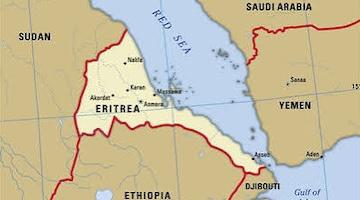 Ethiopia and Eritrea are on the brink of a war that could further destabilize the Red Sea, disrupt oil tanker traffic, and drive gas prices even higher.
 The UN's renewal of the Gang Suppression Force mandate is part of a wider hemispheric project to reassert military control across the Americas. Caribbean leaders cannot claim to support a Zone of…
 The Islamic Revolutionary Guard Corps (IRGC) has issued a letter addressed to the American people, outlining its views on recent developments and Iran-U.S. relations.
 The Trump administration's new sanctions on Cuba, are part of a dual strategy to create unendurable hardship while simultaneously making Cuba financially dependent on the United States.


