“The police” is a regime of state violence that is designed to have freedom from the “rule of law.”
“Cops don’t just patrol our streets, they patrol the language we use to understand police.”
In this series, we ask acclaimed authors to answer five questions about their book. This week’s featured authors are David Correiaand Tyler Wall. Correia is Associate Professor in the Department of American Studies at the University of New Mexico.Wall is an Assistant Professor in the Department of Sociology at the University of Tennessee. Their book is Police: A Field Guide.
Roberto Sirvent:How can your book help BAR readers understand the current political and social climate?
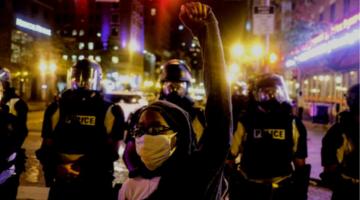
David Correia and Tyler Wall:Police violence, particularly against poor people of color, is a central feature of state power. In the U.S., police, and its use of violence in the fabrication of a racialized and class-based form of “social order,” comes to us from histories of settler colonialism and the slave patrol. Our book, Police: a Field Guide places police in this historical and theoretical context, in order to argue for a more radical analysis of police and police reform. In the wake of popular struggles against police and policing in the U.S., many led by BLM activists and allied-organizations, there have been waves of police reform programs, proposals and promises. The book arms scholars and activists against these kinds of reformists approaches to confronting the problem of racialized police violence against the poor.
One a broader level, we hope a serious strength of the book is that it provides some much-needed theorization of police power. It hopefully helps readers to better understand what we call “the police.” There is a common tendency of many people, including some on “the left,” to assume “the police” is something that doesn’t need much explanation because what police is or does is already so clear and understood. Hence we have common conflations of police with “law enforcement” or even “crime fighting” (albeit both recognized as racialized), and we push back on these views by showing police as first and foremost a regime of state violence that operates as an executive, prerogative power, which means it is designed to have autonomy or freedom from the “rule of law.” This has all sorts of implications about what forms of resistance to the police relation are viable or useful.
What do you hope activists and community organizers will take away from reading your book?
The book is organized as a series of keyword definitions of key cop terms and concepts. We point out that the language we use to talk about police comes to us from police. In other words, cops don’t just patrol our streets, they patrol the language we use to understand police.Thus in order to confront the problem of police violence, we need a different language, one free of the copspeak that currently dominates popular discourses of police. The book is designed to arm activists and community organizers against this reformist language in the hope that this can contribute to more radical and transformative modes of anti-police violence struggle.
We know readers will learn a lot from your book, but what do you hope readers will un-learn? In other words, is there a particular ideology you’re hoping to dismantle?
The entire book is organized as a demystification of police and the police powers. Cops do not enforce the law, they impose order. And this book asks, What is the order that cops impose? It is a patriarchal one that valorizes capitalist property relations, and whiteness, and comes to us from histories of Indigenous dispossession and slavery, and anti-Black violence. But histories of struggles against these patterns of police power are as long as histories of racialized police violence against the poor. We start the book with James Baldwin’s amazing work in the 1960s on police as a way to demonstrate the failures of police reform. In other words, Baldwin’s warnings, no different than the warnings of many BLM activists and critical scholars today, help us unlearn a central premise of police reform: the idea that police are progressive and reform can unlock the progressive potential of police.
“Cops do not enforce the law, they impose order.”
Police reform is not a route to transformation. Police reform serves as the central way that police and its allies relegitimize the police project in the face of existential challenges to the police project by activists. The terms and concepts we define in this book offer an alternative to the copspeak that dominates establishment discourse of police and offers instead a radical vocabulary we hope can contribute to the abolition of police as we know it.
Who are the intellectual heroes that inspire your work?
James Baldwin, Karl Marx. Among contemporary intellectuals: Ruth Wilson Gilmore, Mark Neocleous, Naomi Murakawa.
In what way does your book help us imagine new worlds?
The central premise of the book is the idea that radical alternatives to the police we have are not possible when the language we have to understand police comes to us from police. What we think we know about police comes to us in a language we call “copspeak.” This language is demystified in the book as a way to explain, first, why all forms of police reform lead to more police, more weapons, and more police violence against poor communities of color. Second, the book is intended, literally, as a field guide. As a field guide on police, we are pushing back on the insidious idea that police are absolutely necessary for “society” to exist in the first place. In other words, in order to imagine a world without police, and coincidentally a world beyond racial capitalism, we need a radical language that refuses the police we have.
Roberto Sirventis Professor of Political and Social Ethics at Hope International University in Fullerton, CA. He also serves as the Outreach and Mentoring Coordinator for thePolitical Theology Network. He is co-author, with fellow BAR contributor Danny Haiphong, of the new book, American Exceptionalism and American Innocence: A People’s History of Fake News—From the Revolutionary War to the War on Terror.
COMMENTS?
Please join the conversation on Black Agenda Report's Facebook page at http://facebook.com/blackagendareport
Or, you can comment by emailing us at comments@blackagendareport.com



 The trope of the United States being in a state of decline is a common one, but it should not be accepted without scrutiny. The U.S. faces crises but remains dangerous, powerful, and single-minded in…
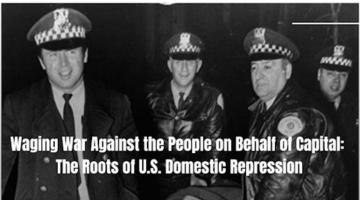 The "Antifa summit" and the NSPM-7 represent another institutional step toward consolidating fascism in the United States by criminalizing opposition to fascism itself.
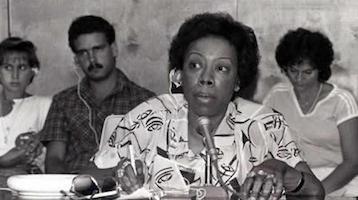 “...the science for revolutionary change…is forged by human persuasion and building social consciousness based on the class analysis which sees the struggle against racism as central.”
 Symone Sanders interview with Hasan Piker exposed her as a bad-faith interlocutor who uses identity as a cudgel while remaining silent on the poverty, pollution, and police violence that plague the…
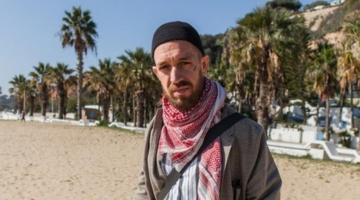 The U.S. extradition request for Fergie Chambers is an attempt to use Spanish courts to extend a domestic repression campaign against political opposition.


