The author examines literature that looks to sites of struggle to find the seeds of an alternative, more just future.
“Planning just communities requires critical understandings of the past.”
In this series we ask organizers, artists, and academics to share books that inform their thinking about abolition. This week’s contributor is Hilary Malson.
I write this piece as a planning historian. Planning, as a profession, is expressly oriented towards spatial futures, while historians are compelled making sense of the past. The texts I discuss below contributed to the development of my own conviction that planning just communities requires critical understandings of the past.
A note on the first section: I discuss three works that were formative in shifting my consciousness. Each laid the groundwork in mind to engage with classic texts in the Black Radical Tradition; reading Michel-Rolph Trouillot’s Silencing the Past: Power and the Production of History in graduate school reminded me of my initial engagement with counternarratives through Octavia Butler’s Kindred; Stephanie Camp’s Closer to Freedom: Enslaved Women and Everyday Resistance in the Plantation South made my later reading of Katherine McKittrick’s Demonic Grounds: Black Women and the Cartographies of Struggle that much more fruitful; and Clyde Woods’ Development Arrested: The Blues and Plantation Power in the Mississippi Delta pushed me towards Walter Rodney’s How Europe Underdeveloped Africa as a means of reframing exploitation of Black American communities within the global context of anti-colonial Black struggle. Though in some respects, these other texts merit prioritization as the works that radicalized me – how could one not fundamentally see the world differently, and with restructured political commitments, after reading Walter Rodney? – I found it useful to return to the earlier works that sparked the radicalization of my orientation towards the world.
Section I: Three books that radicalized me.
Octavia Butler’s sci-fi classic Kindred, which I initially read in junior high, was among the first books to show me how dominant historical narratives are produced through inequalities of power. Dana, a contemporary Black woman, finds herself repeatedly transported to antebellum Maryland to care for her ancestors and ensure their survival. When she returns to the present, her body retains the wounds of the past, and she is haunted by the horrors her ancestors endured – experiences that had been silenced in the historical record. The embodied nature of Dana’s travels across time and space express the extent to which inherited traumas of slavery, rape, and loss are held in Black women’s bodies and memories. Dana and the other Black women resist their ongoing dehumanization on the plantation by stealing and redistributing food, shielding one another from violence, and ending their own lives as final acts of agency. Through their actions, Butler conveyed forms of radical Black feminism shaped by intimate histories and complex politics of care – a counterpoint to the lean-in doctrine promoted as a model for young women today. As a young Black woman reading Kindred, I began to understand Black women’s bodies as political terrains and center Black women’s collective memories as critical counternarratives within racist and patriarchal societies such as our own.
“Butler conveyed forms of radical Black feminism shaped by intimate histories and complex politics of care.”
In Closer to Freedom: Enslaved Women and Everyday Resistance in the Plantation South, historian Stephanie Camp similarly examined the experiences of enslaved women in the plantation societies of the antebellum South, but her analysis was explicitly centered on the spatial dimensions of their resistance. Much has been written about the spectacular slave rebellions that sought to transform slavery-based societies throughout the Americas, but Camp adopted an alternative perspective by focusing squarely on everyday forms of resistance. In her words, such a focus illuminated “the wide terrain between consent… and open, organized opposition,” by situating activities more commonly practiced by women within the repertoire of resistance. As Camp observed, while women were less likely than their male counterparts to engage in open rebellion or runaway, they did express their dissent and pushed back against the spatial containment imposed by the plantation order through actions such as temporary flight (labeled “truancy” or “absenteeism” in the parlance of the times) or partaking in hush harbors (illicit gatherings in the woods beyond the plantation borders at nightfall). Her analysis of alternative spatial practices taught me that there are ways of subverting dominant logics of resistance – even the totalizing surveillance of the plantation order.
“Camp focusing squarely on everyday forms of resistance.”
When I read works by Black abolitionist thinkers like Robin D.G. Kelley and Ruth Wilson Gilmore, my mind always returns to planning historian Clyde Woods. It was Woods’ Development Arrested: The Blues and Plantation Power in the Mississippi Delta that taught me to look to sites of struggle to find the seeds of an alternative, more just future. An explicitly Gramscian argument, Woods undertook a contrapuntal analysis of the centuries of struggle between the Black working classes and the planter classes in the Deep South. His thorough analysis makes painstakingly clear how extractive regimes can continually adapt to maintain their hold on power. Equally important, however, is the counter struggle punctuating that analysis. Woods mined the blues to reveal a “hidden transcript” passed down among the people. This “blues epistemology” foregrounds Black alternative visions of regional development that are rooted in social and economic justice.
Section II: Two books I think with every day.
In 2013, Fred Moten and Stefano Harney published The Undercommons: Black Study and Fugitive Planning, a profoundly influential and widely available set of essays. The book is wide-ranging and complex in its theoretical interrogations, but there is one component that I think with regularly as I work within the university while remaining accountable to the public beyond its walls: the creation of fugitive space in the academy. When the people organize to operate within the state but under the radar of its surveilling technologies to disrupt its oppressive order, they create a new commons. Likewise, with regards to the academy, Harney and Moten proclaim that “to abuse [the university’s] hospitality, to spite its mission, to join its refugee colony, its gypsy encampment, to be in but not of – this is the path of the subversive intellectual in the modern university… Her labor is as necessary as it is unwelcome. The university needs what she bears but cannot bear what she brings... She disappears into the undercommons of enlightenment, where the work gets done, where the work gets subverted, where the revolution is still black, still strong.” The undercommons is more than a practice of extraction from the university and more than a critique of the university’s neoliberalization, though it is outwardly and unapologetically both of these things. Cultivating the undercommons is a form of mutual aid – a fugitive practice of cooperation essential for our collective survival.
“The university needs what she bears but cannot bear what she brings.”
In The Sovereignty of Quiet: Beyond Resistance in Black Culture, literary scholar Kevin Quashie examines ‘quiet’ as an underrecognized expression of Black life (2014). For Quashie, the dominant discourse around Black expression is exceptionally focused on resistance, to the extent that theorists have long missed an analytical opportunity: expressions of interiority, both as critiques of power and of the expansiveness of human life itself. Quiet, he suggests, does not necessarily operate in opposition to resistance; these expressions frequently co-exist alongside one another. “The inner life,” Quashie writes, “is not apolitical or without value, but neither is it determined entirely by publicness. In fact, the interior – dynamic and ravishing – is a stay against the dominance of the social world. It has its own sovereignty.” When I research and write about Black struggles for freedom, I try to keep Quashie’s analytic of quiet in mind. Acts of resistance – even “everyday resistance,” such as those highlighted by Stephanie Camp – tend to be apparent in sites of struggle, but what “quiet” expressions of sovereignty might also be present?
Section III: One book every abolitionist should read.
The text that I recommend to every abolitionist is not a book, but an essay. In her essay Uses of the Erotic: The Erotic as Power, Black lesbian feminist poet, activist, and writer Audre Lorde calls on women to recognize “the erotic” within themselves: an interior source of power she describes as “a measure between the beginnings of our senses and the chaos of our strongest feelings” that has been suppressed through patriarchal and racist oppression. Once attuned to this internal wisdom, we can “live from within outward… [and be] less willing to accept powerlessness.” It is this generative capacity of the erotic that erodes the schism between the internal spiritual world and the external political world. I recommend this work to all abolitionists because, as Lorde argues, the will to resist oppression is cultivated by one’s connection to the erotic within themselves, which then enables us to sustain that resistance, and move towards a different world, through connection with others. “Recognizing the power of the erotic within our lives,” she writes, “can give us the energy to pursue genuine change within our world, rather than merely settling for a shift of characters in the same weary drama.”
Hilary Malson is an urban planning and geography scholar researching housing justice, community building, and Black life amidst ongoing dispossession, displacement, and dispersal. At present, she is a doctoral student in urban planning at UCLA and a collective member of the Los Angeles Center for Community Law and Action.
COMMENTS?
Please join the conversation on Black Agenda Report's Facebook page at http://facebook.com/blackagendareport
Or, you can comment by emailing us at comments@blackagendareport.com





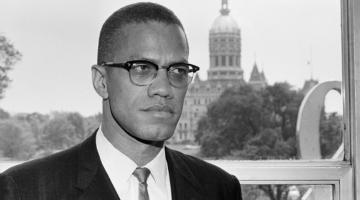 Every year, people around the world honor Malcolm X. Though he was taken from us prematurely, his memory and impact remain. With that memory, there is a mandate that we accept and carry on the legacy…
 Pat Parker warns us that cowardly acquiescence to fascism is deadly for us all.
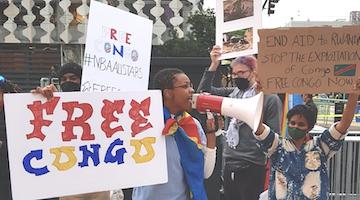 As Rwandan troops tightened their grip on the capitals of DRC’s Kivu Provinces, activists protested the National Basketball Association’s close collaboration with the Rwandan regime.
 The deal for a prisoner exchange proposed by the El Salvadoran president presents a dangerous threat to incarcerated people in the U.S. The continued outsourcing of the U.S. penal system…
 The economic stress on African American people shows itself in phenomena like marriage rates. What once was a benefit to Black communities and a path to the middle class, marriage is becoming…


