by Mark P. Fancher
The heroic African guerilla struggles against colonialism are history. The African present is dominated by AFRICOM, the U.S. military octopus with tentacles deep in the militaries of supposedly independent African states. “If Africa’s enemies have retreated like cowardly rats to the safety of their offices and boardrooms, then it’s time for us to drag their deliberations and plans out into the light of day -- African Liberation Day.”
In the Light of African Liberation Day Imperialist Rats Will Run Away
by Mark P. Fancher
“The late Libyan leader Moammar Qaddafi was in the crosshairs of the imperialists’ gunsights.”
On or near May 25th, there will be commemorations of African Liberation Day around the world. Although this has become an annual ritual, for many African Liberation Day participants the 21st Century has brought considerable confusion about the nature of the conflict between those who want genuine African independence and self-determination and those who want to continue domination and exploitation of the continent.
As Africa’s wars for independence raged during the 1970s, there was little doubt about the nature of the conflict and where the action could be found. The frontlines of battles against colonizers were in Angola, Zimbabwe, Guinea Bissau, Mozambique, Namibia and other regions where liberation organizations with enough letters in their combined acronyms to make alphabet soup mobilized squadrons of guerrilla fighters to carry out hit and run missions that ultimately harassed settler regimes, western armed forces and their proxies out of Africa.
While the stubborn refusal of imperialists to loosen their neo-colonial grip on Africa has meant the struggle for liberation must continue, 1970s-style direct armed conflicts in the African bush between revolutionaries and western troops are rare. The imperialists now take their shots at freedom fighters from behind closed doors at the U.S. State Department, the Pentagon, or NATO headquarters in Brussels. On the ground implementation of strategies is conducted by proxies who are sometimes twice removed from the architects of the plans.
Africa’s freedom fighters may be unable to crash through the closed doors of imperialist strategy rooms and confront the plotters directly, but thanks to the U.S. Freedom of Information Act, it is at least possible to know what they have talked about. Media attention devoted to Hilary Clinton’s e-mails has rarely focused on the thought processes of the former Secretary of State and her associates with regard to Africa. But these exchanges provide fascinating and instructive insight into a collective callous, arrogant mindset.
“The imperialists now take their shots at freedom fighters from behind closed doors at the U.S. State Department, the Pentagon, or NATO headquarters in Brussels.”
In 2011, the late Libyan leader Moammar Qaddafi was in the crosshairs of the imperialists’ gunsights. An April 2, 2011 e-mail to Clinton explains frankly and bluntly why he was targeted. “[Libya’s 143 tons of gold] was accumulated prior to the current rebellion and was intended to be used to establish a pan-African currency based on the Libyan golden Dinar. This plan was designed to provide the Francophone African Countries with an alternative to the French franc…”
The e-mail goes on to explain: “French intelligence officers discovered this plan [for a pan-African currency] shortly after the current rebellion began, and this was one of the factors that influenced President Nicolas Sarkozy’s decision to commit France to the attack on Libya.” The explanation doesn’t stop there: “According to these individuals Sarkozy’s plans are driven by the following issues: a) A desire to gain a greater share of Libya oil production; b) Increase French influence in North Africa, c) Improve his internal political situation in France, d) Provide the French military with an opportunity to reassert its position in the world, e) Address the concern of his advisors over Qaddafi’s long term plans to supplant France as the dominant power in Francophone Africa.”
African countries were expected to get on board the train to Libyan regime change without resisting or even questioning the reasons for the journey. It is therefore not surprising that the U.S. State Department became not only frustrated, but irritated with the African countries that hinted at a willingness to stray from the customary script neo-colonies are expected to follow.
An internal memo forwarded to Clinton dated March 22, 2011 states: “There is a definite split on the [African] continent with more nations lining up behind the March 20th [African Union] statement and questioning our military mission -- or at least seeking greater clarity -- than those who are fully articulating support.” Another memo in the same e-mail chain from Johnnie Carson (former Assistant Secretary of State for African Affairs) relates his conversation with African Union official Ramtane Lamamra who affirmed the African Union’s reluctance to rely on armed force in Libya: “…[Lamamra] noted that the AU is particularly focused on …the need to intensify efforts to resolve the crisis and respond to the legitimate demands of the Libyan people, and notes the joint AU and UN role in facilitating dialogue that leads to political reforms necessary for a peaceful, sustainable solution.”
“Africans knew the imperialist destabilization of Libya would have devastating consequences for the continent.”
Carson reported that Lamamra denied any suggestions that the African Union was making special efforts to preserve the Qaddafi government, and that what the organization wanted instead was a democratic process that would allow the Libyan people to freely and fairly choose their own leaders. Notwithstanding the objective reasonableness of that position, it was clearly in conflict with the U.S. position that “Qaddafi must go.” Carson said: “I told Lamamra the absence of any AU condemnation of Qaddafi was screamingly noticeable.”
Africans knew the imperialist destabilization of Libya would have devastating consequences for the continent. By contrast, the State Department’s hacks, bureaucrats and high-ranking officials are on a mission to manipulate and exploit at whatever cost, and they act with indifference to the pain and turmoil of the people who suffer the consequences of imperialist schemes and operations. Consider the arrogance and cynicism of a February 27, 2011 State Department memo that presumes regime change is inevitable, and offers suggestions for how to handle the aftermath. With respect to the “Italian role” it says: “Should be kept relatively low-profile by virtue of Italy’s colonization of Libya and enduring sensitivities stemming from that. Will be tough to balance Italy’s desire to protect its sizeable commercial interests against the need to play a quiet, less visible role.”
(Ironically, the author of the memo was not a personal acquaintance of Clinton’s and in questioning whether he was still on the State Department payroll, she commented: “I was surprised that he used personal email account if he is at State.”)
Bob Marley said: “Hypocrites and parasites will come up and take a bite. But if their night should turn to day, a lot of people will run away…” If Africa’s enemies have retreated like cowardly rats to the safety of their offices and boardrooms where they not only hide behind U.S. Africa Command (AFRICOM) but also the various terrorist forces and African armies western governments enlist as military proxies, then it’s time for us to drag their deliberations and plans out into the light of day -- African Liberation Day -- so that Africans can see them and learn how to fight the continent’s enemies more effectively.
(Note: The Clinton e-mails and other State Department documents released under the Freedom of Information Act can be accessed by using the department’s “virtual reading room” at: https://foia.state.gov/Search/Search.aspx )
Mark P. Fancher is an attorney who writes frequently about the U.S. military presence in Africa. He is assisting with African Liberation Day commemorations hosted by the All-African People’s Revolutionary Party. He can be contacted at: mfancher(at)comcast.net.

 "When bagman Vigor Moribund came to town" is the latest from BAR's Poet-in-Residence.
 Book Forum Editor, Roberto Sirvent, interviews Onyesonwu Chatoyer about her political organizing and work as a writer and editor.
 New York Democrats are fueling the panic over a fictional crime wave to increase surveillance and police presence in NYC.
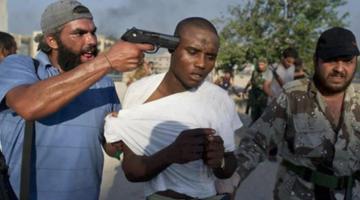 Anti-Black racism in Libya is stoked by the west to justify intervention and maintain dominance over the nation. The path toward liberation is to reject Europe and embrace a political Pan-Africanism.
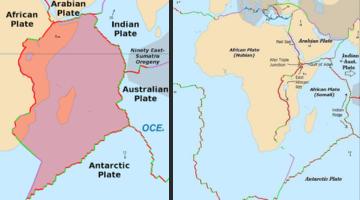 Palestinian people and African/Black people share more than a common struggle. They share a history dating back thousands of years.


