Poverty: Policies and Possibilities, Part 2
by Shannon J. Prince
Part 1 of this article appeared in the December 10 issue of BAR.
Imagine a program that built a childcare center which gave teens construction work experience, used Department of Agriculture funds to pay poor women to cook for poor children, taught poor women to become day care teachers and run day cares, and helped poor women get their GED's. Imagine this program also provided mortgage counseling and founded a health center that provided forty local women with jobs. Now imagine the program was run almost entirely by black welfare mothers. Such a program did once exist. It was called Operation Life. It was at its peak during the 70's and 80's and is detailed in the book Storming Caesar's Palace by Annelise Orleck.
Operation Life was based on the principle that the poor themselves are the experts on poverty and many current successful programs make that adage their foundation. One such program is Jobs for a Future/Homeboy Industries. Homeboy Industries was founded in 1988 by the priest Father Greg Boyle and acts as both an employment agency and a force for economic development, meeting the needs of young people of both genders who have histories of gang involvement. It is funded by local and federal money. The organization helps one thousand people a month. It offers free counseling, tattoo removal, and help transitioning from prison. It provides community service opportunities to those with court mandates, creative writing workshops, and classes in business skills, running female headed households, dealing with domestic abuse, parenting, and general education with a focus on math and reading skills.
"Homeboy Industries was founded in 1988 as both an employment agency and a force for economic development."
The organization also teaches self employment principles, life skills such as budgeting, banking, financial skills, work skills, and business skills. "Homeboys" and "homegirls" range from as young as fourteen to as old as seventy with three fourths being between eighteen and thirty-five. Since many of the participants are seen as unemployable, Homeboy Industries develops relationships with businesses to find people willing to employ marginalized people, matches young people with jobs that meet their interests, and seeks out mentors in their fields for them. Homeboy Industries then pays the salaries of the workers when they first begin so that businesses have little to lose by employing them. Homeboy Industries owns several businesses that train and employ those they serve. There's a silk-screening business, a bakery, a café, and a landscape/maintenance business. By engaging the efforts and talents of poor people, Jobs For a Future/Homeboy Industries successfully lifts people out of poverty.
Another factor in reducing poverty is looking for creative solutions that solve multiple problems. For example, many poor neighborhoods have constructed community gardens in vacant lots. The gardens change spaces once used for prostitution and drug dealing into crime free areas. They also reduce crime by providing young people with a positive activity in which to engage. In Philadelphia, crime on some blocks dropped 90% after the creation of community gardens. After all, it's hard to mug or shoot somebody surrounded by fresh tomatoes and sunflowers. (See "New York's Community Gardens - A Resource at Risk," The Trust for Public Land.)
"The fifteen community gardens in New York grew 11,000 pounds of food in 1999."
The gardens decrease racial tension as people of different cultures come to work together in them. People who once thought each of each other as strange and menacing come together as they encourage new life to grow. Furthermore, community gardens provide access to nature to young children who often are without green spaces. The gardens provide young people with experience on everything from ecology, to marketing (as they sell crops at farmers markets), to government as young people elect each other to decide how to govern their gardens. The gardens also provide the poor with the kind of nutritious food and exercise they are often otherwise denied. This helps prevents poor nutrition from leading to further health problems such as diabetes or babies with low birth weights. The fifteen community gardens in New York grew 11,000 pounds of food in 1999. More than meeting the needs of the community, surplus food is sold to raise money for the poor who grew the crops. Work in these gardens is used to rehabilitate criminals, and local business people are often willing to underwrite the start up costs of the gardens because community gardens raise property values. The creation of community gardens provides poor people with money, food, lower crime rates, higher property values, and better health, while increasing their autonomy and control of community solutions.
We all know there is no single policy that can be implemented to fight poverty - no wizard's spell or magic bullet. Several creative policies must be designed and employed. By creating policies based around two principles - the idea that the poor should not be punished by facing greater obstacles to escaping poverty when they choose to marry or profit from personal knowledge, and the idea that programs that creatively meet the needs of the poor and organize their efforts such as community gardens and tax-funded social programs can have a large impact in reducing destitution - we can help people to escape penury.
While no single policy can be considered a panacea, one major principle is crucial in aiding the poor - the idea that the poor themselves are a powerful resource in the struggle against poverty.
Ms. Prince can be contacted at Shannon.J.Prince@Dartmouth.EDU.

 In this week’s segment, we discuss the US effort to control the world’s oil and gas supplies in Venezuela, Iran, and other nations, and to disrupt and steal supplies going to and from Russia and Ch
 Ajamu Baraka is a Black Agenda Report contributing editor and Director of the North-South Project for People(s)-Centered Human Rights. The North-South Project is among the organizations calling for…
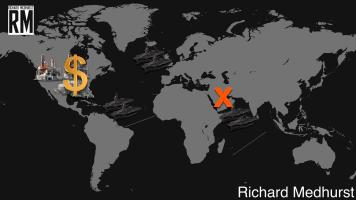 Richard Medhurst discusses his latest investigative reporting, “The Petrogas-Dollar: The Secret US Strategy Behind the Iran War," an analysis of the latest iteration of U.S. hegemony. The U.S. is…
 The U.S. regime change plot against Venezuela succeeded and created a puppet state. Anti-imperialists must admit this reality and forge plans for fighting against it.
 Oh, carrier Intrepid/you in these torrid waters of Santo Domingo/only out of fear.


