Skip to Content

South Africa

Can Black Politics Be Revived?

by BAR executive editor Glen Ford

Obama’s presidency has been disastrous for African Americans, who have been economically crushed and disconnected from their historical roots in social struggle. Political fantasists now urge us to put our faith in demographics, claiming that change will inevitably flow from the darkening of America’s population. But, that’s a trap which leads to a descent into South Africa-like conditions.

South Africa: Chris Hani Would be Angry at ANC “Adopting Our Class Opponents' Policies”

by the National Union of Metalworkers of South Africa

In the 20 years since the assassination of South African communist leader Chris Hani, the contradictions inherent in the agreement leading to electoral democracy have come to a head. "Comrade Chris would have condemned the brutal killing and slaughtering of workers in Marikana in defense of the minerals/energy/finance complex ruling oligarchy interests.”

A Tribute to Chris Hani on the 20th Anniversary of His Assassination

by Carlos Martinez

Chris Hani was a man of the people who saw the struggle for socialism and African liberation as inseparable. A leader of both the South African Communist Party and the African National Congress, Hani “realized that national liberation, though essential, would not bring about total economic liberation.”

Throwing BRICS at the U.S. Empire

by BAR executive editor Glen Ford

History has placed the BRICS nations on the path of confrontation with a superpower in decline. Washington is prepared to strangle the world into submission, or drown it in chaos. “Objectively, the United States has positioned itself as the great and implacable impediment to global development.”

What Happened to South Africa’s Freedom Charter


A Black Agenda Radio commentary by Glen Ford

South Africa’s current crisis is rooted in the road wrongly taken 1994, when the African National Congress and its allies agreed not to upset the corporate order, in exchange for one-person, one-vote. Those chickens are now coming home to roost, as the ANC enforces the corporate order and workers reject union leaders who, they believe, work for the bosses.

You are missing some Flash content that should appear here! Perhaps your browser cannot display it, or maybe it did not initialise correctly.

Economic and Social Crisis in Post Apartheid South Africa


by William Bowles

Has the ANC and its partners in the Tripartite Alliance, the Congress of South African Trade Unions (COSATU) and the SACP betrayed their roots and sold out Black South Africa?” The massacre of miners at Marikana, and the Alliance’s callous response to the carnage, seems to answer in the affirmative. “It's as if the clock stopped in April 1994,” when state power was transferred to Black hands.

The People’s Rage in South Africa


by Mark P. Fancher

South Africa did not complete its revolution with the transfer of government power to Black hands in 1994. The Marikana mine massacre shows that imperialism “will not tolerate any disruption in the flow of profits from the exploitation of highly valuable natural resources.” The question now comes to a head: Will the poor majority of South Africa tolerate a Black government that defends the interests of imperialism?

Reflections on Gil Scott-Heron

by Norman (Otis) Richmond aka Jalali

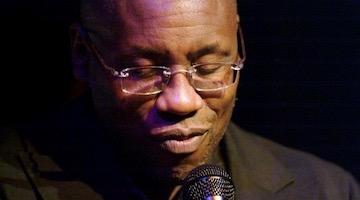
Gil Scott-Heron’s repertoire was as wide and deep as the audience that loved him. “He dealt with racism, capitalism, the environment, Pan-Africanism, substance abuse, nuclear power, women's liberation and just plain ‘silly’ little love songs.”

No FEAR, Chapter 4 continued: The Sound That Freedom Makes


by BAR editor and columnist Marsha Coleman-Adebayo

Dr. Marsha Coleman-Adebayo has permitted us to serialize excerpts of her new book, No FEAR: A Whistleblower’s Triumph over Corruption and Retaliation at the EPA. Dr. Coleman-Adebayo incurred the wrath of EPA when she protested the agency’s alliance with corporations that were poisoning miners in South Africa. This week, we continue with Chapter 4.

Vanadium, Green Crimes and the White House

by BAR editor and columnist Marsha Coleman-Adebayo

The US and the global community use workers as cheap, disposable commodities.” That’s certainly the case with the strategic mineral vanadium, the extraction of which in South Africa has led to the gruesome deaths of many miners. “The victims bleed from every orifice of the body, they defecate and urinate blood, develop cancers of the stomach- esophagus, in addition to kidney and liver failure.”

South Africa Buries Its Freedom Charter

A Black Agenda Radio commentary by Glen Ford

In refusing to even consider nationalizing the mining industry, South Africa’s ruling party, the African National Congress, has all but repudiated its most solemn (and fundamentally socialist) document: the Freedom Charter. Created and endorsed by a people’s movement in 1955, the Charter calls for national ownership of minerals, but the ANC government vows that will never happen. Under nominal Black rule, the “ANC has transformed itself into a handmaiden of multinational capital.”

You are missing some Flash content that should appear here! Perhaps your browser cannot display it, or maybe it did not initialise correctly.

Part One: No FEAR: A Whistleblower’s Triumph


by BAR editor and columnist Marsha Coleman-Adebayo

Dr. Marsha Coleman-Adebayo has permitted us to serialize excerpts of her new book, No FEAR: A Whistleblower’s Triumph over Corruption and Retaliation at the EPA. Dr. Coleman-Adebayo incurred the wrath of EPA when she protested the agency’s alliance with corporations that were poisoning miners in South Africa. We begin with the forward to the book, by Noam Chomsky.

South African President Attacks United Nations Over War Against Libya


by Abayomi Azikiwe

The President of South Africa began his rotating month as president of the UN Security Council with a rebuke of the world body’s relationship with African states. “Although South Africa voted in favor of UN Resolution 1973 that authorized a so-called ‘no-fly zone’ over Libya, the action was clearly designed to engineer the destruction of the country and the overthrow of the government of Col. Muammar Gaddafi.” The UN claimed it acted to protect civilians, but “there was never any real evidence of the massacre of Libyan civilians by the Gaddafi government.”

March 23: Anniversary of the Beginning of Apartheid's End: The Battle of Cuito Cuanavale

A Black Agenda Radio commentary by Bruce Dixon

Apartheid South Africa responded to Angola's 1974 independence from the Portuguese with a US-backed military invasion.  Declaring that "the blood of Africa" flowed through Cuban veins, Fidel Castro dispatched the Cuban armed forces to confront the armies of racist South Africa in Angola.  Between 1974 and 1988 more than 1100 Cubans laid down their lives in Africa to hasten the end of apartheid.  This week is the anniversary of the historic battle of Cuito Cuanavale, in which Cuban, Angolan and Namibian forces routed the supposedly invincible land and air forces of white-ruled South Africa, eventually making possible the release of Nelson Mandela from prison, and the end of apartheid in South Africa itself, and earning for Cuba the lasting enmity of the United States. If we in the U.S. were serious about racial reconciliation, we too would celebrate the March 23 anniversary of Cuito  Cuanavale. 

You are missing some Flash content that should appear here! Perhaps your browser cannot display it, or maybe it did not initialise correctly.

Listen to Black Agenda Radio on the Progressive Radio Network, with Glen Ford and Nellie Bailey

Poor “Shack”-Dwellers Advocate Decries “New Apartheid” in South Africa

We seem to have a new apartheid” in South Africa, says S’bu Zikode, leader of the poor people’s organization Abahliali base-Mjondolo. In this new order, “the poor are not taken care of, are not part of society.” Zikode, who is touring the United States, says the African National Congress government “wants to create a ‘shack-free’ country where the poor can be hidden,” reserving the cities “for the better-off and the rich.”

Bloomberg Undermines Living Wage While Jockeying for President

Billionaire New York City mayor Michael Bloomberg, who is said to be eyeing a run for the White House in 2012, has hired a notorious opponent of minimum wages to study proposals to include subsidized development projects under Living Wage regulations. The mayor’s expert says higher wages kill economic development. But expanded wage protections have been “very successful” in Los Angeles and other cities, says Paul Sonn, of the National Employment Law Center.

Anti-War Committee Broadens Scope

A recent mass meeting of the United National Anti-War Committee (UNAC) showed progress in diversifying the peace movement. UNAC co-coordinator Joe Lombardo said a large fraction of participants at the Manhattan conference were Muslim, part of a newly-formed Muslim Peace Coalition with chapters in 16 states.

Plus…

Bruce Dixon examines the woeful irrelevance of the Black Misleadership Class; Jared Ball counters Michael Eric Dyson’s outrageous assault on Black youth; and Danny Schecter dissects the banksters’ fraudulent mortgages.

Syndicate content


Dr. Radut